
Image: BBC World
Thaksin Shinawatra's release from prison raises questions about his future in Thai politics and the evolving landscape of power in Thailand. What’s next?
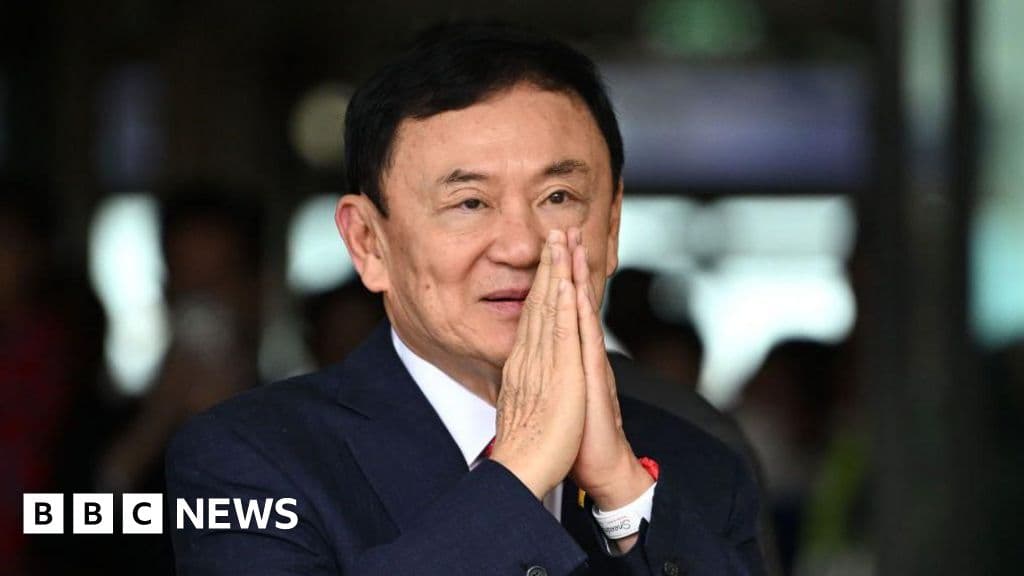
GlipzoThaksin Shinawatra, Thailand's former prime minister, has made headlines again after his release from prison in Bangkok. At 76 years old, Thaksin has spent nearly two decades in exile and the last eight months incarcerated for corruption and abuse of power during his tenure from 2001 to 2006. His return to the public eye, complete with an electronic ankle bracelet, has sparked widespread speculation about his future in Thai politics, despite his party, Pheu Thai, insisting he will remain in the shadows.
The political landscape in Thailand has been tumultuous since Thaksin first took power in January 2001. A self-made billionaire known for his ambitious reforms, he drew both fervent support and fierce opposition. His tenure has seen multiple elections, a military coup in September 2006, and ongoing court challenges against his allies, all of which have shaped his complex legacy.
Thaksin’s political journey is marked by significant achievements and dramatic setbacks. His policies, which included universal healthcare and rural development initiatives, garnered him a loyal following. However, his confrontational style and the perception of his growing power alarmed the conservative establishment, leading to:
Even after his ousting, Thaksin remained a formidable force, running his party from abroad and maintaining a grip on Thai politics. In 2023, a controversial 'grand bargain' allowed him to return home, but his influence is now being tested in a drastically altered political climate.
Thaksin’s recent imprisonment came after the Supreme Court dismissed his previous leniency, ruling that he had exploited his time in a police hospital to evade his sentence. His release coincided with a critical moment for Pheu Thai, which faced a disappointing performance in the February general election. The party's position weakened significantly, finishing third behind the reformist People's Party and the nationalist Bhumjaithai party.
Political analysts, including Ken Lohatepanont, argue that Thaksin's emergence from prison occurs within a new political context. They note: - Pheu Thai has been relegated to a junior coalition partner. - The party must evaluate whether to reintegrate Thaksin into its leadership or to focus on nurturing new leaders.
The question remains: will Thaksin's potential return to a prominent role in politics invigorate Pheu Thai, or will it hinder their prospects?
The swift decline of the 'grand bargain' raises questions about the intentions of the conservative forces that once welcomed Thaksin back. Did they always plan to undermine his party? Or was Thaksin's unwillingness to fade into the background a catalyst for their sudden shift?
The mistrust between Thaksin and conservative factions is palpable and likely insurmountable. Even if he desires to reclaim a significant political position, the prospects seem dim. Legal barriers and a changed public sentiment may prevent him from regaining the influence he once wielded.
Thaksin's return and the subsequent events highlight ongoing tensions in Thailand's political landscape, which has been shaped by decades of rivalry between populist movements and conservative establishments. The implications of his release extend beyond just one man; they reflect broader patterns of power, governance, and public sentiment in Thailand. As the country navigates its complex political dynamics, the following factors will be essential to watch: - Public Sentiment: How will the Thai populace react to Thaksin's potential comeback? - Pheu Thai Strategy: Will the party pivot towards Thaksin's influence or focus on new leadership? - Judicial Influence: How will the courts continue to shape the political narrative?
As Thailand moves forward, the era defined by Thaksin's ambitious vision appears to be shifting. Political analysts suggest that while Thaksin’s influence may never be fully extinguished, the landscape has irrevocably changed. The choices made by Pheu Thai and Thaksin himself in the coming months will play a pivotal role in shaping the future of Thai politics. Will they adapt to the new realities, or will they cling to the past? Only time will tell.

Tensions soar as the US and Iran engage in air strikes near the Strait of Hormuz, raising concerns over global oil supply and regional stability.
BBC World
Trump's international interventions face serious stalemates. What will this mean for U.S. foreign policy? Explore the critical challenges ahead.
Indian Express
Tehran denies resignation of President Masoud Pezeshkian amid claims of IRGC influence. What does this mean for Iran's political stability? Click to learn more!
Indian Express