
Image: Indian Express Entertainment
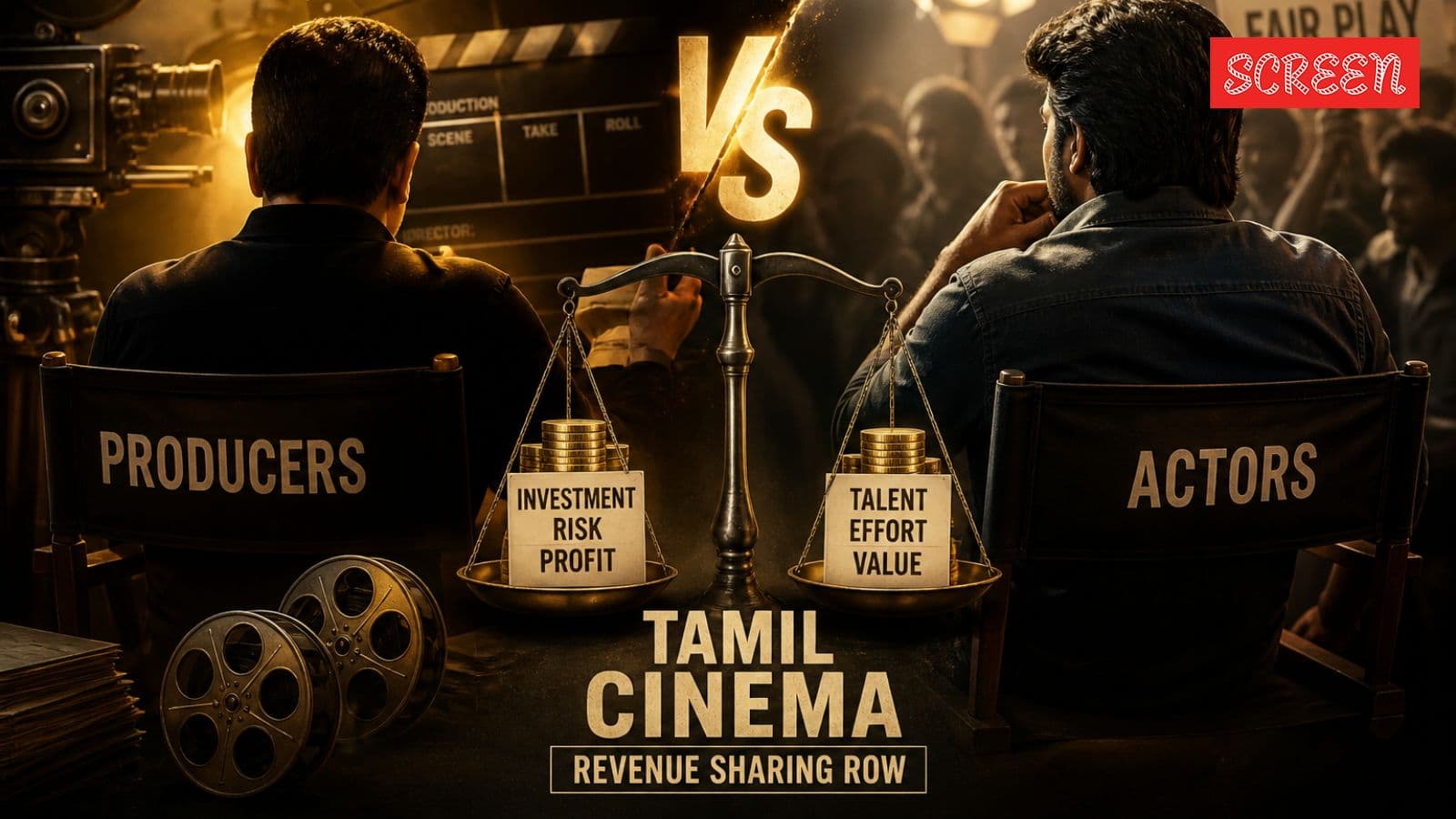
Tamil producers threaten a strike over massive actor salaries, pushing for a revenue-sharing model to combat financial losses in the industry.
GlipzoIn a significant move that could reshape the Tamil film industry, producers have announced a token strike set for May 2, 2024. This action comes in response to the soaring upfront fees paid to actors, which have become increasingly unsustainable amid disappointing box office performances. The producers' ultimatum indicates they are ready to escalate to an indefinite strike if negotiations do not commence with actors. This development has sparked discussions not only about salary structures but also about the future of filmmaking in Tamil Nadu.
The crux of the issue lies in the current payment model for actors, many of whom are demanding astronomical upfront fees—often upwards of Rs 50 crore per project. The producers’ proposal seeks to introduce a revenue-sharing model where actors would receive a smaller upfront payment while the remainder of their salary would be linked to the film's performance. This shift aims to distribute financial risk more equitably between producers and actors, especially as many films struggle to recover their production costs.
The financial landscape of Tamil cinema has drastically changed in recent years. Producers have voiced concerns that many big-budget films are failing to generate profits, pushing them into a corner. According to producer Dhananjayan, 2024 was manageable, but 2025 has seen a string of anticipated projects flop at the box office. He expressed that, despite these losses, actors continue to receive their hefty salaries, leaving producers questioning their sustainability.
Dhananjayan added, “If producers are incurring losses, everyone must share the pain. You cannot only talk about salaried individuals suffering. What about those paying those salaries?” This sentiment encapsulates the frustration among producers who feel they are bearing the burden alone while actors secure their payments regardless of a film’s success.
The push for a revenue-sharing model isn’t new. It gained traction after notable figures in the Hindi film industry, such as Aamir Khan, began advocating for reduced salaries in favor of profit participation. In Tamil cinema, however, a reluctance among actors to embrace this model has persisted, largely due to concerns over financial transparency. Many actors are wary, fearing potential exploitation or the inability to accurately gauge a film's true profitability.
However, as Dhananjayan pointed out, the landscape has evolved significantly. With advancements in digital tracking and the establishment of structured deals for satellite, digital, and distribution rights, financial transparency is now more accessible than ever. This begs the question—what is holding actors back from adopting a more equitable payment structure?
An example that has intensified the ongoing debate is the film Parasakthi, featuring actor Sivakarthikeyan, which performed poorly despite minimal competition. Interestingly, the producer managed to sidestep significant losses by restructuring the payment model. Instead of the typical Rs 50 crore upfront, they paid Rs 25 crore and offered a 33% profit share.
This innovative approach not only eased the financial strain but also aligned the interests of the actor and producer. Dhananjayan elaborated on this by explaining how the producer of Parasakthi successfully negotiated similar arrangements with other key team members, thus reducing initial financial burdens while still incentivizing performance.
Had the producer opted for the full upfront payment, the project could have faced a staggering loss of nearly Rs 40 crore. Instead, this strategy has demonstrated a viable path forward for Tamil cinema, one that could potentially benefit both producers and actors.
As the strike date approaches, the stakes are high. The Nadigar Sangam, the union representing Tamil actors, has expressed disappointment over the producers' stance, signaling a potential standoff. The outcome of this situation could have profound implications for the industry.
If producers successfully implement a revenue-sharing model, it may set a precedent for other film industries in India, creating a ripple effect that could redefine contracts across the board. Conversely, if actors resist this shift, the strike could lead to a prolonged halt in film production, exacerbating the financial woes currently faced by the industry.
In conclusion, the upcoming negotiations are not just about salaries; they are about the sustainability and future direction of Tamil cinema. The film industry is at a critical juncture, and how both parties navigate this situation could determine its trajectory for years to come. Producers and actors alike must recognize that collaboration and transparency are key to thriving in an increasingly competitive landscape.
The resolution of this conflict has the potential to change the economic dynamics of the Tamil film industry, impacting not only those directly involved but also the wider ecosystem, including technicians, crew members, and the audience who ultimately consume the content produced.
Zahan Kapoor reveals an unconventional role in his upcoming film, signaling a significant shift from his breakout success in Black Warrant. What’s next for this rising star?
Bollywood Hungama
Discover how Vishal Jethwa is transforming his physique for Shakti Shalini, emphasizing the mental discipline behind peak fitness.
Bollywood Hungama
Discover the dark truths of urban development in Kammatipaadam, a film that reveals the often-overlooked sacrifices behind city growth.
Indian Express