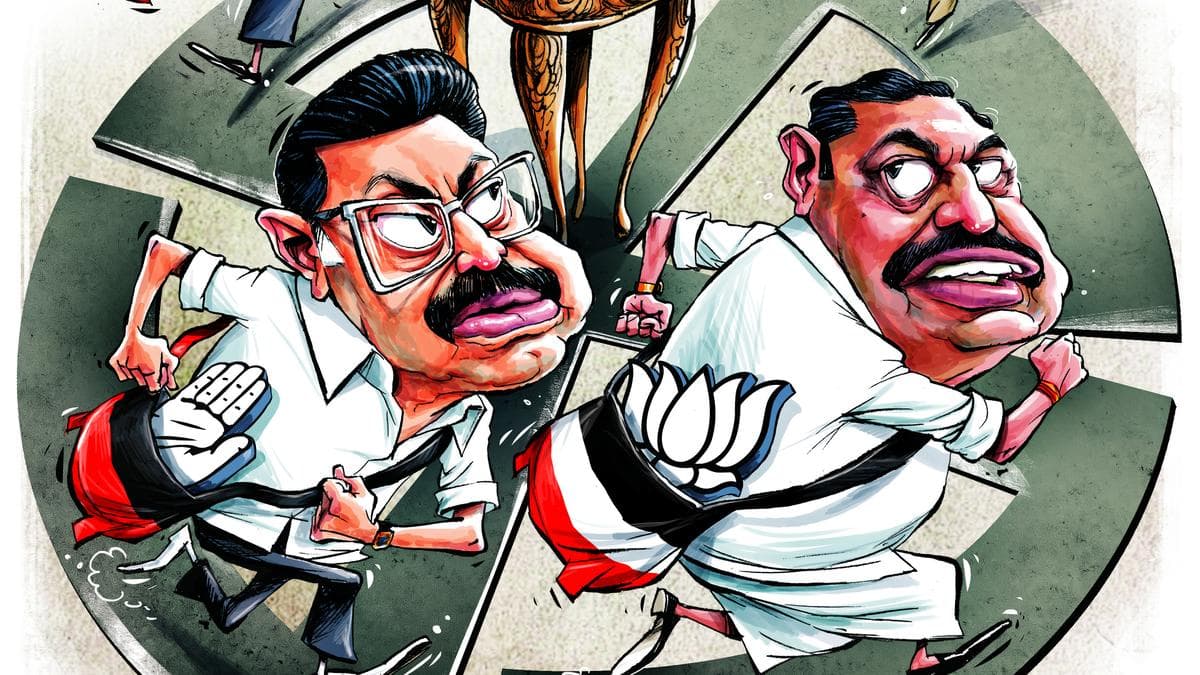
Tamil Nadu's 2026 Assembly elections are heating up with new players and shifting alliances. Will Gen Z's influence disrupt traditional politics?
Political Landscape Shifts Ahead of Tamil Nadu Elections
As Tamil Nadu gears up for its **2026 Assembly elections**, the political arena is about to witness a vibrant yet contentious contest. Nominations are set to commence in just **10 days**, and the stage is already buzzing with activity among various political factions. In this election cycle, there's a palpable sense of change, particularly among the **Gen Z voters**, who feel increasingly alienated from longstanding political entities like the **Dravida Munnetra Kazhagam (DMK)** and the **All India Anna Dravida Munnetra Kazhagam (AIADMK)**. The introduction of the **Tamilaga Vettri Kazhagam (TVK)**, led by the beloved actor **Vijay**, could significantly alter the dynamics of Tamil Nadu's political landscape.
Coalition Dynamics and Seat-Sharing Challenges
Currently, the two dominant coalitions—**DMK's Secular Progressive Alliance (SPA)** and **AIADMK's National Democratic Alliance (NDA)**—have yet to finalize their seat-sharing arrangements. The DMK has formed alliances with several parties, including the **Congress** for **28 seats**, the **Communist Party of India (CPI)** for **five seats**, and others for a total of **19 additional seats**. However, negotiations remain tense, particularly with smaller parties like the **CPI(M)**, **Viduthalai Chiruthaigal Katchi (VCK)**, and the **Makkal Needhi Maiam (MNM)**, which are pushing for a more equitable distribution of seats.
Key features of the current political climate include:
- Discontent among allies: Smaller parties are feeling sidelined as the DMK prioritizes its larger allies.
- Continued negotiations: The DMK is conducting interviews for potential candidates, further complicating the seat allocation.
- Defections: Former AIADMK members like O. Panneerselvam and his son P. Ravindhranath have shifted allegiances to the DMK, adding to the intrigue.
Tensions Rising Among Coalition Partners
Until recently, the SPA appeared unified, having organized numerous protests against the **BJP-led central government**. However, fractures have begun to emerge as the DMK has suggested that some of its allies might need to relinquish seats to accommodate newer entrants like the MNM and DMDK. This has led to tensions within the coalition, as allies are reluctant to concede ground.
The TVK's proposition to share power at its inaugural conference in Vikravandi, located about 150 km south of Chennai, has added another layer of complexity. The Congress, eager to regain influence after decades of absence from power, was initially tempted by the TVK's offer but ultimately reaffirmed its alliance with the DMK, securing three additional seats compared to the last assembly election and a Rajya Sabha berth.
AIADMK-NDA Coalition Struggles with Internal Conflicts
On the opposing side, the **AIADMK-led NDA** has had its own set of challenges. Following a rocky 2024 Lok Sabha election where both the AIADMK and BJP went solo—resulting in a clean sweep for the SPA in all **39 constituencies**—the two parties have sought to mend their alliance. Despite this, internal conflicts have arisen, especially following the fluctuating loyalty of the **Amma Makkal Munnetra Kazhagam (AMMK)** under **T.T.V. Dhinakaran**, which briefly exited the NDA but returned just months later.
Why It Matters
The outcome of the **2026 Tamil Nadu Assembly elections** could have far-reaching implications, not only for the state's political landscape but also for national politics. A shift in power dynamics could signal a larger trend of disillusionment among younger voters with traditional political parties, prompting a reevaluation of strategies and policies.
Looking Ahead: What’s Next for Tamil Nadu?
As we approach the **election date**, all eyes will be on how the seat-sharing negotiations unfold and whether the SPA can maintain its unity in the face of emerging challenges. Key developments to watch include:
- The finalization of seat-sharing agreements among the DMK and its allies.
- The impact of the TVK on voter sentiment, particularly among younger demographics.
- Any further shifts in party affiliations that could alter the balance of power.
In conclusion, the Tamil Nadu Assembly elections of 2026 are shaping up to be a pivotal moment in the state’s political history. With new players entering the fray and established parties facing internal strife, the upcoming weeks promise to be filled with unexpected twists and turns as the electoral battle unfolds.