
Image: BBC World
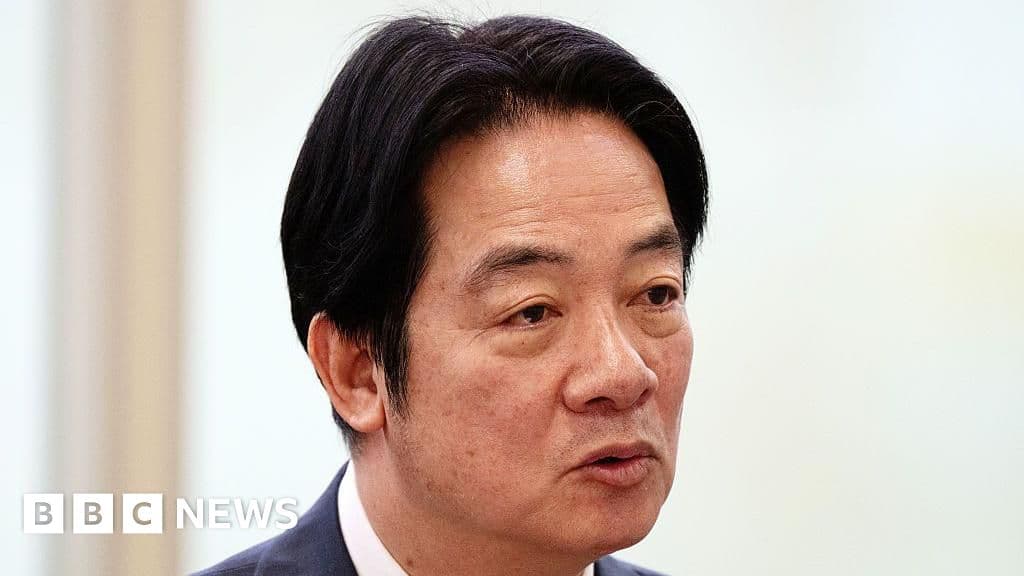
Taiwan's President Lai Ching-te asserts no conflict will be provoked while affirming sovereignty amid rising tensions with China and U.S. support.
GlipzoIn a firm statement following a pivotal summit between Donald Trump and Xi Jinping, Taiwan's President Lai Ching-te asserted that while Taiwan will not instigate conflict, it will resolutely maintain its sovereignty. This declaration comes in the wake of discussions regarding Taiwan's independence, a sensitive issue that has significant implications for regional stability.
Chinese state media reported that during the summit, Xi Jinping emphasized that Taiwan represents "the most important issue" affecting U.S.-China relations. He cautioned that mishandling the situation could lead to severe consequences. In response, Trump warned Taiwan through Fox News, stating, "I'm not looking to have somebody go independent."
The relationship between the United States and Taiwan has been historically strong, with the U.S. bound by law to assist Taiwan in its defense efforts. After the summit, Trump reiterated that U.S. policy towards Taiwan remains unchanged, emphasizing his desire to avoid confrontation with Beijing. He acknowledged Xi's strong feelings about Taiwan but clarified that no commitments had been made regarding the island’s future.
For years, the Taiwanese administration has upheld that there is no necessity for a formal declaration of independence, as Taiwan already views itself as a sovereign entity. In his initial reaction to the summit, Lai reinforced this perspective on his Facebook page, asserting, "there is no 'Taiwan independence' issue."
The majority of the Taiwanese population identifies as part of a sovereign nation, favoring the maintenance of the existing status quo in relations with China. This means avoiding both unification with China and a formal declaration of independence. Lai's administration has been vocal against Beijing's attempts to intimidate Taiwan, with Beijing labeling Lai as a "troublemaker" who threatens cross-strait peace.
In his post, Lai emphasized, "Taiwan will not provoke, will not escalate conflict, but will not under pressure give up national sovereignty and dignity, as well as the democratic and free way of life." He stressed Taiwan's commitment to defending the status quo while promoting constructive and respectful dialogue with China.
Despite Beijing's claims of desiring a peaceful reunification with Taiwan, the Chinese government has not ruled out the possibility of using force to achieve its goals. Over the years, the U.S. has provided military support to Taiwan under the Taiwan Relations Act, which aims to ensure the island can defend itself if attacked. Recently, the Trump administration approved a staggering $11 billion arms sale to Taiwan, one of the most substantial transactions in recent history.
This arms deal has provoked ire from Beijing, which has significantly increased its military pressure on Taiwan through extensive military drills, including blockade simulations. After the Beijing summit, Trump indicated that he would weigh the approval of arms sales, noting that discussions with Xi had been thorough.
Since the early 1980s, the U.S. has reassured Taiwan that it would not consult with Beijing regarding arms sales. However, Trump suggested that such commitments could be reevaluated, stating the 1980s were "a long way" back.
On Sunday, Lai expressed gratitude to Trump for his unwavering support for peace in the Taiwan Strait and the escalation of arms sales. He noted that given China's persistent military threats and ambitions, continued U.S. arms sales and security collaboration are vital for Taiwan's defense.
The ongoing tensions over Taiwan are not just a regional concern; they have implications for global security and geopolitical dynamics. As the U.S. aims to counterbalance China's growing influence, Taiwan remains a focal point of contention.
Looking forward, the international community should keep a close eye on Taiwan's actions and China's responses. Lai's firm stance reflects a broader sentiment among Taiwanese citizens who prioritize their sovereignty and democratic values.
As tensions escalate, Taiwan's relationship with the U.S. will likely become even more critical. The island's ability to navigate these complex dynamics will shape not only its future but also the broader geopolitical landscape in the Asia-Pacific region. The next steps taken by both Taiwan and China will be crucial in determining whether peace can be maintained or if conflict could arise.
Why It Matters: Taiwan's sovereignty is not just a local issue; it symbolizes the struggle for self-determination in the face of authoritarian pressure. The evolving dynamics between Taiwan, China, and the U.S. will significantly impact regional stability and international relations for years to come.

Tensions soar as the US and Iran engage in air strikes near the Strait of Hormuz, raising concerns over global oil supply and regional stability.
BBC World
Trump's international interventions face serious stalemates. What will this mean for U.S. foreign policy? Explore the critical challenges ahead.
Indian Express
Tehran denies resignation of President Masoud Pezeshkian amid claims of IRGC influence. What does this mean for Iran's political stability? Click to learn more!
Indian Express