Glipzo
WorldTechnologyBusinessSportsEntertainmentScienceHealthPolitics
Glipzo
WorldTechnologyBusinessSportsEntertainmentScienceHealthPolitics
  1. Home
  2. /
  3. Politics
  4. /
  5. Supreme Court Grants Bail to Kashmiri Separatist Shabir Shah
Supreme Court Grants Bail to Kashmiri Separatist Shabir Shah

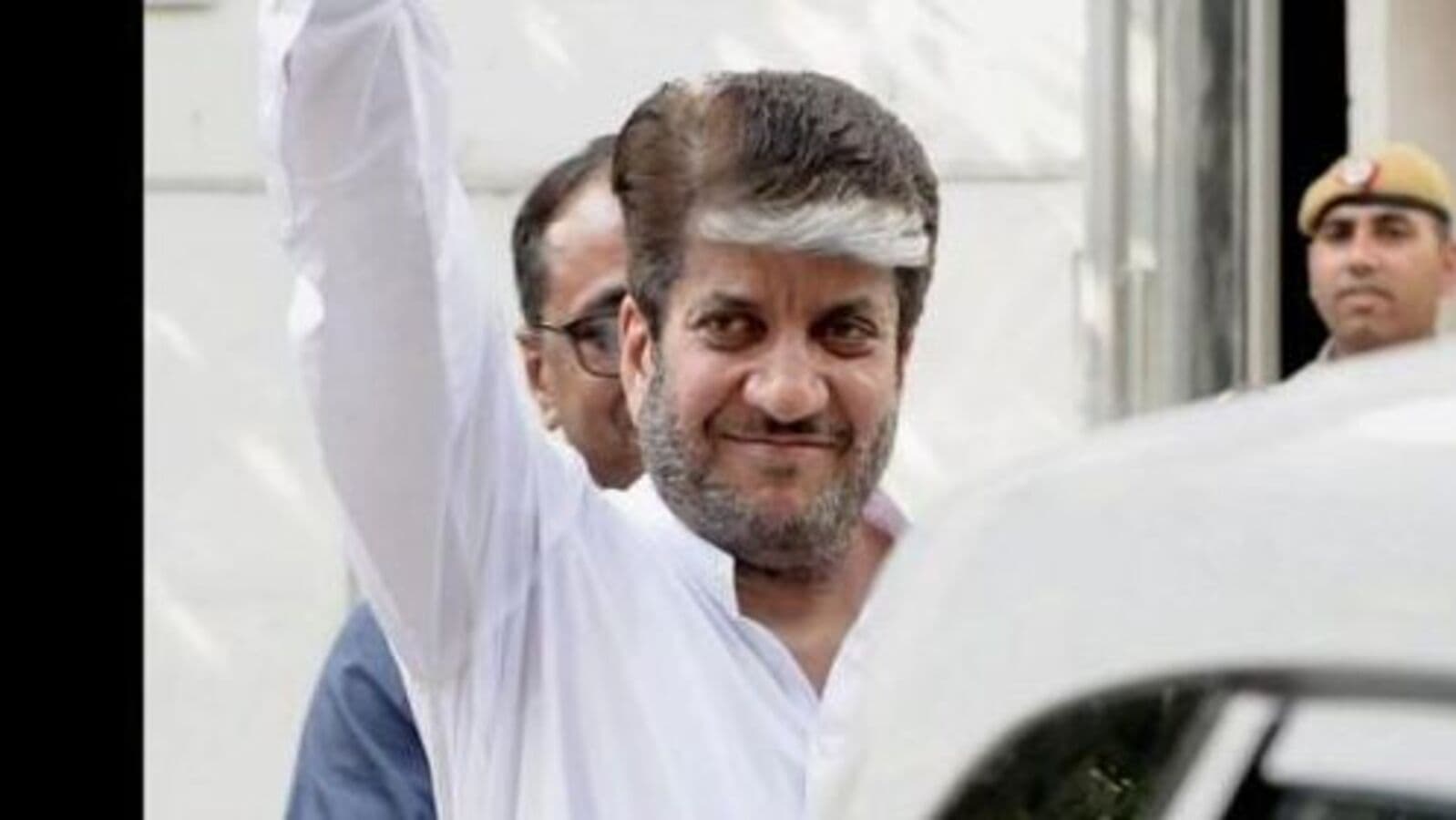
Image: Mint (Business)

Politics
Friday, March 13, 20264 min read

Supreme Court Grants Bail to Kashmiri Separatist Shabir Shah

The Supreme Court grants bail to Kashmiri separatist leader Shabir Ahmed Shah in a terror funding case, highlighting legal and political complexities in Kashmir.

Glipzo News Desk|Source: Mint (Business)
Share
Glipzo

Key Highlights

  • Supreme Court grants bail to Kashmiri separatist leader Shabir Ahmed Shah.
  • Shah's case involves allegations of terror funding and separatist activities.
  • The decision comes after irregularities were noted during the trial.
  • Shah founded the JKDFP in 1998, advocating for Kashmir's separation.

In this article

  • Supreme Court Decision on Shabir Ahmed Shah's Bail On **Thursday**, the **Supreme Court of India** granted bail to **Shabir Ahmed Shah**, a prominent Kashmiri separatist leader, in a case concerning **terror funding**. The decision was made public following a hearing featuring arguments from senior advocate **Colin Gonsalves**, who represented Shah, while senior advocate **Siddharth Luthra** defended the **National Investigation Agency (NIA)**.
  • Background of the Case In **September 2022**, the Supreme Court had previously denied Shah interim bail, prompting the NIA to respond to his petition that challenged a **June 12, 2025** order from the **Delhi High Court**. That order had denied his bail request, citing concerns that Shah might engage in unlawful activities or potentially influence witnesses if released.
  • Allegations Against Shabir Ahmed Shah According to the allegations, Shabir Ahmed Shah played a crucial role in fostering a separatist agenda in **Jammu and Kashmir**. His actions reportedly included: - Inciting the public to support the secession of Jammu and Kashmir. - Paying homage to deceased terrorists by labeling them as “martyrs.” - Engaging in **hawala transactions** to facilitate financial inflows. - Raising funds through **cross-Line of Control (LoC)** trade.
  • Shabir Ahmed Shah’s Political Background Born on **June 14, 1953**, in **Kadipora**, located in the **Anantnag district** of south Kashmir, Shabir Ahmed Shah hails from a business family. He completed his education up to the higher secondary level and later established the **Jammu and Kashmir Democratic Freedom Party (JKDFP)** in **1998**. This political group advocates for the separation of Jammu and Kashmir from India, marking Shah as a significant figure in the separatist movement.
  • Implications of the Bail Decision The Supreme Court's decision to grant bail to Shabir Ahmed Shah could have various implications for the ongoing political landscape in Jammu and Kashmir. This ruling may signal a shift in how the legal system addresses cases involving separatist leaders and the complexities surrounding terrorism-related charges.
  • Conclusion The recent Supreme Court ruling to grant bail to Shabir Ahmed Shah highlights significant legal and political issues within India, particularly concerning **Jammu and Kashmir**. As a prominent separatist leader, Shah's case encapsulates the ongoing tensions between the Indian government and separatist factions, raising questions about national security, legal processes, and the future of the region. The bail conditions imposed by the court are likely to shape the trajectory of Shah’s activities and the broader separatist movement in Kashmir.
  • Key Highlights - **Supreme Court grants bail** to Kashmiri separatist leader Shabir Ahmed Shah. - Shah's case involves allegations of **terror funding** and separatist activities. - The decision follows a lengthy period of incarceration and trial irregularities. - Shah has been a significant figure in the separatist movement since founding the JKDFP in 1998. - Ongoing debates about language and identity in the context of Kashmir separatism.
  • Keywords - Shabir Ahmed Shah - Kashmiri separatist - Supreme Court of India - terror funding - Jammu and Kashmir - National Investigation Agency (NIA)
  • Category Politics

Supreme Court Decision on Shabir Ahmed Shah's Bail On **Thursday**, the **Supreme Court of India** granted bail to **Shabir Ahmed Shah**, a prominent Kashmiri separatist leader, in a case concerning **terror funding**. The decision was made public following a hearing featuring arguments from senior advocate **Colin Gonsalves**, who represented Shah, while senior advocate **Siddharth Luthra** defended the **National Investigation Agency (NIA)**.

The bench, composed of Justices Vikram Nath and Sandeep Mehta, indicated that a comprehensive order detailing the conditions of bail would be issued shortly. This ruling comes after the court considered multiple irregularities that surfaced during the trial and took into account Shah’s extended period of imprisonment.

Background of the Case In **September 2022**, the Supreme Court had previously denied Shah interim bail, prompting the NIA to respond to his petition that challenged a **June 12, 2025** order from the **Delhi High Court**. That order had denied his bail request, citing concerns that Shah might engage in unlawful activities or potentially influence witnesses if released.

Shah was apprehended by the NIA on June 4, 2019, amid a larger crackdown on separatist activities in Jammu and Kashmir. The agency had initiated investigations back in 2017, identifying a group of twelve individuals involved in a conspiracy that aimed to raise funds for disruptive activities, including stone-pelting and inciting violence against the Indian government.

Allegations Against Shabir Ahmed Shah According to the allegations, Shabir Ahmed Shah played a crucial role in fostering a separatist agenda in **Jammu and Kashmir**. His actions reportedly included: - Inciting the public to support the secession of Jammu and Kashmir. - Paying homage to deceased terrorists by labeling them as “martyrs.” - Engaging in **hawala transactions** to facilitate financial inflows. - Raising funds through **cross-Line of Control (LoC)** trade.

These funds were allegedly intended to support subversive and militant operations in the region, which has been a focal point of conflict between India and various separatist factions.

Shabir Ahmed Shah’s Political Background Born on **June 14, 1953**, in **Kadipora**, located in the **Anantnag district** of south Kashmir, Shabir Ahmed Shah hails from a business family. He completed his education up to the higher secondary level and later established the **Jammu and Kashmir Democratic Freedom Party (JKDFP)** in **1998**. This political group advocates for the separation of Jammu and Kashmir from India, marking Shah as a significant figure in the separatist movement.

In the past, the NIA has raised concerns regarding Shah's language, particularly his use of the term “Indian State and Jammu and Kashmir” in place of simply referring to “India.” During a hearing on October 31, 2025, Solicitor General Tushar Mehta objected to this phrasing, arguing it reflects a separatist mindset that cannot be ignored.

Implications of the Bail Decision The Supreme Court's decision to grant bail to Shabir Ahmed Shah could have various implications for the ongoing political landscape in Jammu and Kashmir. This ruling may signal a shift in how the legal system addresses cases involving separatist leaders and the complexities surrounding terrorism-related charges.

Key Considerations: - The court's acknowledgment of irregularities in the trial process. - The potential for Shah to influence public sentiment upon release. - The ongoing debate over the legality of separatist movements in India.

As the situation develops, the impact of Shah’s release on the separatist movement and overall stability in the region remains to be seen.
Conclusion The recent Supreme Court ruling to grant bail to Shabir Ahmed Shah highlights significant legal and political issues within India, particularly concerning **Jammu and Kashmir**. As a prominent separatist leader, Shah's case encapsulates the ongoing tensions between the Indian government and separatist factions, raising questions about national security, legal processes, and the future of the region. The bail conditions imposed by the court are likely to shape the trajectory of Shah’s activities and the broader separatist movement in Kashmir.

Key Highlights - **Supreme Court grants bail** to Kashmiri separatist leader Shabir Ahmed Shah. - Shah's case involves allegations of **terror funding** and separatist activities. - The decision follows a lengthy period of incarceration and trial irregularities. - Shah has been a significant figure in the separatist movement since founding the JKDFP in 1998. - Ongoing debates about language and identity in the context of Kashmir separatism.

Keywords - Shabir Ahmed Shah - Kashmiri separatist - Supreme Court of India - terror funding - Jammu and Kashmir - National Investigation Agency (NIA)

Category Politics

Did you find this article useful? Share it!

Share

Related Articles

Shocking Health Crisis: Mojtaba Khamenei's Surgeries and Future
Politics
Apr 24, 2026

Shocking Health Crisis: Mojtaba Khamenei's Surgeries and Future

Mojtaba Khamenei faces major health challenges after surgeries, shifting power dynamics in Iran as military leaders rise. What’s next for Iran?

Indian Express
Shocking U-Turn: HP Government Withdraws Room Tariff Hike
Politics
Apr 24, 2026

Shocking U-Turn: HP Government Withdraws Room Tariff Hike

Discover why the Himachal Pradesh government reversed a room tariff hike just one day after its announcement, following public backlash. Click to learn more.

Indian Express
Iran's Cultural Retort to Trump's 'Hellhole' Remarks
Politics
Apr 24, 2026

Iran's Cultural Retort to Trump's 'Hellhole' Remarks

Iran takes a jab at Trump after he endorses Savage's 'hellhole' comments on India and China, highlighting the importance of cultural understanding in diplomacy.

Indian Express

Categories

  • World
  • Technology
  • Business
  • Sports

More

  • Entertainment
  • Science
  • Health
  • Politics

Explore

  • Web Stories
  • About Us
  • Contact

Legal

  • Privacy Policy
  • Terms of Service

© 2026 Glipzo. All rights reserved.