
Image: Mint (Business)
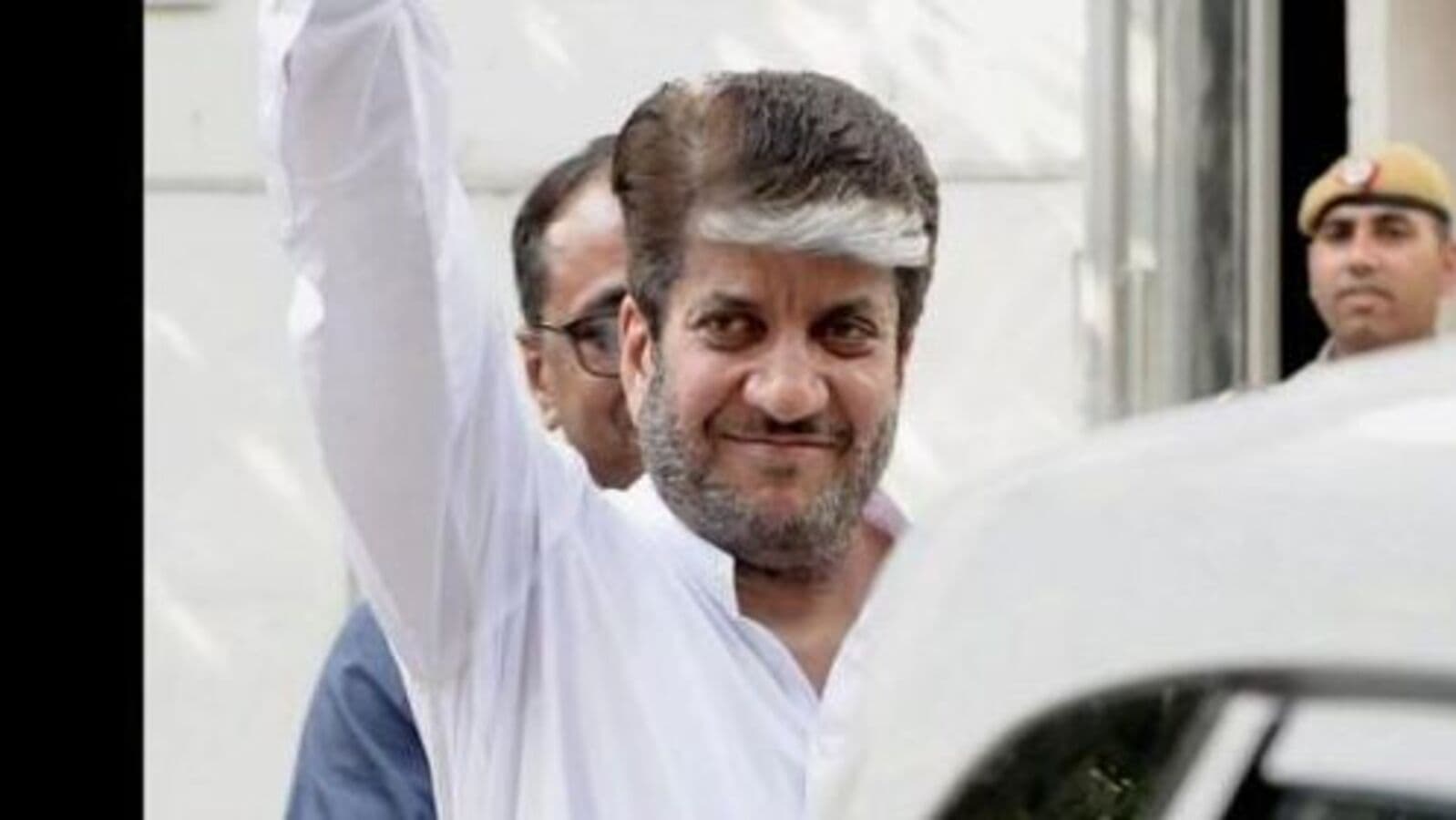
The Supreme Court grants bail to Kashmiri separatist leader Shabir Ahmed Shah, highlighting concerns over trial irregularities and national security implications.
GlipzoOn October 5, 2023, the Supreme Court of India made a significant ruling by granting bail to Shabir Ahmed Shah, a prominent Kashmiri separatist leader. The decision was reached during a hearing where the court examined arguments from both sides regarding Shah's involvement in a terror funding case. The bench, comprising Justices Vikram Nath and Sandeep Mehta, indicated that a comprehensive order would be forthcoming, along with stringent conditions attached to the bail.
This ruling marks a notable development in Shah's legal battle, which has been ongoing since his arrest by the National Investigation Agency (NIA) on June 4, 2019. The court's decision comes after a careful evaluation of the arguments presented by senior advocate Colin Gonsalves, who represented Shah, and senior advocate Siddharth Luthra, who defended the NIA's position.
The Supreme Court's decision follows the court's earlier actions, including a September 4, 2022 ruling that denied Shah's request for interim bail and prompted a notice to the NIA for its response to Shah's petition. The Delhi High Court had previously denied Shah bail on June 12, 2025, citing concerns over the risk of him engaging in further unlawful activities or influencing potential witnesses.
Shah's legal troubles stem from allegations that he played a pivotal role in facilitating a separatist movement in Jammu and Kashmir. The NIA's investigation, initiated in 2017, implicated Shah in a larger conspiracy to raise funds aimed at disrupting public order, including acts of violence such as stone-pelting, damaging property, and even attempts to wage war against the Indian government.
The allegations against Shah include: - Incitement of public sentiment in favor of Jammu and Kashmir's secession. - Eulogizing deceased militants as “martyrs” and paying tributes to them. - Engaging in hawala transactions to facilitate the transfer of funds, which were purportedly used for militant activities. - Raising funds through cross-Line of Control (LoC) trade, intended to support separatist agendas.
The NIA has consistently argued that Shah's activities pose a significant threat to national security, emphasizing the potential for him to continue his unlawful endeavors if released without stringent bail conditions.
Shabir Ahmed Shah, born on June 14, 1953, in Kadipora, Anantnag district, grew up in a business family and pursued education up to the higher secondary level. In 1998, he founded the Jammu and Kashmir Democratic Freedom Party (JKDFP), a political group advocating for Kashmiri separatism.
His political rhetoric has often drawn scrutiny, particularly his reference to the “Indian State and Jammu and Kashmir”, which the Solicitor General Tushar Mehta contested in court, arguing that it reflects a historical narrative that undermines India's sovereignty. This point of contention arose during Shah's bail hearing on October 31, 2025, when Mehta highlighted Shah's speeches from the 1990s to illustrate his stance.
The Supreme Court’s latest ruling highlights the complexities surrounding legal proceedings involving separatist leaders in the context of national security. Shah's case poses broader questions about the legal framework governing terror funding and the implications for individuals accused of facilitating separatist movements.
While the court's decision to grant bail signals a potential shift in Shah's legal fortunes, the strict conditions that accompany the bail are expected to keep him under close scrutiny. The Supreme Court's forthcoming detailed order will likely outline these conditions, which may include restrictions on his movement and communication.
The Supreme Court's decision to grant bail to Shabir Ahmed Shah reflects the ongoing tension between legal rights and national security concerns in India. As the situation develops, the implications for separatist movements in Kashmir and the broader political landscape will be closely monitored. Shah's case remains a pivotal point in discussions about terror funding, separatism, and the balance between civil liberties and security measures.
As the legal process unfolds, observers will be keen to see how the conditions imposed by the court will influence Shah's future activities and the ongoing discourse surrounding Kashmir's political status.

Tensions soar as the US and Iran engage in air strikes near the Strait of Hormuz, raising concerns over global oil supply and regional stability.
BBC World
Trump's international interventions face serious stalemates. What will this mean for U.S. foreign policy? Explore the critical challenges ahead.
Indian Express
Tehran denies resignation of President Masoud Pezeshkian amid claims of IRGC influence. What does this mean for Iran's political stability? Click to learn more!
Indian Express