
Image: BBC Business
Spotify introduces a 'Verified' badge to help users identify human artists, amid growing concerns over AI-generated music. Discover the implications!
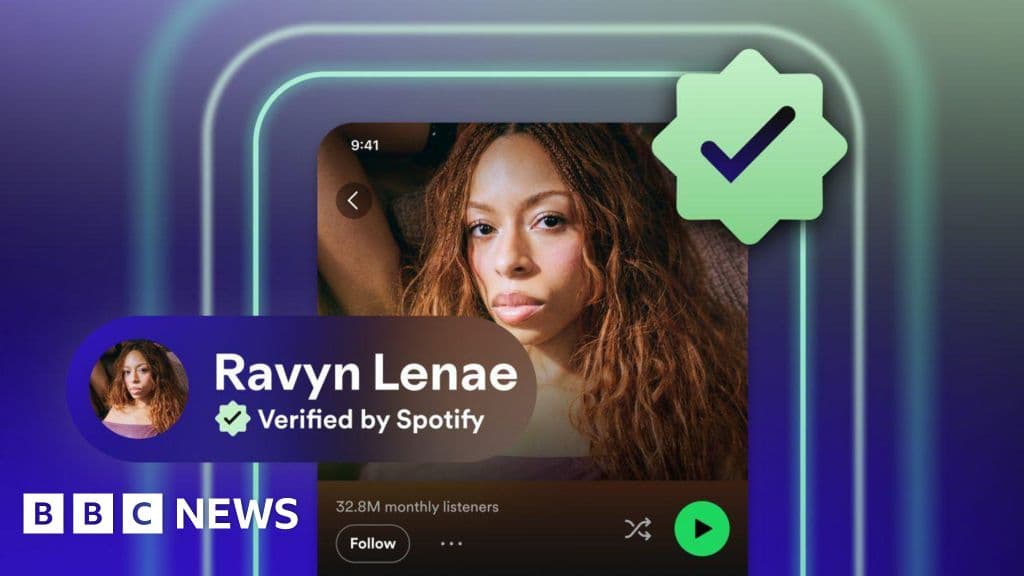
GlipzoIn a groundbreaking move, Spotify is set to launch a 'Verified' badge aimed at helping users distinguish between human and AI-generated artists on its platform. This development comes in response to growing concerns about the influx of AI-generated music and its impact on the music industry. With the introduction of this badge, fans will soon see a green checkmark alongside the label 'Verified by Spotify' next to the names of artists who meet specific authenticity standards.
This initiative is designed to enhance the listening experience, ensuring that loyal Spotify users can easily recognize genuine artists. The criteria for obtaining this badge include having linked social media accounts, consistent listener engagement, and other indicators that suggest a real artist is behind the profile. These could entail tour dates or merchandise sales, which position the artist as a legitimate contributor to the music scene.
Spotify claims that over 99% of artists that users actively search for will receive verification, translating to hundreds of thousands of identifiable artists. The music streaming giant emphasizes that the verification process will prioritize those who have made significant contributions to music culture and history. This approach aims to reduce the clutter of content farms that often populate digital music platforms.
As Spotify steps into the realm of artist verification, it is also grappling with the complexities of AI-generated music. While the badge aims to signify a human presence behind the artist name, critics argue that it does not guarantee that the music itself is not influenced or created by AI technologies. Ed Newton-Rex, a former AI executive and advocate for creator rights, raised concerns about the potential repercussions of the verification process. He suggested that some genuine human artists might not meet the verification criteria due to a lack of touring or merchandise sales, effectively punishing them in the process.
In contrast, Newton-Rex advocates for a system that explicitly labels AI-generated music, similar to features offered by other streaming services. This would provide clarity for listeners who wish to support human-made artistry and understand the context of the music they are consuming.
Nick Collins, a professor of music at the University of Durham, acknowledges that Spotify's new initiative is not surprising given the ongoing debates around generative AI in the music industry. He points out that the challenge lies in accurately labeling music itself rather than just the artists. "AI usage is not a binary position between 'entirely authentically handmade' and 'fully AI generated,' but can have lots of in-between cases," Collins explained.
This nuanced understanding indicates that while the verification badge is a step in the right direction, it may inadvertently favor established commercial artists over emerging independent talents. The tagging system could reinforce existing hierarchies in the music industry, potentially sidelining newer artists who lack the infrastructure to tour or sell merchandise.
Spotify has faced backlash in recent years for its handling of AI-generated content. Users have expressed their frustrations in community forums, demanding clearer labels for AI-produced songs. Many feel that they should not have to pay full price for content when the platform is increasingly filled with AI-generated tracks.
In 2023, then-CEO Daniel Ek stated that there were no plans to impose a complete ban on AI-generated content on the platform. This indicates a cautious approach, balancing innovation with the traditional music industry landscape. However, the recent case of the band The Velvet Sundown, which was accused of being AI-generated due to their lack of public appearances and interviews, highlights the confusion surrounding the authenticity of artists on the platform. They now identify as a "synthetic music project... with the support of artificial intelligence" and have garnered 126,000 monthly listeners.
As Spotify rolls out the 'Verified' badge, it will be interesting to see how users respond to this new feature and whether it achieves its goal of distinguishing between human artists and AI-generated content. The music landscape is evolving rapidly, fueled by advancements in technology, and Spotify's verification system may set a precedent for how other platforms approach artist authenticity.
Looking ahead, the streaming giant will need to navigate the delicate balance between fostering innovation and preserving the integrity of human artistry. Users should keep an eye on how Spotify adapts its verification criteria and whether it introduces additional measures to clarify the nature of the music available on its platform. As the debate surrounding AI in music continues, Spotify's decisions could have lasting implications for the industry as a whole.
Why It Matters: The introduction of the 'Verified' badge is a critical response to the rise of AI-generated music, aiming to protect the interests of human artists while enhancing transparency for listeners. As the music industry grapples with these challenges, Spotify's efforts could shape the future of digital music consumption.
---

Zahan Kapoor reveals an unconventional role in his upcoming film, signaling a significant shift from his breakout success in Black Warrant. What’s next for this rising star?
Bollywood Hungama
Discover how Vishal Jethwa is transforming his physique for Shakti Shalini, emphasizing the mental discipline behind peak fitness.
Bollywood Hungama
Discover the dark truths of urban development in Kammatipaadam, a film that reveals the often-overlooked sacrifices behind city growth.
Indian Express