
Image: BBC Business
Southern England faces significant rail disruptions due to a radio fault, affecting major services and causing delays of up to 90 minutes. Stay informed!
GlipzoSignificant disruptions are currently affecting rail services across southern England, with the situation expected to persist until the end of the day. This follows a radio communication failure that impacted several major rail operators including South Western Railway, CrossCountry, Southern, Gatwick Express, London Overground, Great Western Railway, and Thameslink.
The issue was initially reported at 08:53 BST and was resolved by 11:00 BST, but the repercussions of the fault are still being felt. National Rail has indicated that while services are starting to normalize, many routes may still encounter delays of up to 90 minutes or face cancellations.
Passengers are advised to remain vigilant, as the recovery process is ongoing, and major disruptions are expected to last until the end of the day. As of 5:00 PM, services operated by Southern, Thameslink, and Gatwick Express were reported to be back on track, while the London Overground had fully recovered by midday.
Despite some services returning to normal, travelers using South Western Railway, CrossCountry, and Great Western Railway during peak hours are still cautioned about potential disruptions. The rail operators have emphasized the need for passengers to check travel updates before heading out, as significant delays and cancellations continue to plague the system.
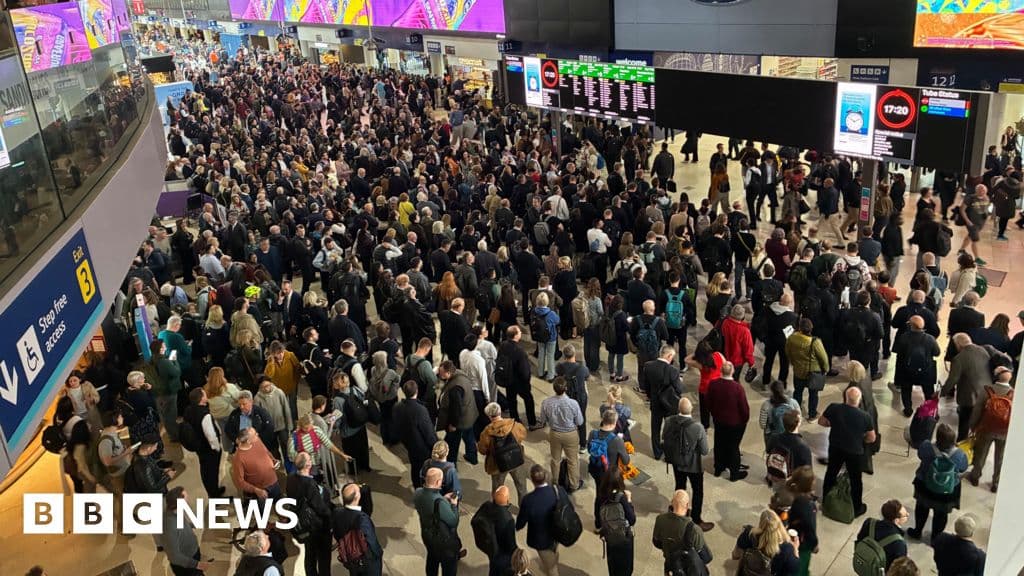
Transport for London is also advising commuters to steer clear of London Waterloo Station, which is experiencing long queues and congestion due to the rail disruptions combined with a separate track issue on the Jubilee Line.
The disruptions have not only affected travelers but have also created widespread frustration among passengers. The Southern Railway reported that its services to and from London Victoria were especially impacted. This includes the West Coastway route connecting Brighton and Portsmouth/Southampton, with delays stretching into the afternoon.
Gatwick Express also cautioned passengers about delays on routes to London Victoria, while Thameslink indicated that services to and from Brighton, Horsham, and Three Bridges would likely be impacted. The operator GTR, which manages these rail services, has issued apologies to customers for the disruption, particularly in the areas west of Chichester in West Sussex.
The impact of these delays is being felt by many commuters who rely on these services. Gemma Givans, a 28-year-old tattoo artist, expressed her frustration after her train from London Victoria was cancelled, stating, "If I don't work, I don't get paid. It is affecting me financially."
Meanwhile, Caleb Anderson, an 18-year-old sixth-form student, voiced his concern over being several hours late to college in Winchester due to delays stemming from Portsmouth. As he prepares for his upcoming A-Levels, he described the situation as "stressful."
Paul Barrick, a 50-year-old traveler from Basingstoke, shared his disappointment as well, explaining that delays meant he would miss his ferry to the Isle of Wight for a planned 30-mile coastal hike. "I'm not going to make it," he lamented.
National Rail has provided guidance for affected passengers regarding their entitlement to compensation for delayed or cancelled journeys. This includes instructions on how to claim back costs incurred due to the disruption. As travel continues to be hampered by these issues, the importance of staying informed remains critical for all rail users.
These ongoing disruptions highlight the fragility of transport infrastructure and the cascading effects of technical failures on daily commutes. The ramifications are not just logistical; they also have financial and emotional implications for travelers who depend on timely rail services.
As the day progresses, rail operators will continue to work on restoring normal services. Passengers are urged to keep an eye on updates and consider alternative transportation options where feasible. The coming days will reveal how quickly the rail network can rebound from this incident and whether further preventative measures will be implemented to avert similar disruptions in the future.
