
Image: Indian Express
Falta's repolling has turned into a three-way contest after TMC's Jahangir Khan withdraws, reshaping local political dynamics. What’s next for Falta?
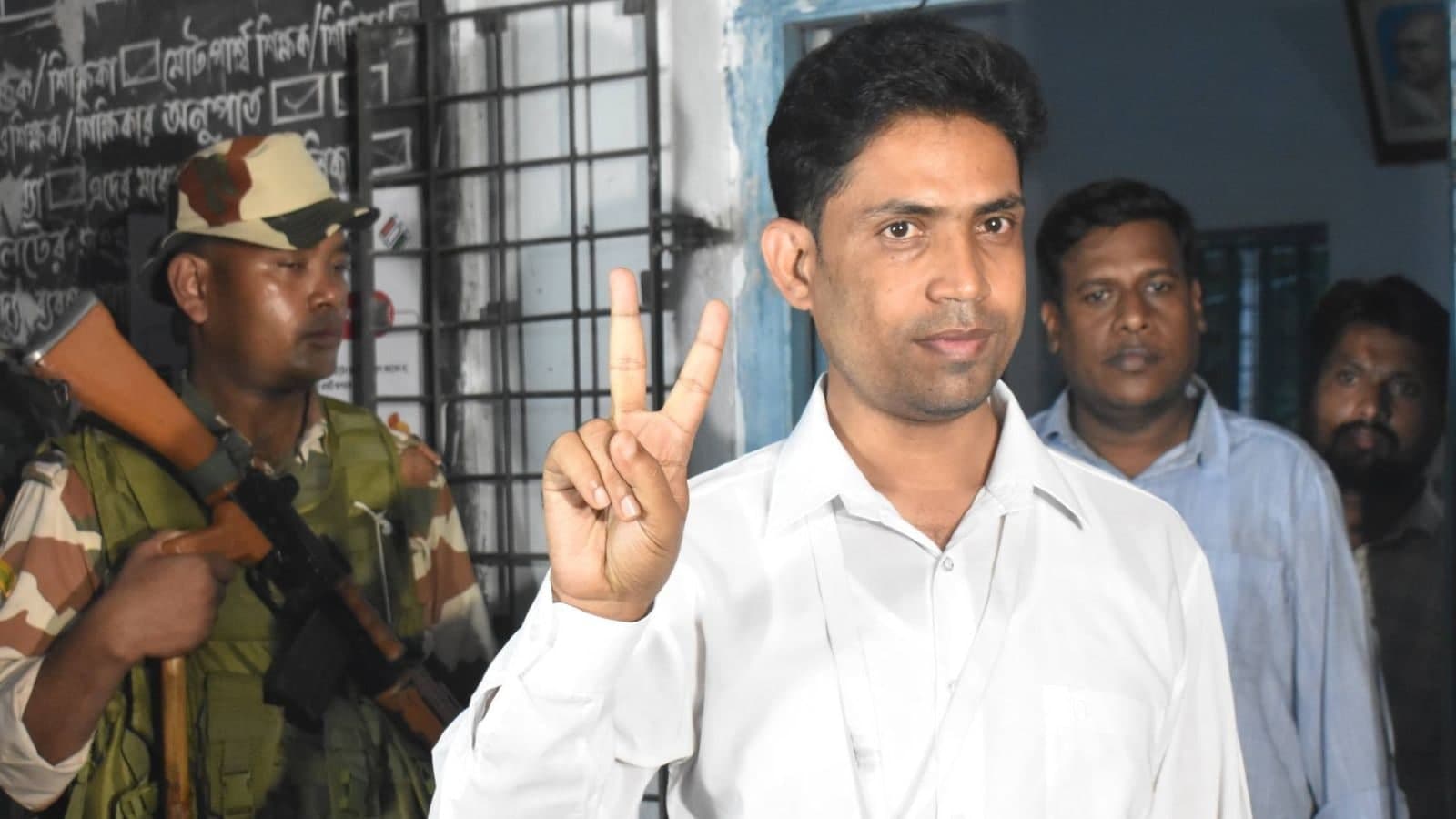
GlipzoThe Falta Assembly constituency in West Bengal is witnessing a significant political shift as repolling commenced on Thursday across all 285 polling booths. This renewed electoral exercise follows the 2026 West Bengal Assembly elections, marred by allegations of irregularities that necessitated a complete re-election. With the Trinamool Congress (TMC) leader Jahangir Khan unexpectedly withdrawing from the race, the competition has transformed into a three-way battle between the Bharatiya Janata Party (BJP), Congress, and CPI(M).
Polls opened at 7 am and will continue until 6 pm, with the counting of votes scheduled for May 24. The Election Commission of India (ECI) ordered this repolling after reports of severe electoral violations during the previous elections held on April 23 and 29. In addition to Falta, repolling is also taking place in 15 booths across the Paschim Magrahat and Diamond Harbour assembly segments.
The decision for repolling in Falta stems from the ECI's findings of significant electoral malpractice during the previous polling. The commission noted that numerous booths experienced substantial irregularities that compromised the democratic process. This prompted a reassessment of the election results in Falta, highlighting the importance of fair elections in maintaining public trust.
Khan's withdrawal came just days before the repoll, raising questions about his motives. During a press conference, he expressed a desire for peace, stability, and development in Falta, stating, “I want Falta to stay peaceful, healthy, and good.” He emphasized his ties to the region, declaring, “I am a son of Falta’s soil”, and mentioned the state government’s special development package aimed at enhancing the constituency.
Khan's announcement of his withdrawal has sparked mixed reactions within the political landscape. He claimed his decision was focused on the well-being of the locality, distancing himself from any party influence. “Let there be a Golden Falta, that was my dream,” he stated, indicating his commitment to local progress beyond personal political ambitions.
However, the TMC's stance on Khan's withdrawal has been complex. While Khan framed his exit as a personal choice, TMC officials clarified that he did not consult the party before making this decision. Saayoni Ghosh, a TMC Member of Parliament, suggested that Khan might have felt unsafe due to threats he previously reported, which led him to seek court protection. “Even if this election were to take place, it would not have been a free and fair election,” Ghosh asserted, hinting that Khan's concerns about safety played a significant role in his decision.
With Khan out of the race, the political dynamics in Falta have changed dramatically. The contest now features BJP's Debangshu Panda, CPI(M)’s Shambhu Kurmi, and Congress’s Abdur Razzak vying for the assembly seat. This three-way competition could significantly impact voter turnout and preferences in the region.
The Aam Janata Unnayan Party (AJUP) leader, Humayun Kabir, criticized Khan's decision, questioning his earlier statements about standing firm against external pressures. “Before this, he said that he will not bow down, but then why did he bow down now?” Kabir remarked, highlighting the perception of political instability and the potential implications of Khan’s exit for the local electorate.
As the repolling unfolds, the outcome in Falta may set the stage for broader implications in West Bengal’s political landscape. With the TMC stepping back from this race, the results could inform future strategies for all parties involved, particularly the TMC, which must navigate the consequences of internal strife and external pressures.
The success of the remaining candidates will depend heavily on their ability to resonate with voters who may feel uncertain about the political environment following Khan's dramatic exit. Additionally, the ECI’s response to the allegations of past electoral misconduct will be closely scrutinized, as it could influence public perception of the electoral process moving forward.
Falta's political climate is now more volatile than ever, with heightened stakes for the parties involved. As the community engages with the repolling process, how candidates address local issues and concerns will be critical in shaping the future of governance in Falta.
In the coming weeks, observers should watch for developments related to the counting of votes, potential reactions from the TMC regarding Khan’s withdrawal, and how the newly configured electoral landscape influences voter sentiment as the region prepares for the upcoming elections.
This unexpected turn in Falta not only highlights the complexities of state politics but also underscores the need for transparency and safety in the electoral process, essential for fostering a healthy democratic environment.

Tensions soar as the US and Iran engage in air strikes near the Strait of Hormuz, raising concerns over global oil supply and regional stability.
BBC World
Trump's international interventions face serious stalemates. What will this mean for U.S. foreign policy? Explore the critical challenges ahead.
Indian Express
Tehran denies resignation of President Masoud Pezeshkian amid claims of IRGC influence. What does this mean for Iran's political stability? Click to learn more!
Indian Express