
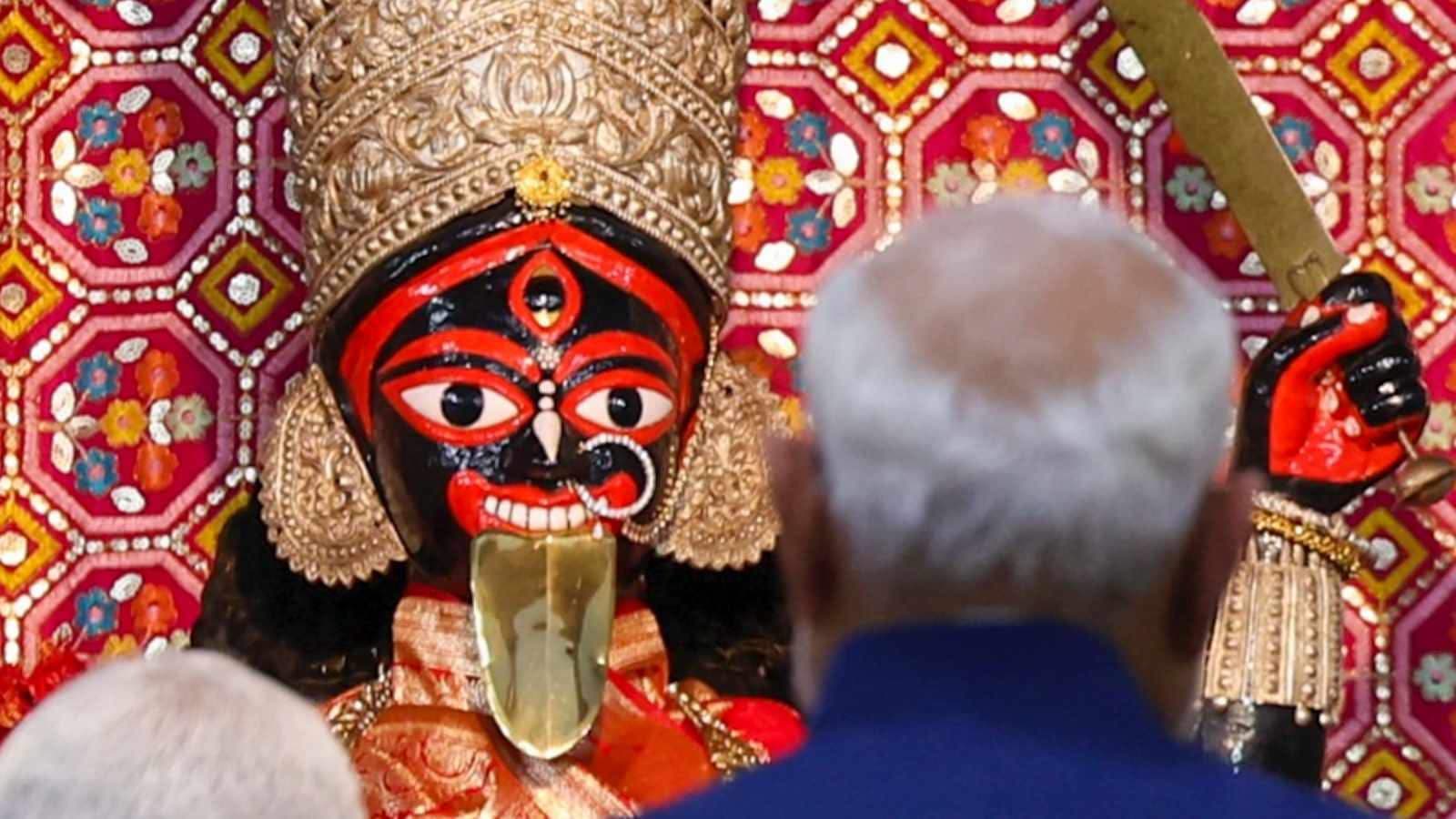
Image: Indian Express
Discover why PM Modi's visit to Thanthania Kalibari sparked viral moments and political significance in West Bengal's upcoming elections.
GlipzoOn a notable day in Kolkata, Prime Minister Narendra Modi captured hearts and headlines as he paid homage at the Thanthania Kalibari temple on Sunday, a significant stop during his ongoing election campaign in West Bengal. This temple, revered among locals, is dedicated to Goddess Kali, specifically worshipped here as Siddheswari Kali. The moment resonated with many as it showcased Modi's deep connection to the cultural and spiritual fabric of the region.
Just before his much-anticipated roadshow, Modi’s visit to the temple created a buzz not only for its spiritual significance but also for the intimate and relatable gestures he displayed. In a now-famous video that has taken social media by storm, the Prime Minister was seen purchasing flowers from a street vendor, a moment that many found refreshing and down-to-earth.
Raju Maity, the 37-year-old flower seller, who has been part of the family business for three generations, described the encounter. “He (PM Modi) did not engage in conversation but simply requested a ‘dali’ for the puja. I crafted a thali with hibiscus, tuberose, and lotus flowers,” Maity shared. The Prime Minister handed him 300 rupees for the flowers, illustrating a simple yet profound moment of connection.
In addition to the flowers, PM Modi indulged in some local sweets, purchasing ‘khirer pyara’ from nearby vendor Shambhu Adak for 200 rupees. After receiving the sweets, Modi’s parting words, “bhalo theko” (stay well), added a touch of warmth to the encounter, endearing him further to the public.
During his later public address at an election rally, PM Modi emphasized the temple's pivotal role in the cultural identity of West Bengal. His visit comes at a critical time, as the BJP works to counteract allegations from the Trinamool Congress party, which has branded it as “anti-Bengali.” In a strategic move, BJP leaders have begun to chant “Jai Maa Kali” alongside their traditional “Jai Shri Ram” slogans, reinforcing their commitment to local traditions and sentiments.
This move is part of a broader strategy by the BJP, as reflected in the visits of leaders like Amit Shah to the same temple in December. In a similar vein, other BJP figures, including Tapas Roy, Suvendu Adhikari, and Bijay Ojha, marked the recent Bengali New Year by visiting the Firangi Kalibari temple. These actions highlight the party's attempts to integrate itself into the cultural milieu of West Bengal ahead of the phase-2 of the Assembly elections.
The Thanthania Kalibari temple is steeped in history, with its origins tracing back to around 1703 AD, although the exact timeline remains a topic of debate. Legend has it that a celibate priest named Udaynarayan, who belonged to a tantric order, established the Kali idol on an earthen mound, leading to the creation of the temple. The idol is notably positioned atop five human skulls, known as the ‘panchamundi asan’.
After Udaynarayan’s passing, a Brahmin from the Haldar caste took on the priestly duties, and the temple structure was built thereafter. The temple's history is further enriched by a marble plaque that credits its construction to Babu Shankar Chandra Ghosh in the early 1800s.
Interestingly, the temple’s name, Thanthania, is believed to derive from the sound of a bell that was rung to warn nearby settlements of dacoit attacks. This historical context adds layers to the temple's significance, making it a focal point of local heritage.
Among the temple's distinctive customs is the offering of ‘daab chingri,’ a traditional Bengali dish featuring prawns cooked in coconut. Shambhu Adak, the sweet vendor, noted that this ritual was believed to have been initiated by the spiritual leader Ramakrishna Paramhansa, further intertwining the temple with the spiritual legacy of Bengal.
As PM Modi’s visit continues to resonate across social media platforms, it’s clear that such gestures not only reflect his political strategies but also reinforce his connection to the local populace.
With the West Bengal Assembly elections approaching, PM Modi's engagement with local customs and traditions may play a pivotal role in shaping voter sentiments. As the BJP aims to solidify its presence in a region historically dominated by the Trinamool Congress, these cultural connections could be key to their electoral success.
Looking forward, it will be essential to observe how such interactions influence public opinion and whether they translate into electoral gains for the BJP. The interplay of culture and politics in this vibrant state promises to be a compelling narrative in the lead-up to the elections.
In summary, PM Modi’s visit to Thanthania Kalibari serves not only as a spiritual homage but also as a calculated political move aimed at reinforcing the BJP's connection to West Bengal's rich cultural tapestry. The coming weeks will reveal how effectively these efforts resonate with the electorate and impact the political landscape.

Tensions soar as the US and Iran engage in air strikes near the Strait of Hormuz, raising concerns over global oil supply and regional stability.
BBC World
Trump's international interventions face serious stalemates. What will this mean for U.S. foreign policy? Explore the critical challenges ahead.
Indian Express
Tehran denies resignation of President Masoud Pezeshkian amid claims of IRGC influence. What does this mean for Iran's political stability? Click to learn more!
Indian Express