
Image: BBC World
Russia's Victory Day parade omits tanks for the first time, signaling deeper issues in the ongoing Ukraine conflict. What does this mean for Putin and the nation?
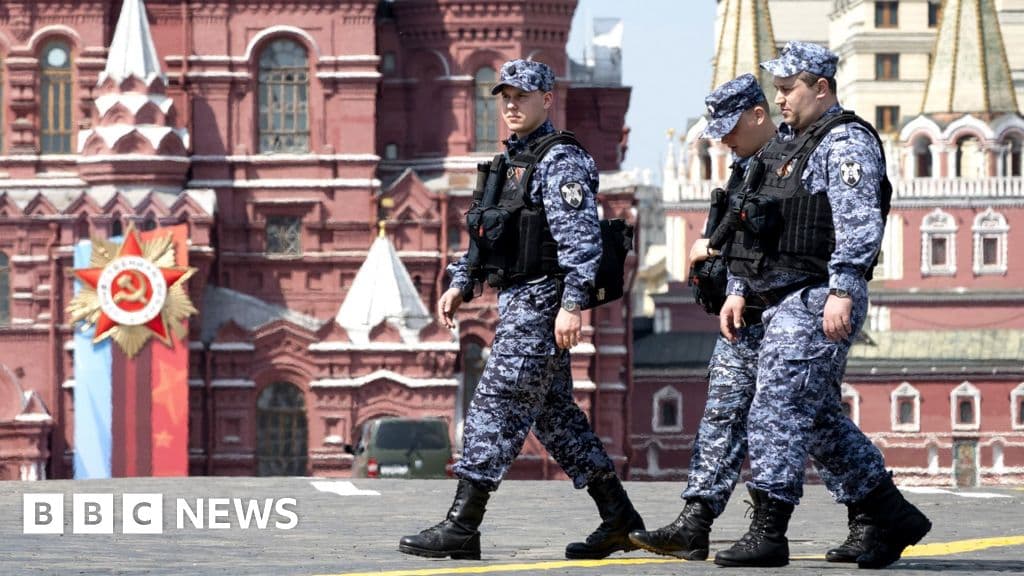
GlipzoEvery year on May 9, Russia commemorates Victory Day, a national holiday celebrating the defeat of Nazi Germany. The streets of Moscow are usually filled with military might, showcasing an array of tanks, missiles, and soldiers. However, this year, something unprecedented is unfolding. For the first time in nearly two decades, the iconic Red Square will host its annual parade without any military hardware. Just soldiers will march in front of the public, raising eyebrows and igniting discussions about the state of Russia's military campaign in Ukraine.
The word “Pobeda,” meaning victory, is plastered across giant banners and screens around Red Square, but the absence of tanks reveals a stark message about the current situation. Vladimir Putin's regime has long used the narrative of the Soviet Union's triumph in World War II to bolster national pride and justify ongoing military actions. However, the scaled-back celebration in 2023 points to a troubling reality: the war in Ukraine is not progressing as planned.
Russian politician Yevgeny Popov candidly remarked, “Our tanks are busy right now. They are fighting. We need them more on the battlefield than on Red Square.” This statement encapsulates the Kremlin's rationale for the absence of military equipment during the festivities. Yet, the question lingers: if the war has been ongoing for five years, why is Russia scaling back its display of strength?
Popov’s comments reflect a deep-seated anxiety among Russian officials. With Ukraine pushing back against the invasion, the Kremlin is now faced with an uncomfortable truth: if military strength is needed on the front lines, the grand displays of power in Moscow become secondary. The lack of tanks at such a significant event could be perceived as a sign of weakness.
Adding to the urgency surrounding the parade, recent events have highlighted the risks of the ongoing conflict. On May 2, a Ukrainian missile and drone strike resulted in the deaths of two individuals and injuries to over 30 others in the Russian city of Cheboksary. Additionally, a drone attack the previous night breached Moscow's air defenses, damaging a luxury apartment building near the Kremlin. While the damage was substantial, thankfully, there were no casualties. Such incidents contribute to a growing narrative of vulnerability within Russia's borders, fueling fears of further escalation.
The Kremlin has pointed to these incidents as justification for the reduced parade, with Dmitry Peskov, Putin's spokesperson, labeling the situation a “terrorist threat” from Ukraine. In response, the Russian defense ministry has threatened retaliatory strikes on Kyiv if Moscow comes under attack during the festivities.
Amidst these heightened tensions, public sentiment regarding the absence of tanks at the parade is mixed. Conversations with ordinary Russians reveal a range of opinions:
This year’s parade, while still significant, is a reminder of the challenges facing Russia. The absence of military hardware serves as a metaphor for a country grappling with the complexities of a prolonged war.
As of January 2023, the conflict in Ukraine has officially exceeded the duration of the Soviet Union's fight against Nazi Germany during the Great Patriotic War (1941-1945). This historical milestone raises questions about the long-term implications of the ongoing war and how it shapes the Russian identity.
Polling data, including from state-run agencies, indicates that Putin's approval ratings are on the decline. The once-confident leader, who frequently appeared in military attire discussing strategies, has become less visible this year. Conversations with average Russians suggest growing war fatigue, concerns about rising living costs, and discontent with increasing internet restrictions imposed by the state.
As the situation continues to evolve, several critical elements will shape the future of Russia's military and political landscape: - Increased domestic pressure: With public sentiment shifting, the Kremlin may face mounting pressure to adapt its strategies or even reconsider its approach to the war. - International reactions: The ongoing conflict and its impact on global geopolitics will resonate beyond Russia and Ukraine, influencing international relations and military alliances. - Long-term consequences for Putin: The implications of a prolonged conflict could lead to significant changes within Russia, affecting Putin's grip on power and the country’s future direction.
The 2023 Victory Day parade, with its notable absence of military hardware, serves as a critical indicator of Russia's current state and future trajectory. As the war rages on, all eyes will remain on Moscow and the evolving dynamics of this complex conflict.

Tensions soar as the US and Iran engage in air strikes near the Strait of Hormuz, raising concerns over global oil supply and regional stability.
BBC World
Trump's international interventions face serious stalemates. What will this mean for U.S. foreign policy? Explore the critical challenges ahead.
Indian Express
Tehran denies resignation of President Masoud Pezeshkian amid claims of IRGC influence. What does this mean for Iran's political stability? Click to learn more!
Indian Express