
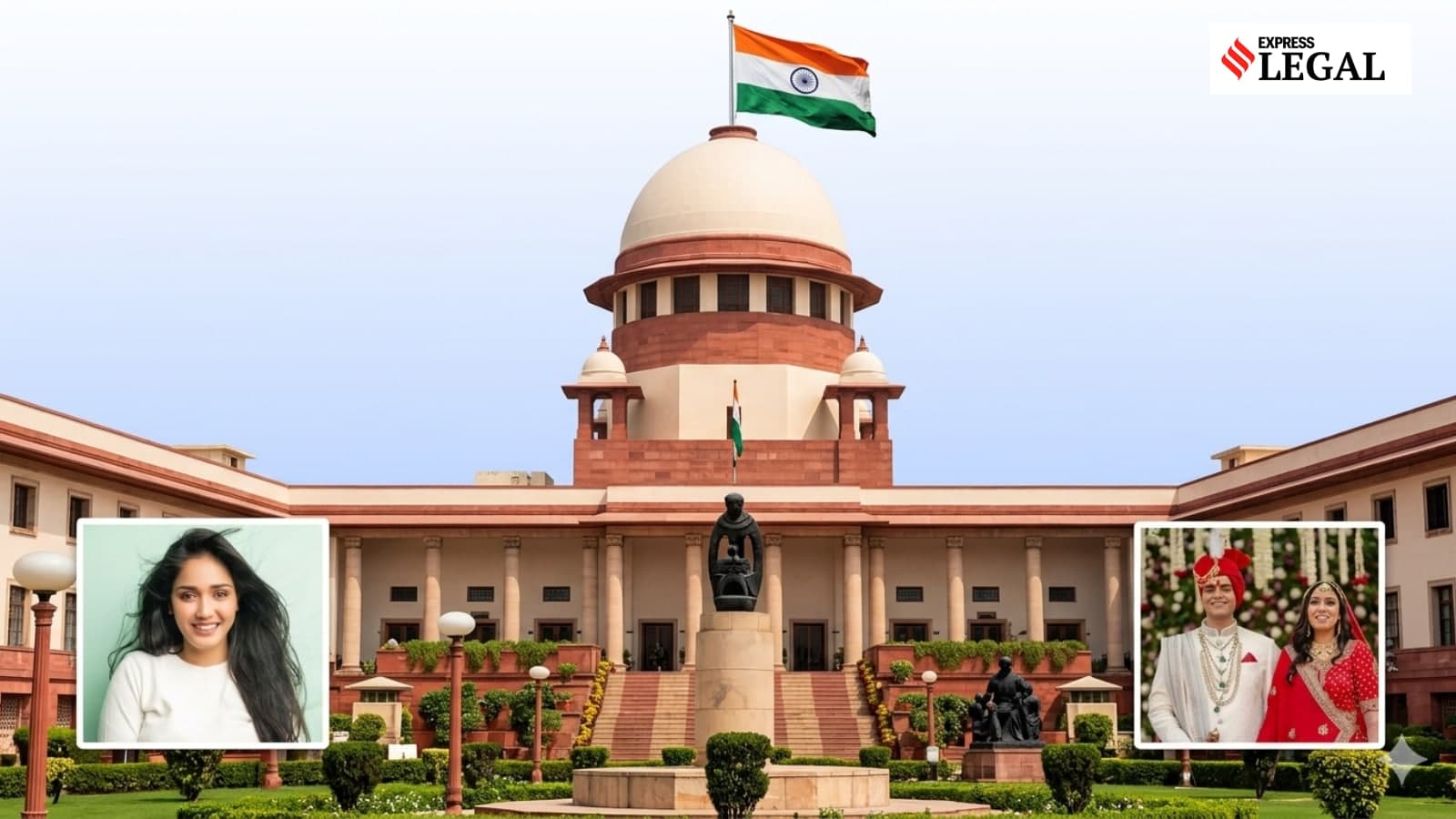
Image: Indian Express
Uncover the shocking details of Twisha Sharma's death as the Supreme Court hears the case. Will justice be served in this high-profile investigation?
GlipzoThe case of Twisha Sharma, a 33-year-old woman found dead under mysterious circumstances in her home, has ignited a wave of national concern and outrage. Discovered on May 12, 2026, just six months after her marriage to Samarth Singh, the incident has escalated from a personal tragedy into a critical legal battle, now capturing the attention of the Supreme Court of India.
Twisha's body was located in her matrimonial home in Bhopal, raising questions about domestic violence, systemic bias, and the integrity of law enforcement. The shocking revelations that emerged surrounding her death have prompted widespread demands for justice and accountability.
The background of this case is particularly troubling. Twisha’s husband, Samarth Singh, is the son of Giribala Singh, a retired district and sessions judge. This familial connection has fueled suspicions that the local police failed to properly investigate the incident. Allegations have surfaced that crucial evidence was mishandled, including claims of tampered CCTV footage and a lack of prompt forensic analysis.
Given these circumstances, Twisha's family has expressed deep frustration and distrust towards the Bhopal police, accusing them of deliberately obstructing justice. The situation escalated to the point where the Central Bureau of Investigation (CBI) was called in, alongside a second autopsy conducted by a team from the prestigious AIIMS Delhi. The Supreme Court has also taken notice, initiating suo motu proceedings due to concerns over potential institutional bias.
The timeline of events in the Twisha Sharma case reflects a series of alarming developments:
A postmortem examination conducted at AIIMS Bhopal determined the cause of death to be asphyxia due to hanging; however, controversies quickly erupted. The police failed to present the nylon gym rope allegedly used in the incident at the time of the autopsy, instead introducing it later, which raised eyebrows. The Bhopal court subsequently dismissed a request from Twisha’s family for a second autopsy, further complicating the family's quest for clarity and justice.
Following the initial investigations, the Bhopal police registered an FIR against Samarth Singh for charges including matrimonial cruelty and dowry death. After the FIR was filed, Singh went into hiding, prompting the police to initially offer a Rs 10,000 reward, which was later increased to Rs 30,000 for information leading to his arrest. Meanwhile, Giribala Singh successfully obtained anticipatory bail, intensifying public outrage.
In a bid to clear his name, Samarth Singh challenged the denial of his bail plea in the Madhya Pradesh High Court, arguing that the allegations against him were based on conjecture rather than facts. He also countered the dowry claims, asserting that significant amounts of money had been transferred to Twisha’s account by him and his mother.
As the case progressed, a torrent of digital evidence began to surface. Social media saw leaks of WhatsApp chats, Call Detail Records (CDRs), and CCTV footage, leading to a highly charged public discourse. Twisha’s family accused Giribala Singh of manipulating the investigation, alleging that selective, doctored footage was released to sway public opinion.
On May 19, a Bhopal sessions court denied Samarth Singh’s plea for anticipatory bail, emphasizing that the nature of Twisha’s death, occurring within six months of their marriage, warranted serious consideration of the circumstances.
The Twisha Sharma case is emblematic of deeper issues within the Indian judicial and law enforcement systems, particularly concerning cases of domestic violence and dowry-related deaths. The involvement of high-profile individuals has raised questions about the influence of social status on legal proceedings. As this case continues to unfold, it is crucial to monitor how the Supreme Court addresses the allegations of bias and the protection of evidence.
This case is not just about one woman's tragic demise; it reflects systemic issues that plague many families across India. The outpouring of public support for Twisha's family signifies a collective demand for change in how domestic violence cases are handled. The Supreme Court's upcoming hearing will be pivotal in determining the trajectory of this case and could set important precedents for future investigations.
As the Supreme Court prepares to hear the case, the nation watches closely. The outcome could lead to significant legal reforms regarding domestic violence and justice for victims. With the CBI now involved and public pressure mounting, it is essential to see whether the investigation will yield a transparent and accountable process.
The Twisha Sharma case serves as a reminder of the urgent need for reform in the legal treatment of domestic violence, and the proceedings set to unfold in the Supreme Court could pave the way for much-needed changes in the system.

Tensions soar as the US and Iran engage in air strikes near the Strait of Hormuz, raising concerns over global oil supply and regional stability.
BBC World
Trump's international interventions face serious stalemates. What will this mean for U.S. foreign policy? Explore the critical challenges ahead.
Indian Express
Tehran denies resignation of President Masoud Pezeshkian amid claims of IRGC influence. What does this mean for Iran's political stability? Click to learn more!
Indian Express