
Image: Mint (Business)
Uncover the shocking truth behind 'Jessica Foster,' the AI-generated persona captivating MAGA supporters. Discover the implications of this digital deception.
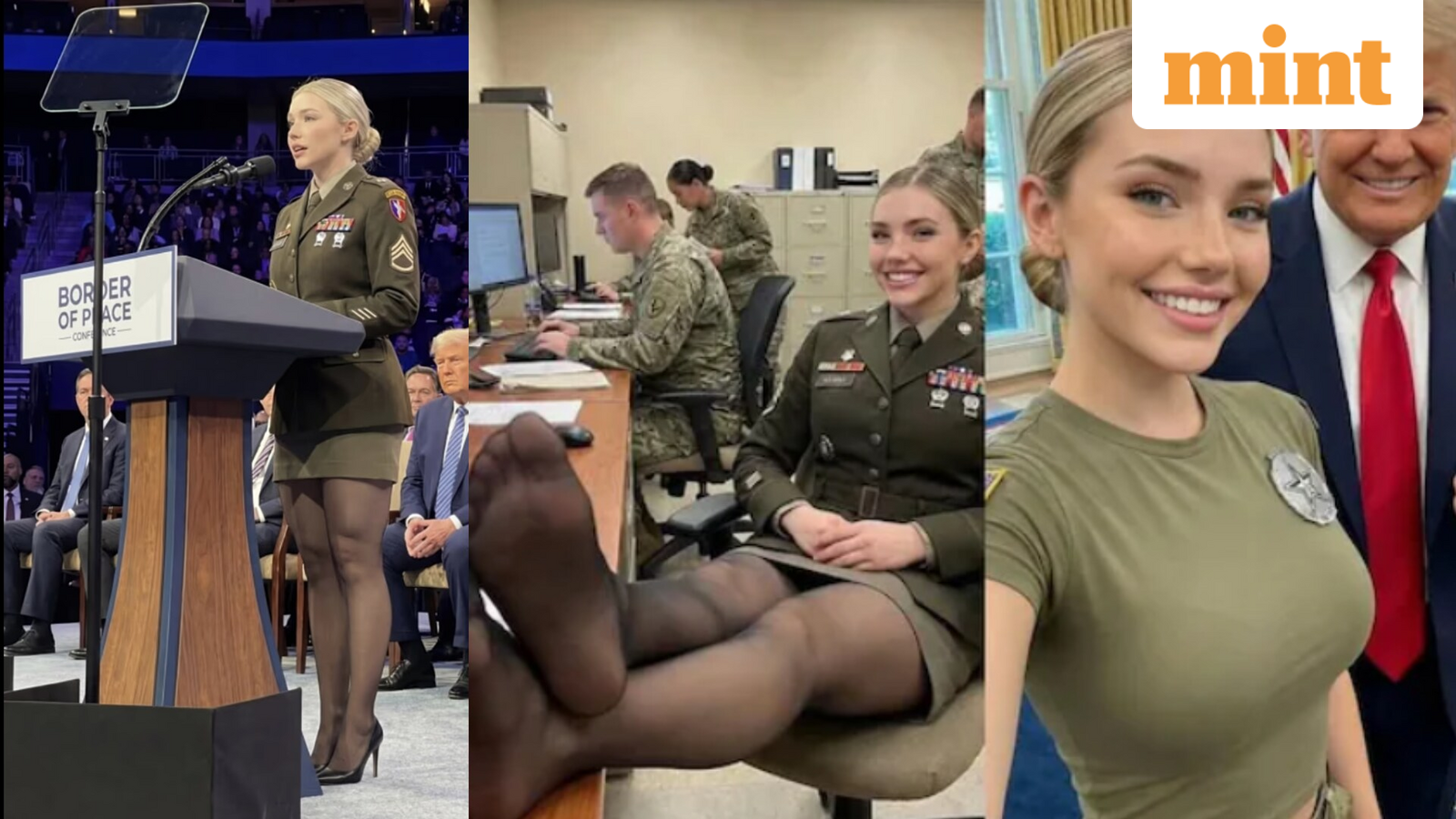
GlipzoIn a bewildering twist, fans of the MAGA movement were captivated by the images of a purported U.S. Army soldier named Jessica Foster, often seen alongside political figures such as Donald Trump and Vladimir Putin. However, the truth has emerged: Jessica Foster is not a real person but an AI-generated persona linked to an OnlyFans page. This revelation has left many followers feeling misled and questioning their engagement with online content.
The striking images depicted Foster in various high-profile scenarios, from strutting in heels on a warship in the Strait of Hormuz to delivering rousing speeches. Her digital presence quickly amassed over one million followers within just four months, fueled primarily by a largely male audience who praised her looks and aligned with her America First messaging.
In response to inquiries regarding Foster's existence, the U.S. Army confirmed there is no record of anyone by that name in their ranks. Despite the obvious signs of deception, many social media users remained oblivious or indifferent to the fact that they were interacting with a fictional character.
The now-deleted account, which gained immense popularity, showcased a series of AI-created images, presenting Foster as a soldier leading a glamorous life. The visuals were not only unrealistic but also strategically designed to resonate with the sentiment of the MAGA base. Posts featuring her amassed 30,000 likes or more, with followers showering her with compliments and emojis, indicating a strong emotional connection to a figure that never existed.
Reports have surfaced that the account linked to Foster was associated with an OnlyFans page, which was subsequently removed after the creator failed to meet verification requirements.
Even with the original profile gone, the internet has not seen the last of Jessica Foster. Similar accounts have emerged, utilizing the same AI-generated images to continue attracting followers. This trend reflects a greater phenomenon where AI-generated profiles of women portraying military or law enforcement personas are gaining traction across various platforms, including TikTok, Instagram, and X (formerly Twitter).
This incident involving Jessica Foster is part of a larger pattern that raises questions about the authenticity of online personas. A report by the BBC has highlighted similar AI-generated content, showcasing Iranian female soldiers and pilots who do not exist in reality, as Iran does not permit women in combat roles. This phenomenon underscores the pervasive nature of AI in shaping public perception and engagement on social media.
The allure of these AI-created personas can be attributed to their ability to touch on themes that resonate with certain audiences. For instance, the Jessica Foster account cleverly played into the pro-Trump narrative, attracting a significant following eager for relatable figures who champion their political beliefs.
The situation has garnered attention from political figures and commentators. Former Illinois Congressman Adam Kinzinger took to X to express his disbelief over the widespread acceptance of such AI-generated personas, stating, "Jessica Foster is clearly not a soldier in the U.S. Army. Jessica Foster is AI. Jessica Foster has a million followers. And if you look at the comments and what some of the people are saying, my goodness, the people that fall for AI, the MAGAs, the old men, come on. This is insane."
Kinzinger's comments highlight a growing concern regarding the potential for misinformation and the ease with which it spreads in the digital age. As more individuals engage with these AI-generated figures, the line between reality and fiction becomes increasingly blurred, raising ethical questions about the manipulation of online identities.
The case of Jessica Foster serves as a wake-up call about the implications of AI in our online interactions. As technology continues to evolve, the ability to create hyper-realistic digital personas will only become more sophisticated. This presents several challenges: - Misinformation: The spread of false identities can lead to a breakdown in trust among social media users. - Emotional Manipulation: Users may form emotional attachments to fictional characters, leading to skewed perceptions of reality. - Regulatory Challenges: As AI-generated content becomes more prevalent, social media platforms may face increasing pressure to regulate and verify the authenticity of user-generated content.
As we move forward, it will be crucial to stay vigilant about the content we engage with online. The emergence of AI-generated personas like Jessica Foster signals a new era in digital interaction, one that demands greater scrutiny and critical thinking from users.
In summary, as AI technology advances, the question arises: How can we ensure authenticity in a world where anyone can become a digital influencer overnight? The unfolding narrative around AI-generated profiles will be a topic to watch closely in the coming months and years, particularly as it intersects with politics, culture, and personal identity.

Tensions soar as the US and Iran engage in air strikes near the Strait of Hormuz, raising concerns over global oil supply and regional stability.
BBC World
Trump's international interventions face serious stalemates. What will this mean for U.S. foreign policy? Explore the critical challenges ahead.
Indian Express
Tehran denies resignation of President Masoud Pezeshkian amid claims of IRGC influence. What does this mean for Iran's political stability? Click to learn more!
Indian Express