
Image: Indian Express
Trump calls for Middle Eastern nations to join the Abraham Accords, a pivotal move amid rising tensions with Iran and fallout from the Gaza conflict.
GlipzoOn May 25, former U.S. President Donald Trump urged several Middle Eastern nations, including Saudi Arabia, Qatar, Pakistan, Egypt, Turkey, and Jordan, to join the Abraham Accords. This initiative aims to normalize relations between these countries and Israel, a key U.S. ally. In a recent social media statement, Trump emphasized the urgency of this proposal, suggesting that it should be mandatory for these nations to sign the accords simultaneously.
> "After all the work done by the United States to try and pull this very complex puzzle together, it should be mandatory that all of these Countries...sign onto the Abraham Accords," Trump stated.
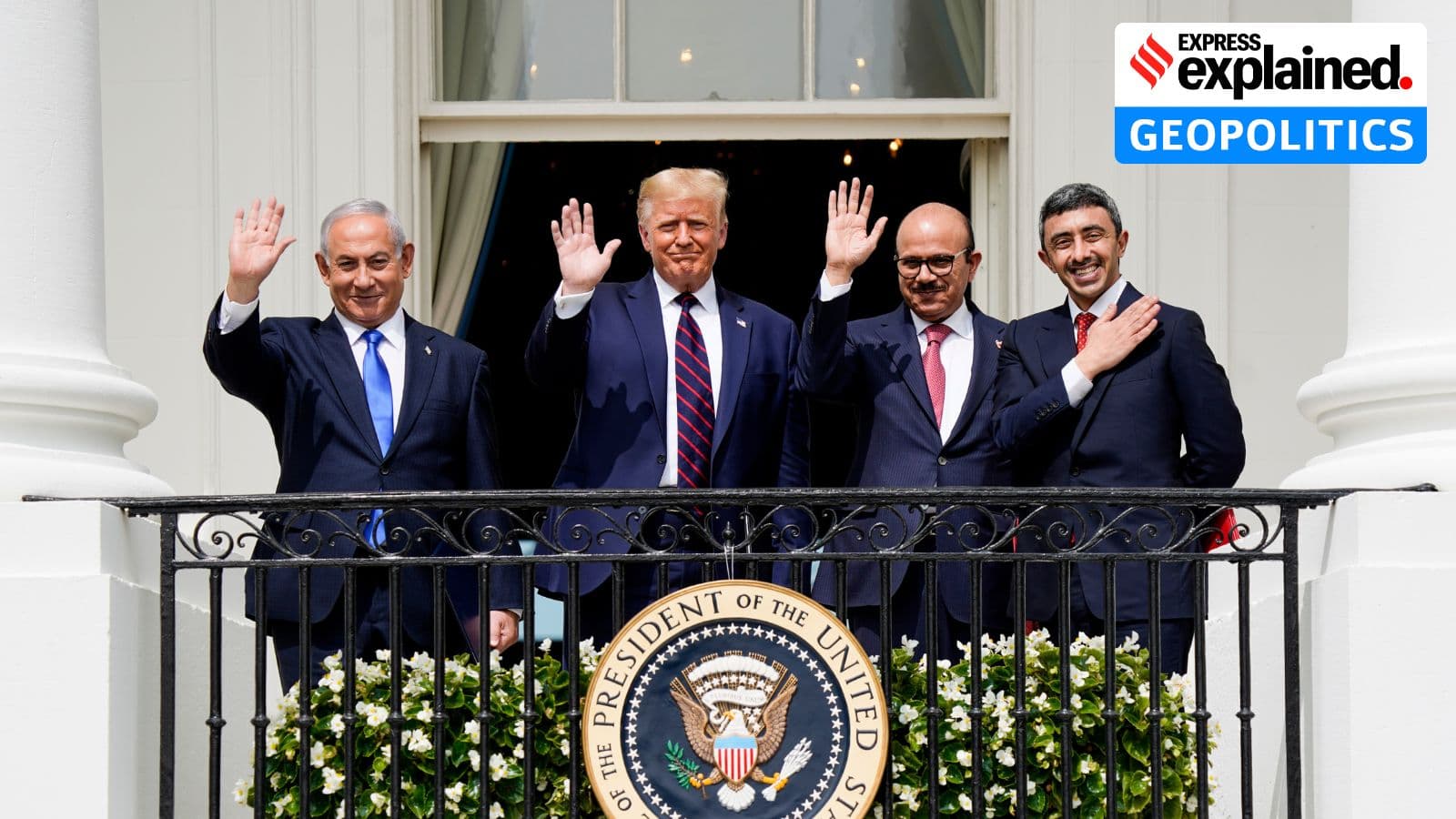
The Abraham Accords, introduced during Trump’s first term in 2020, marked a significant shift in Middle Eastern diplomacy, promoting peace agreements between Israel and several Muslim-majority nations. However, the proposal arrives during a tumultuous period marked by rising tensions in the region, particularly due to the ongoing conflict between Israel and Gaza, and escalating hostilities with Iran. This context makes Trump's appeal particularly contentious.
The Abraham Accords symbolize a groundbreaking effort to foster peace and cooperation between Israel and its Arab neighbors. Named after the biblical figure revered in both Islam and Judaism, these agreements were pitched by the U.S. as a framework for achieving regional stability and economic collaboration.
Initially, countries like the United Arab Emirates (UAE), Bahrain, and Morocco, which had previously been staunch opponents of relations with Israel, began normalizing ties. Notably, Bahrain and UAE were among the first to officially join the accords, and since then, nations like Somaliland and Kazakhstan have also expressed interest. However, despite its status as a key ally of the U.S., Saudi Arabia has yet to sign the accords. The kingdom insists that Israel must first cease its military actions in Gaza and commit to a credible two-state solution, leading to an independent Palestinian state.
In a notable response to Trump’s latest proposal, Pakistan, which has been mediating talks between the U.S. and Iran, officially declined the invitation to join the Abraham Accords. Khawaja Asif, Pakistan's Defence Minister, articulated the country’s position, stating that aligning with the accords would conflict with Pakistan's core principles, particularly regarding the recognition of Palestine as a sovereign nation.
The rejection underscores the complexities of Middle Eastern politics, especially in light of the recent military actions taken by Israel against Gaza. As tensions intensify across the Arab world, Pakistan's stance reflects a broader sentiment of solidarity with the Palestinian cause, challenging Trump's narrative at a time when regional stability is tenuous.
Trump's renewed focus on the Abraham Accords comes at a critical time for his political image. With the U.S. engaged in an ongoing conflict with Iran, Trump is attempting to leverage the accords as a symbol of his foreign policy achievements. If successful, this could enhance his reputation as a skilled negotiator and help him regain control over a situation that appears increasingly chaotic.
However, the backdrop of rising violence in Gaza and public discontent regarding U.S. military actions complicates his efforts. A recent Pew Research Center poll indicated that 62% of Americans disapprove of Trump's handling of military operations against Iran, a sentiment that has remained consistent since March. Furthermore, 51% of respondents believe that U.S. military actions are not yielding positive results, reflecting growing skepticism among the electorate.
The implications of these developments extend beyond the Middle East. Rising oil and gas prices, driven by geopolitical uncertainties, are starting to weigh on the U.S. economy. The closure of the Strait of Hormuz, a crucial maritime passage for oil shipments, has triggered concerns about inflation and overall economic stability. The Gallup Economic Confidence Index recently plummeted to -45, its lowest since October 2022, indicating a significant decline in public confidence regarding economic conditions.
As public dissatisfaction mounts, Trump's administration faces increasing pressure to address these economic challenges while navigating complex international relationships. The intersection of domestic opinion and foreign policy will be a pivotal factor in shaping the trajectory of U.S. engagement in the region and the potential success of the Abraham Accords.
Looking forward, the prospects of the Abraham Accords and their expansion hinge on multiple factors. Key questions arise: Will Saudi Arabia shift its stance and sign the accords? Can Trump regain public trust amid rising discontent over military actions? And how will the U.S. manage its relationship with Iran while attempting to promote regional peace?
As the situation continues to evolve, it will be crucial to monitor the reactions of Middle Eastern nations, the impact of public opinion on U.S. foreign policy, and the broader implications for regional stability. The future of the Abraham Accords may very well depend on these dynamics as leaders navigate a complex and shifting geopolitical landscape.

Tensions soar as the US and Iran engage in air strikes near the Strait of Hormuz, raising concerns over global oil supply and regional stability.
BBC World
Trump's international interventions face serious stalemates. What will this mean for U.S. foreign policy? Explore the critical challenges ahead.
Indian Express
Tehran denies resignation of President Masoud Pezeshkian amid claims of IRGC influence. What does this mean for Iran's political stability? Click to learn more!
Indian Express