
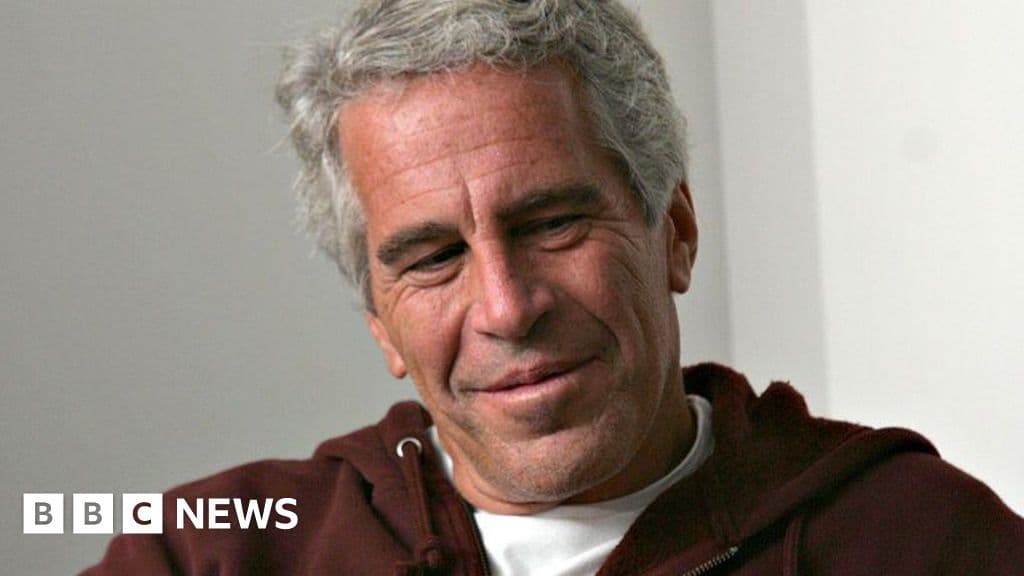
Image: BBC World
A judge has unsealed a note allegedly written by Jeffrey Epstein before his death, shedding light on his troubled mind and the circumstances of his demise.
GlipzoIn an unexpected turn of events, a U.S. judge has authorized the release of a document alleged to be a suicide note penned by the infamous Jeffrey Epstein just a month before his controversial death. This revelation, made public on Wednesday, has reignited discussions surrounding Epstein's tragic demise and the circumstances leading up to it, further deepening the intrigue surrounding one of the most notorious figures in recent history.
The handwritten note, which has yet to be verified by the BBC or any other credible source, was discovered by Epstein's former cellmate, Nicholas Tartaglione. Tartaglione, a convicted felon serving time for a quadruple murder, claims to have found the document hidden within a book after an earlier suicide attempt by Epstein in July 2019. Just weeks later, Epstein was found dead in his cell, a death officially ruled a suicide as he awaited trial for serious sex-trafficking charges.
Released documents reveal that the note contains several striking phrases that suggest a troubled mind. Among the handwritten lines, Epstein reportedly wrote, "They investigated me for months - FOUND NOTHING!!!" This statement highlights the investigation that surrounded him, which ultimately led to no criminal charges that could be substantiated. Furthermore, the note states, "It is a treat to be able to choose one's time to say goodbye," suggesting a resigned acceptance of his fate.
The brevity of the note—spanning only seven lines—has left many questioning its true meaning. Key phrases include: - “Watcha want me to do - Bust out cryin!!” - “NO FUN - NOT WORTH IT.”
These lines offer a glimpse into Epstein's state of mind during a tumultuous period, yet they lack context and depth, leaving many to ponder his true intentions at the time.
The note had been sealed as part of ongoing criminal proceedings involving Tartaglione, who was in the same cell as Epstein. The release of the document follows a court decision prompted by a request from The New York Times, which argued there was no longer a valid reason to keep the note confidential. Federal prosecutors echoed this sentiment, stating that the public interest outweighed the need for continued secrecy.
In Judge Kenneth M. Karas’ ruling, he underscored the importance of public access to the note, asserting that it promotes accountability and trust in the justice system. He stated, "The Court comfortably concludes that public access to the Note promotes 'a measure of accountability' as well as ensures that the public will 'have confidence in the administration of justice.'"
Epstein's death has been shrouded in controversy, with numerous theories surrounding the events of that fateful night. Reports have identified critical security failures at the facility where he was held, leading to rampant speculation about potential foul play. The circumstances of his passing have fueled conspiracy theories, with many questioning how a high-profile inmate could die under such bizarre circumstances.
The U.S. Department of Justice has been quite reticent to comment on Epstein's note, previously stating that they had not reviewed it. They have, however, committed to transparency by releasing millions of documents related to Epstein's case in recent months. This ongoing transparency effort has been crucial in maintaining public interest and trust in the legal proceedings related to Epstein's extensive criminal activities.
The release of Epstein's purported suicide note brings to light not only the complexities surrounding his life and death but also the broader implications for justice and accountability in high-profile cases. As the public continues to grapple with the fallout from Epstein's actions, this document serves as a reminder of the need for transparency in the justice system, especially in cases involving influential figures.
Additionally, this incident raises critical questions about the mental health and treatment of inmates within the prison system. The circumstances of Epstein’s death and his earlier suicide attempt call for a reevaluation of prison protocols in dealing with individuals facing severe psychological distress.
Looking ahead, this latest development is likely to spur further investigation into Epstein's past, as well as ongoing discussions about the broader implications for victims of sexual trafficking. The fallout from Epstein’s case continues to resonate, urging society to confront uncomfortable truths about power, privilege, and accountability.
As more information emerges, it will be essential to watch how both the public and the judicial system respond to this unprecedented situation. The pursuit of justice for Epstein's victims remains a critical focus, and this newly released note may fuel further inquiries into his life and the systemic failures that allowed his crimes to go unchecked for so long.

Tensions soar as the US and Iran engage in air strikes near the Strait of Hormuz, raising concerns over global oil supply and regional stability.
BBC World
Trump's international interventions face serious stalemates. What will this mean for U.S. foreign policy? Explore the critical challenges ahead.
Indian Express
Tehran denies resignation of President Masoud Pezeshkian amid claims of IRGC influence. What does this mean for Iran's political stability? Click to learn more!
Indian Express