
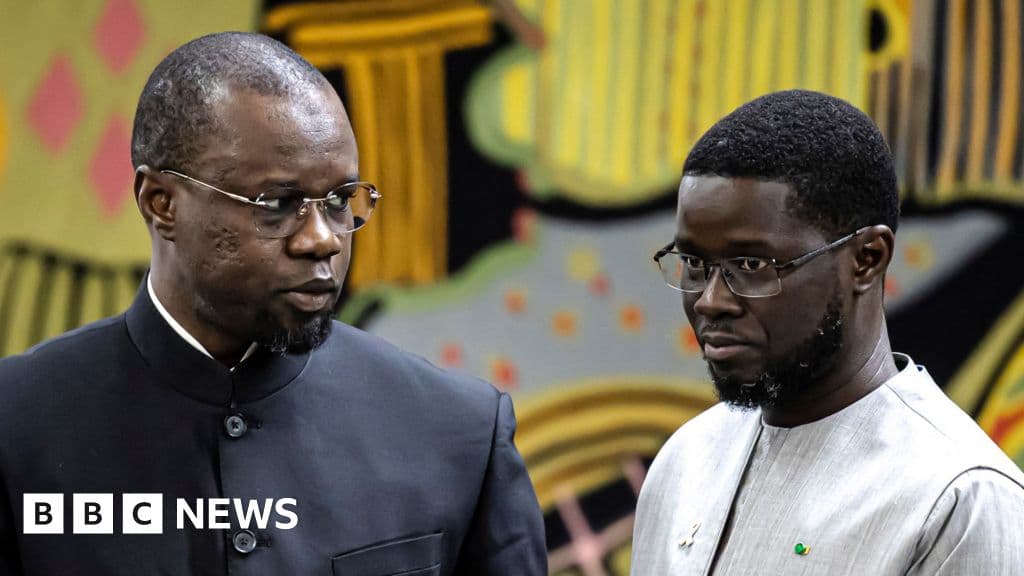
Image: BBC World
Senegal's political landscape shifts dramatically as President Faye dismisses PM Sonko amid economic turmoil and rising protests. What’s next?
GlipzoSenegal is currently experiencing a significant political upheaval as President Bassirou Diomaye Faye has officially dismissed Prime Minister Ousmane Sonko amid a backdrop of rising tensions and economic challenges. This unexpected decision, announced on national television by a presidential aide, comes after months of internal strife within the government, raising questions about the country’s political stability and future direction.
In a move that caught many by surprise, President Faye declared that he had "ended the duties" of his former ally Sonko, along with the entire cabinet, effectively dissolving the government. This announcement follows a contentious parliamentary session where Sonko openly criticized Faye's handling of Senegal's debt crisis, emphasizing the need for urgent reform.
Sonko, known for his popularity among the youth of Senegal, responded to his dismissal with a message on social media, expressing that he would "sleep with a light heart." This sentiment reflects the complex emotions surrounding his exit from a role that once seemed secure, particularly given his significant influence among the younger demographic.
The relationship between Faye and Sonko has been fraught with conflict for several months. The two had previously formed a powerful political alliance that led to their stunning victory over former President Macky Sall. This partnership was characterized by the slogan, "Diomaye is Sonko, Sonko is Diomaye," symbolizing their mutual support.
However, cracks began to show as Faye criticized Sonko's perceived overreach within their party, Pastef, while Sonko accused Faye of failing to defend him against his critics. This infighting has been further complicated by Senegal's economic struggles, with public debt reportedly soaring to 132% of GDP as stated by the International Monetary Fund (IMF).
Senegal's economic landscape is increasingly dire, with the IMF suspending its $1.8 billion lending program due to the country's inability to manage its debt effectively. This financial instability not only jeopardizes the government's ability to function but also threatens the livelihoods of ordinary Senegalese citizens who are already feeling the pinch of economic hardship.
The political fallout from Sonko’s dismissal could have significant repercussions on the stability of Senegal’s government. The youth-led protests that erupted in response to his ousting are indicative of a broader discontent with the current administration and its handling of pressing issues. As students took to the streets of Dakar, their chants in support of Sonko highlighted the potential for civil unrest, making it clear that the political landscape in Senegal is far from settled.
With the government now dissolved, the question of who will be appointed as the new Prime Minister looms large. Observers are keen to see whether the next leader will be someone who can unify the party and address the pressing economic issues or if further divisions will emerge.
As the country braces for potential changes in leadership, the focus will likely shift to how the new government will tackle the economic challenges ahead. The success or failure of the next administration could dramatically influence Senegal's political stability and the public's trust in its leaders.
In conclusion, the political landscape of Senegal is in flux, and as President Faye navigates the fallout from this decision, all eyes will be on the emerging dynamics within the government and the ongoing response from the populace. Will this lead to a new era of governance in Senegal or further exacerbate the existing tensions? Only time will tell, but the implications of Faye's decision are sure to be felt for years to come.
Stay tuned as this story unfolds, and consider the broader implications of this political upheaval on Senegal's future.

Tensions soar as the US and Iran engage in air strikes near the Strait of Hormuz, raising concerns over global oil supply and regional stability.
BBC World
Trump's international interventions face serious stalemates. What will this mean for U.S. foreign policy? Explore the critical challenges ahead.
Indian Express
Tehran denies resignation of President Masoud Pezeshkian amid claims of IRGC influence. What does this mean for Iran's political stability? Click to learn more!
Indian Express