
Image: BBC World
Romanian PM Ilie Bolojan ousted in shocking no-confidence vote. What’s next for the country amid political turmoil? Click to find out more.
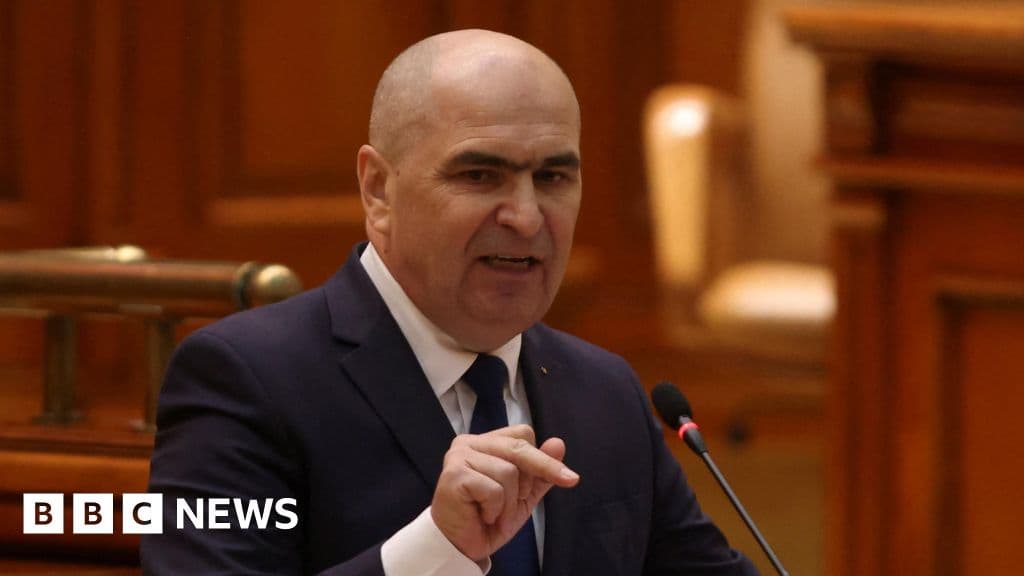
GlipzoRomanian Prime Minister Ilie Bolojan has been ousted following a significant no-confidence vote in the parliament, a move that has sent shockwaves through the country's political landscape. This vote, which saw 281 MPs supporting the motion—well above the 233 needed—marks a pivotal moment for the Romanian government.
In a surprising turn of events, the Social Democrats, the largest party in the coalition, abandoned Bolojan's four-party alliance last month. This shift was driven by ongoing tensions over austerity measures aimed at reducing Romania's budget deficit, which have been a point of contention between the liberal prime minister and the left-leaning party. The Social Democrats opted to align with the far-right opposition, signaling their discontent with Bolojan's leadership and policies.
The rift between Bolojan and the Social Democrats highlights the challenges of coalition governance in Romania, particularly in light of the financial pressures the country faces. As an EU and NATO member bordering Ukraine, Romania's political stability is crucial, not just for its citizens, but for regional security as well. President Nicusor Dan has reassured observers that the nation will maintain its pro-EU stance despite the political upheaval.
Following the no-confidence vote, President Dan is expected to take decisive action to rebuild the coalition under a different prime minister. The political environment remains tense, as the country navigates the fallout of this vote. With elections not scheduled until 2028, a snap election seems unlikely, but the uncertainty surrounding the political landscape has raised concerns among financial markets. The Romanian leu experienced a significant drop, hitting a record low against the euro just before the pivotal vote.
The coalition led by Bolojan had only been in power for ten months, during which they aimed to mitigate the influence of the far-right Alliance for Uniting Romanians (AUR), which has gained substantial parliamentary representation. The AUR’s rise to power, capturing one-third of parliamentary seats, underscores the shifting political dynamics in Romania.
The friction between Bolojan and the Social Democrats primarily revolved around austerity measures instituted to address the country’s budgetary challenges. These measures, while aimed at stabilizing the economy, have adversely affected the leftists’ voter base, exacerbating tensions within the coalition. The Social Democrats have expressed a willingness to rejoin a pro-EU coalition under new leadership, signaling potential avenues for political reconciliation.
In a recent statement, President Dan acknowledged the challenges ahead: "Political discussions will be difficult, but it is my responsibility as president—and that of the political parties—to steer Romania in the right direction." His words reflect the delicate balance of power and the need for collaboration in the face of economic uncertainty.
As the political landscape in Romania evolves, several key factors will influence the country's trajectory:
Romania's political future hinges on the ability of its leaders to navigate these challenges effectively. The ousting of Prime Minister Bolojan marks not just a shift in leadership but a potential turning point for the country as it grapples with the complexities of governance and economic stability in a rapidly changing political landscape. As the nation prepares for what lies ahead, attention will be focused on how the new leadership will address pressing issues and foster a cohesive coalition moving forward.

Tensions soar as the US and Iran engage in air strikes near the Strait of Hormuz, raising concerns over global oil supply and regional stability.
BBC World
Trump's international interventions face serious stalemates. What will this mean for U.S. foreign policy? Explore the critical challenges ahead.
Indian Express
Tehran denies resignation of President Masoud Pezeshkian amid claims of IRGC influence. What does this mean for Iran's political stability? Click to learn more!
Indian Express