
Image: BBC World
The DOJ has expanded federal execution methods to include firing squads and gas, sparking controversy and debate across the nation. What’s next?
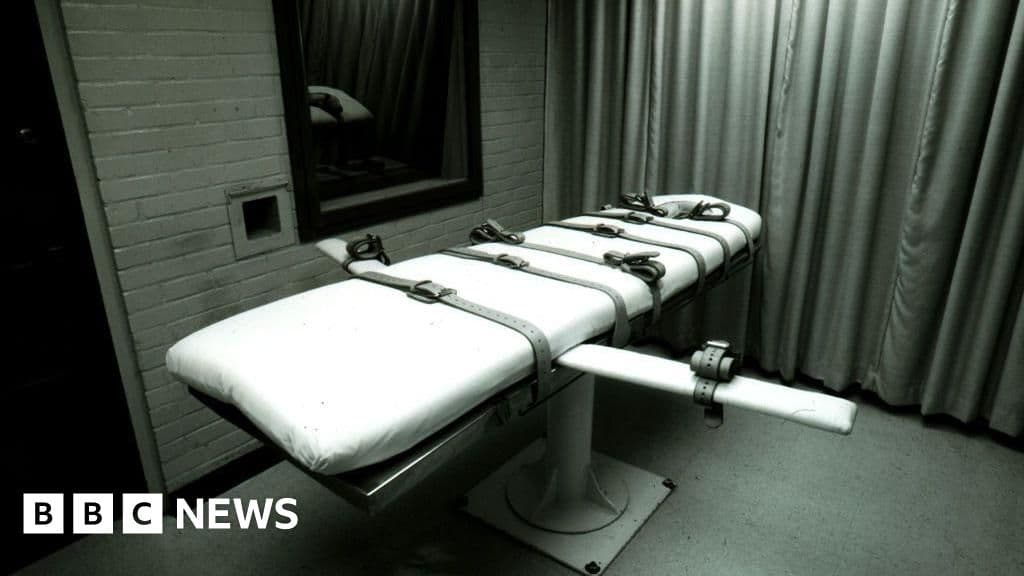
GlipzoIn a significant and contentious decision, the U.S. Department of Justice (DOJ) has announced an expansion of execution methods in federal prisons. This change, unveiled in a 48-page memo released on Friday, introduces firing squads, gas asphyxiation, and electrocution as options for carrying out capital punishment. The DOJ claims that these alternatives will "strengthen" the death penalty, aiming to deter heinous crimes, deliver justice for victims, and offer closure to grieving families.
The memo comes after a period of stagnation in federal executions, a situation largely attributed to the previous administration’s moratorium. Former President Joe Biden granted clemency to 37 of the 40 federal death row inmates before he left office, indicating a shift towards a more lenient approach to capital punishment. However, during his presidency, Donald Trump made it clear that he would resume federal executions, effectively reinstating the death penalty's active use.
In its report, the DOJ defends the traditional method of lethal injection, specifically citing pentobarbital as the “gold standard” for this practice. Lethal injection has been the primary method of execution in the U.S. since 1993, yet it has faced considerable backlash. Critics argue that it can be an inhumane form of execution, especially given the recent difficulties in obtaining the drug. The DOJ argues that broadening the available methods will ensure that the federal government can carry out executions even when certain drugs are unavailable, thus maintaining the integrity of the justice system.
The move to expand execution methods aligns with Trump’s long-standing support for the death penalty. During his first term, he lifted a 20-year moratorium on federal executions, resulting in the execution of 13 death row inmates. Upon returning to office on January 20, 2025, Trump signed an executive order that mandates pursuing the death penalty for all severe crimes and particularly in cases involving the murder of law enforcement officers by illegal immigrants.
The announcement has elicited a spectrum of reactions from lawmakers and advocacy groups. Acting Attorney General Todd Blanche criticized the previous administration for not pursuing the death penalty more aggressively, stating that it failed in its duty to protect Americans from the most dangerous criminals, including terrorists and child murderers.
Conversely, Senator Dick Durbin, a prominent Democrat, condemned the expansion of the death penalty as "cruel, immoral, and discriminatory." He stated, "Expanding the federal death penalty will be a stain on our history," reflecting a broader concern among opponents who argue that such measures disproportionately affect marginalized communities.
As the federal government reconsiders its stance on execution methods, several states have already taken steps to introduce alternative methods. Currently, five states allow for firing squads as a means of execution, according to the Death Penalty Information Center. Most notably, Alabama became the first state in 2024 to execute a prisoner using nitrogen gas, a method that has since been adopted by four additional states.
This trend raises important questions about the future of capital punishment across the nation. As states experiment with different methods, the potential for legal challenges and public outcry may influence the broader conversation on the death penalty.
The DOJ's decision to expand execution methods is not just a legal adjustment; it represents a fundamental shift in the narrative surrounding capital punishment in the United States. As public opinion continues to evolve, the implications of this policy change could resonate far beyond the walls of federal prisons.
As the DOJ implements these changes, all eyes will be on how this affects federal executions and whether states will follow suit. The intersection of law, morality, and public opinion on this issue will continue to spark debate, making it a critical topic to watch in the coming years.

Tensions soar as the US and Iran engage in air strikes near the Strait of Hormuz, raising concerns over global oil supply and regional stability.
BBC World
Trump's international interventions face serious stalemates. What will this mean for U.S. foreign policy? Explore the critical challenges ahead.
Indian Express
Tehran denies resignation of President Masoud Pezeshkian amid claims of IRGC influence. What does this mean for Iran's political stability? Click to learn more!
Indian Express