
Glipzo
WorldTechnologyBusinessSportsEntertainmentScienceHealthPolitics
Glipzo
WorldTechnologyBusinessSportsEntertainmentScienceHealthPolitics
  1. Home
  2. /
  3. Politics
  4. /
  5. Shocking Maharashtra Violence: The Tragic Events of May 1986
Shocking Maharashtra Violence: The Tragic Events of May 1986

Image: Indian Express

Politics
Monday, May 11, 20264 min read

Shocking Maharashtra Violence: The Tragic Events of May 1986

Explore the tragic violence in Maharashtra on May 11, 1986, and its political ramifications, from police shootings to party strategies amid unrest.

Glipzo News Desk|Source: Indian Express
Share
Glipzo

Key Highlights

  • Seven dead in Maharashtra violence: 5 from police firing.
  • BJP adopts Gandhian socialism; aims for full employment.
  • Bangladesh's chaotic elections resume: Jatiya Party leads.
  • Farooq Abdullah seeks mass resignation of National Conference members.

In this article

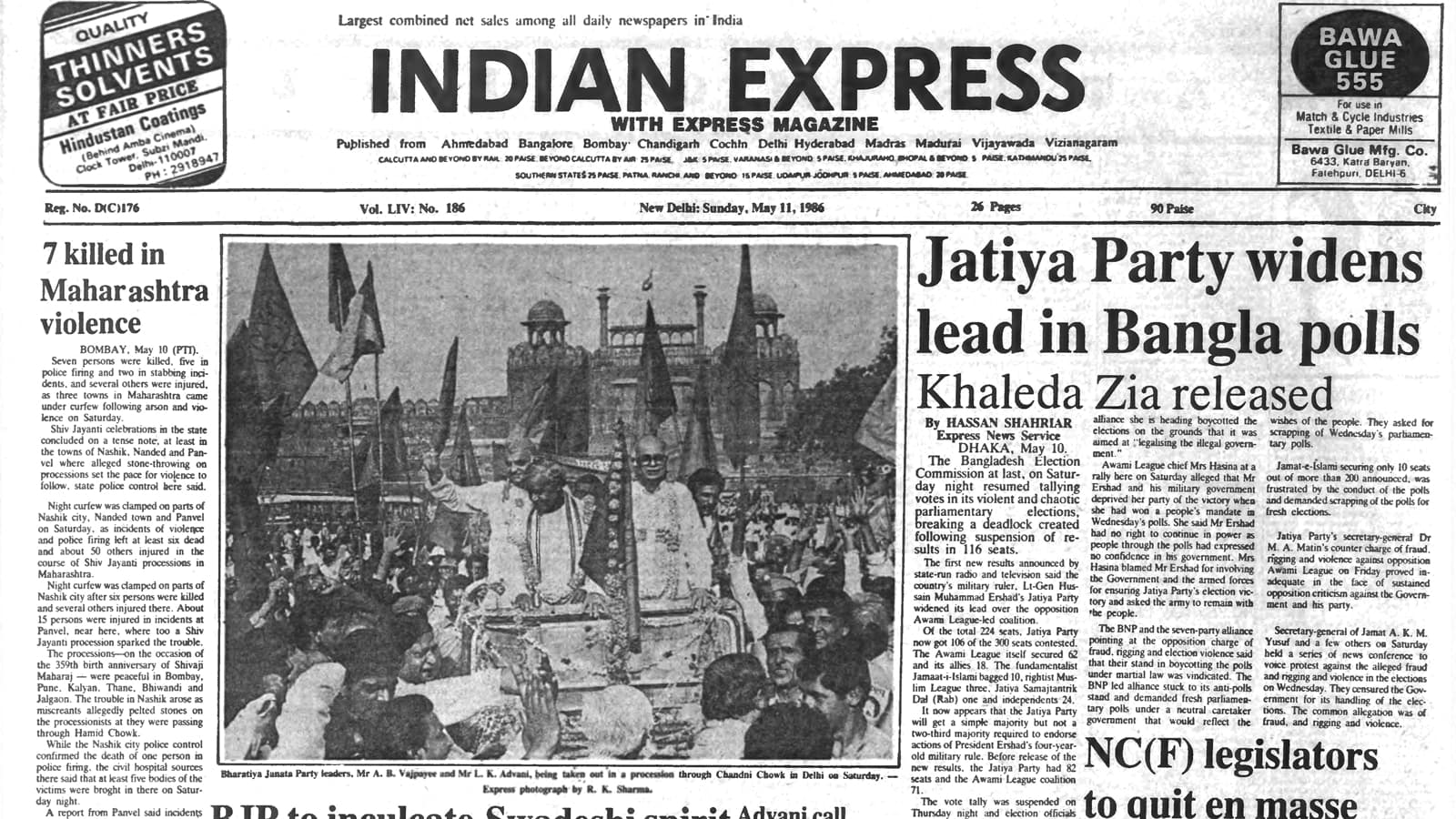
  • A Day of Tragedy: May 11, 1986, in Maharashtra On **May 11, 1986**, Maharashtra was shaken by a wave of violence that left **seven individuals dead**, including **five killed by police firing** and **two from stabbing incidents**. The chaos erupted as Shiv Jayanti celebrations turned tumultuous in **three towns: Nashik, Nanded, and Panvel**. As tensions escalated, the state government imposed a **curfew** to restore order amidst rampant arson and violence.
  • Political Implications: BJP's Gandhian Socialism In the midst of this turmoil, the **Bharatiya Janata Party (BJP)** convened for its second plenary session, during which it adopted an **11-page economic policy statement**. This policy draws inspiration from **Gandhian Socialism** and the philosophy of **Integral Humanism**, championed by **Deendayal Upadhyaya**, a former president of the Jana Sangh. The core of this economic agenda aims to tackle issues like **poverty** and **unemployment** by enhancing the **agro-rural economy** and promoting the spirit of **Swadeshi**, or self-reliance.
  • Election Turbulence in Bangladesh Across the border, **Bangladesh** was also grappling with its political crisis as the **Election Commission** resumed the counting of votes from parliamentary elections that had descended into chaos. The suspension of results from **116 parliamentary seats** had created a political deadlock, and the current situation suggested that the **Jatiya Party** was on track to secure a simple majority, albeit falling short of the two-thirds majority needed to validate the actions of **President Ershad’s** military regime.
  • National Conference's Bold Move Back in India, the political landscape was equally tumultuous as **Farooq Abdullah**, president of the **National Conference (NC)** and former chief minister, announced his intention to seek the resignation of all **32 assembly members** of his party. This drastic move was aimed at preempting the **Congress (I)** party from forming a government with support from **14 Independent assembly members**.
  • Why It Matters: Reflecting on May 1986 The events of **May 11, 1986**, serve as a stark reminder of the fragility of peace and order in both Maharashtra and Bangladesh. The violence in Maharashtra raises critical questions about social tensions and law enforcement practices, especially regarding how authorities respond to communal strife. The implications of this unrest could reverberate through political landscapes, influencing future elections and governance.
  • Looking Ahead: What Lies Ahead for Maharashtra and Bangladesh As Maharashtra grapples with the aftermath of violence, the enforcement of law and order will be paramount in restoring public trust. Observers will be keenly watching how the local government addresses the concerns of its citizens, particularly the communities affected by the recent violence.

A Day of Tragedy: May 11, 1986, in Maharashtra On **May 11, 1986**, Maharashtra was shaken by a wave of violence that left **seven individuals dead**, including **five killed by police firing** and **two from stabbing incidents**. The chaos erupted as Shiv Jayanti celebrations turned tumultuous in **three towns: Nashik, Nanded, and Panvel**. As tensions escalated, the state government imposed a **curfew** to restore order amidst rampant arson and violence.

The disturbances began when alleged stone-throwing incidents at processions set off a chain reaction of clashes. Eyewitnesses reported a palpable sense of fear and unrest, as the state police scrambled to maintain control over the situation. The violence not only caused loss of life but also left dozens injured, further complicating the already tense atmosphere.

Political Implications: BJP's Gandhian Socialism In the midst of this turmoil, the **Bharatiya Janata Party (BJP)** convened for its second plenary session, during which it adopted an **11-page economic policy statement**. This policy draws inspiration from **Gandhian Socialism** and the philosophy of **Integral Humanism**, championed by **Deendayal Upadhyaya**, a former president of the Jana Sangh. The core of this economic agenda aims to tackle issues like **poverty** and **unemployment** by enhancing the **agro-rural economy** and promoting the spirit of **Swadeshi**, or self-reliance.

These developments reflect the BJP's efforts to solidify its political stance during a period marked by significant social unrest. The party's focus on grassroots economic reforms may resonate with voters who are disillusioned by the ongoing violence.

Election Turbulence in Bangladesh Across the border, **Bangladesh** was also grappling with its political crisis as the **Election Commission** resumed the counting of votes from parliamentary elections that had descended into chaos. The suspension of results from **116 parliamentary seats** had created a political deadlock, and the current situation suggested that the **Jatiya Party** was on track to secure a simple majority, albeit falling short of the two-thirds majority needed to validate the actions of **President Ershad’s** military regime.

Meanwhile, the situation intensified as Khaleda Zia, a prominent political figure, was released from house arrest just days after the elections. Her release raised questions about the integrity of the electoral process and the role of opposition leaders in shaping the future of Bangladeshi politics.

National Conference's Bold Move Back in India, the political landscape was equally tumultuous as **Farooq Abdullah**, president of the **National Conference (NC)** and former chief minister, announced his intention to seek the resignation of all **32 assembly members** of his party. This drastic move was aimed at preempting the **Congress (I)** party from forming a government with support from **14 Independent assembly members**.

Abdullah's decision not only underscores the volatility of regional politics but also reflects the growing tensions within the Jammu and Kashmir legislative assembly. By considering such a significant action, the National Conference is positioning itself as a formidable player in the state’s political dynamics.

Why It Matters: Reflecting on May 1986 The events of **May 11, 1986**, serve as a stark reminder of the fragility of peace and order in both Maharashtra and Bangladesh. The violence in Maharashtra raises critical questions about social tensions and law enforcement practices, especially regarding how authorities respond to communal strife. The implications of this unrest could reverberate through political landscapes, influencing future elections and governance.

Furthermore, the situation in Bangladesh highlights the challenges faced by emerging democracies in the region. The potential for political instability stemming from electoral disputes can lead to broader social unrest, affecting not only governance but also the lives of ordinary citizens.

Looking Ahead: What Lies Ahead for Maharashtra and Bangladesh As Maharashtra grapples with the aftermath of violence, the enforcement of law and order will be paramount in restoring public trust. Observers will be keenly watching how the local government addresses the concerns of its citizens, particularly the communities affected by the recent violence.

In Bangladesh, the electoral fallout could lead to intensified political maneuvering as parties regroup and strategize their next steps. The release of Khaleda Zia may spark renewed activism and opposition movements, potentially reshaping the political landscape.

Both regions are at a crossroads, and the decisions made in the coming days will be critical in defining their respective paths. With ongoing tensions and political challenges, the eyes of the world remain fixed on Maharashtra and Bangladesh, eager to see how these situations unfold and what they mean for the future of democracy in South Asia.

Did you find this article useful? Share it!

Share

Related Articles

Critical Air Strikes Erupt Between US and Iran in Gulf Region
Politics
Jun 1, 2026

Critical Air Strikes Erupt Between US and Iran in Gulf Region

Tensions soar as the US and Iran engage in air strikes near the Strait of Hormuz, raising concerns over global oil supply and regional stability.

BBC World

Trump Faces Stalemate in International Military Strategy
Politics
Jun 1, 2026

Trump Faces Stalemate in International Military Strategy

Trump's international interventions face serious stalemates. What will this mean for U.S. foreign policy? Explore the critical challenges ahead.

Indian Express

Tehran Denies Rumors of President Pezeshkian’s Resignation
Politics
Jun 1, 2026

Tehran Denies Rumors of President Pezeshkian’s Resignation

Tehran denies resignation of President Masoud Pezeshkian amid claims of IRGC influence. What does this mean for Iran's political stability? Click to learn more!

Indian Express

Categories

  • World
  • Technology
  • Business
  • Sports

More

  • Entertainment
  • Science
  • Health
  • Politics

Explore

  • Web Stories
  • About Us
  • Contact

Legal

  • Privacy Policy
  • Terms of Service
  • Disclaimer

© 2026 Glipzo. All rights reserved.