
Image: BBC World
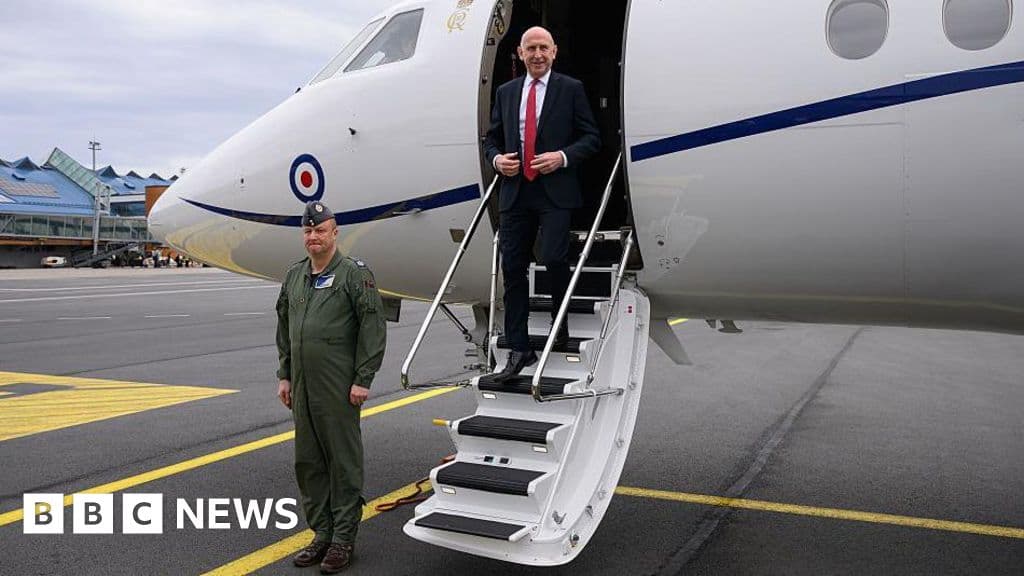
An RAF jet carrying UK Defence Secretary John Healey had its GPS jammed near Russia, raising alarms about military safety and tensions in the region.
GlipzoIn a startling turn of events, an RAF jet carrying the UK Defence Secretary, John Healey, encountered a serious security breach as it flew near the Russian border on Thursday. This alarming incident raised questions about the safety of military flights in regions fraught with geopolitical tension. Healey was on his way back to the UK after visiting British forces stationed in Estonia when the aircraft's GPS signal was reportedly jammed, a maneuver believed to be orchestrated by Russia.
The significance of this event cannot be overstated. With rising tensions between the UK and Russia, incidents like these highlight the precarious nature of military operations in sensitive areas. It was first reported by the Times, which noted that the pilots had to switch to an alternative navigation system for the duration of the approximately three-hour flight.
The timing of this incident is particularly concerning, as it comes just a day after revelations that two Russian warplanes had engaged in dangerous maneuvers, intercepting an RAF spy plane over the Black Sea. Such aggressive actions by Russian forces have become increasingly common, prompting heightened scrutiny from UK military officials. While it remains unclear whether Healey was a specific target, the visibility of the flight's path on various aircraft tracking websites raises questions about security protocols.
During his visit to Estonia, Healey had engaged with UK service members participating in a NATO military exercise near the Russian border, which underscores the ongoing commitment of the UK to maintain a robust military presence in Eastern Europe. The Ministry of Defence has yet to comment on the incident, leaving many to speculate about the implications for future military operations.
This latest incident is not an isolated occurrence. In a previous encounter last month, a Russian Su-35 fighter jet approached a Rivet Joint surveillance aircraft, prompting the activation of emergency systems due to dangerously close proximity. Reports indicated that the Su-35 flew close enough to disable the autopilot system on the British plane.
Moreover, a Su-27 jet executed multiple passes in front of the RAF aircraft, coming alarmingly close—within six meters (19 feet)—to its nose. Healey has publicly commended the “outstanding professionalism” of the RAF crews during these “unacceptable” Russian maneuvers, which the Ministry of Defence described as the most perilous actions taken by Russia since 2022.
The growing frequency of such incidents raises serious questions about the efficacy of current defence strategies employed by the UK. Events like these not only jeopardize the safety of military personnel but also threaten broader geopolitical stability. The MoD has previously stated that the actions of Russian pilots represent a significant escalation in their aggressiveness, especially given the context of ongoing conflicts and tensions in the region.
This is not the first time an RAF plane has been subjected to GPS jamming; a similar incident occurred in 2024 when then-Defence Secretary Grant Shapps experienced GPS disruption while flying near Russian airspace. Such patterns indicate a troubling trend that could lead to more severe confrontations in the future.
Understanding the implications of these incidents is crucial not only for military analysts but also for the general public. As tensions between NATO nations and Russia continue to rise, the risks associated with military flights in contested airspace significantly increase. The need for robust countermeasures against electronic warfare tactics, such as GPS jamming, becomes imperative for ensuring the safety of military operations.
Additionally, these incidents serve as a reminder of the complex geopolitical landscape and the necessity for international diplomacy and cooperation to mitigate risks. As military tensions escalate, the potential for miscalculations and unintended escalations could have dire consequences.
As we look to the future, it is essential to monitor how the UK and NATO respond to these provocative actions by Russia. Will there be an enhancement of air defense systems or an increase in military presence in the region? The strategic implications of these developments will likely be significant, affecting not only military operations but also international relations.
In the coming weeks, observers should pay attention to any updates from the Ministry of Defence regarding new policies or strategies aimed at countering Russian aggression. Moreover, further developments regarding military exercises and international negotiations will be critical in shaping the next steps in this ongoing geopolitical saga.
In summary, the recent jamming incident involving the RAF and Defence Secretary Healey serves as a stark reminder of the volatile dynamics at play in Eastern Europe and the urgent need for vigilance and preparedness in the face of evolving threats.

Tensions soar as the US and Iran engage in air strikes near the Strait of Hormuz, raising concerns over global oil supply and regional stability.
BBC World
Trump's international interventions face serious stalemates. What will this mean for U.S. foreign policy? Explore the critical challenges ahead.
Indian Express
Tehran denies resignation of President Masoud Pezeshkian amid claims of IRGC influence. What does this mean for Iran's political stability? Click to learn more!
Indian Express