
Image: Indian Express
Discover the shocking events of May 5, 1986, including the Akali Dal crisis, Khaleda Zia's disappearance, and a tragic bus accident. Click to learn more!
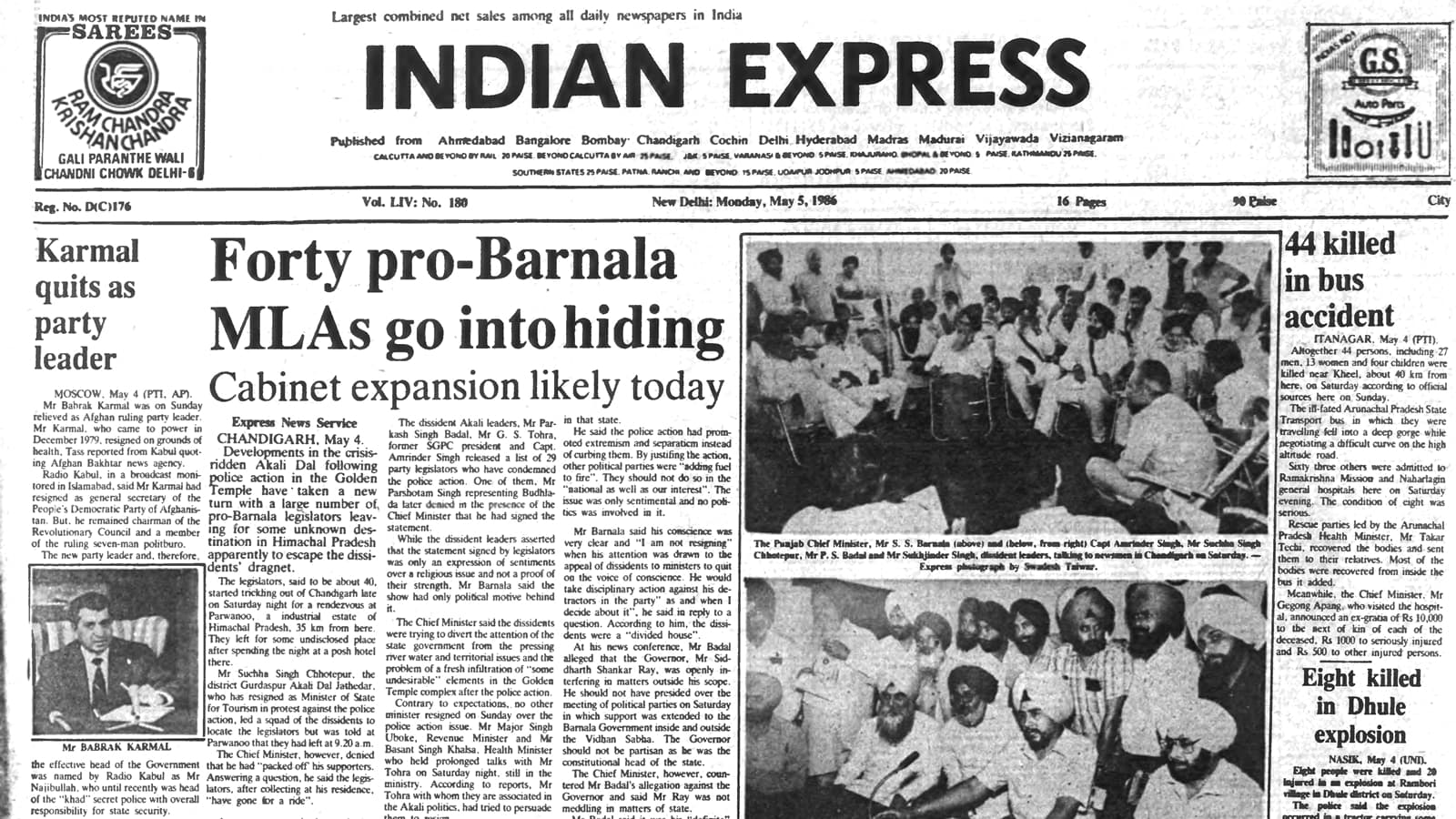
GlipzoOn May 5, 1986, a significant shift occurred within the Akali Dal, a political party in India, amidst a crisis triggered by police actions at the Golden Temple. This situation escalated as numerous pro-Barnala legislators mysteriously departed for an undisclosed location in Himachal Pradesh. The dissenting leaders within the party, including prominent figures such as Parkash Singh Badal, G S Tohra, and former SGPC president Amrinder Singh, publicly released a list of 29 party legislators who vehemently condemned the police actions at the sacred site.
The unrest within the Akali Dal indicates deep political rifts, particularly in response to the heightened tensions surrounding the Golden Temple, a spiritual center for Sikhs, which has historically been a flashpoint for political strife in India. The legislators’ departure signals a potential fragmentation within the party, raising questions about its future direction and stability.
In a separate yet equally gripping story, Khaleda Zia, the opposition leader in Bangladesh, made headlines by resurfacing after a five-day absence. Her sudden reappearance at the Dhaka district bar library ended speculation about her whereabouts. Zia revealed that she had been detained by police at an undisclosed location near Savar, approximately 15 miles from Dhaka. This revelation starkly contradicted the government’s persistent claims that she had not been arrested.
Zia’s disappearance occurred while she was returning from a political rally in Jamalpur, and her reemergence has sparked outrage among her supporters and raised serious concerns about the state of democracy and civil liberties in Bangladesh. The incident underscores the volatile political climate in the country and the lengths to which authorities may go to silence opposition.
In international news, Babrak Karmal, the leader of the ruling party in Afghanistan, has announced his resignation due to health issues. Karmal, who rose to power in December 1979, was reported by the Tass news agency from Kabul, citing the Bakhtar news agency as the source of this information. His resignation marks the end of an era for Afghanistan, as Karmal's leadership has been characterized by the challenges of Soviet influence and internal strife.
The political landscape in Afghanistan remains precarious, and Karmal’s departure could signal further instability as the country navigates its complex path toward governance and reconstruction.
A tragic bus accident near Kheel, located about 40 kilometers from Itanagar, has resulted in the loss of 44 lives, including 27 men, 13 women, and four children. Official reports indicate that the Arunachal Pradesh State Transport bus fell into a deep gorge while attempting to maneuver a treacherous curve on a high-altitude road. In addition to the fatalities, 63 passengers sustained injuries and were rushed to Ramakrishna Mission and Naharlagun general hospitals, with eight individuals in serious condition.
This heartbreaking incident not only highlights the dangers of travel in challenging terrains but also raises critical questions about road safety measures and the need for improved infrastructure in the region. Local authorities are under pressure to investigate the causes of the accident and implement necessary safety protocols to prevent such tragedies in the future.
The events of May 5, 1986, paint a complex picture of political unrest and social tragedy. The Akali Dal crisis reflects a broader struggle for power and representation within India, especially concerning the Sikh community and their historical grievances. Khaleda Zia's ordeal highlights the ongoing challenges faced by political figures in Bangladesh, especially regarding their safety and the right to dissent.
Furthermore, the devastating bus accident in Arunachal Pradesh underscores the urgent need for enhanced transportation safety measures in India's hilly regions. As the nation grapples with these crises, the implications for governance, civil rights, and infrastructure development are profound.
As the situation unfolds, observers will be keenly monitoring the responses of the Indian government to the Akali Dal crisis and the potential ramifications for political stability in Punjab. In Bangladesh, the fallout from Khaleda Zia's detention could ignite protests or lead to shifts in the opposition's strategies against the ruling party.
In Afghanistan, the implications of Karmal's resignation are yet to be fully understood, but it could pave the way for new leadership dynamics as the country continues to navigate its tumultuous political landscape. Lastly, in light of the tragic accident, expect increased scrutiny on road safety regulations, which may prompt governmental reviews and reforms aimed at preventing future tragedies.
The events of this day remind us of the intertwined nature of politics and public safety, and the ongoing struggles for justice and reform in various parts of the world.

Tensions soar as the US and Iran engage in air strikes near the Strait of Hormuz, raising concerns over global oil supply and regional stability.
BBC World
Trump's international interventions face serious stalemates. What will this mean for U.S. foreign policy? Explore the critical challenges ahead.
Indian Express
Tehran denies resignation of President Masoud Pezeshkian amid claims of IRGC influence. What does this mean for Iran's political stability? Click to learn more!
Indian Express