Glipzo
WorldTechnologyBusinessSportsEntertainmentScienceHealthPolitics
Glipzo
WorldTechnologyBusinessSportsEntertainmentScienceHealthPolitics
  1. Home
  2. /
  3. World
  4. /
  5. Shocking Discovery: Oldest Rock Art Found in Indonesia
Shocking Discovery: Oldest Rock Art Found in Indonesia

Image: Science Daily

World
Sunday, March 22, 20264 min read

Shocking Discovery: Oldest Rock Art Found in Indonesia

Discover the shocking revelation of a 67,800-year-old handprint, the oldest rock art known, shedding light on early human migration to Australia.

Glipzo News Desk|Source: Science Daily
Share
Glipzo

Key Highlights

  • 67,800-year-old hand stencil found in Indonesia's Sulawesi.
  • Oldest known rock art, predating previous findings by 15,000 years.
  • Research reveals continuous artistic activity for 35,000 years.
  • Findings support early human migration to Australia by 65,000 years ago.
  • Unique claw-like stencil suggests deep connections between humans and animals.

In this article

  • Unveiling the Oldest Known Rock Art A remarkable **67,800-year-old hand stencil** discovered in a cave in **Indonesia** has been identified as the oldest known example of rock art on our planet. This groundbreaking find not only surpasses a previous significant discovery in the same region by **15,000 years** but also sheds light on the early artistic expressions of human ancestors.
  • Advanced Techniques Reveal Ancient Art The **ancient handprint** was found amid more recent artworks within the caves, adding a fascinating layer to the understanding of artistic evolution in this region. To determine the age of the stencil, the research team employed **uranium-series dating** techniques, analyzing minute mineral layers that had formed over and beneath the artwork in the **Liang Metanduno cave**. This meticulous process allowed scientists to confidently establish the stencil's age, confirming it as the oldest reliably dated cave art discovered to date.
  • The Unique Features of the Handprint What makes this hand stencil particularly intriguing is its unique claw-like appearance. After its initial creation, the image was intentionally modified, with the outlines of the fingers narrowed, creating a distinctive look. **Professor Adam Brumm**, another co-leader of the study, pointed out that the precise significance of this alteration remains a mystery.
  • Implications for Understanding Human Migration The implications of this discovery stretch far beyond the realm of art. **Dr. Adhi Agus Oktaviana**, a rock art specialist at BRIN, emphasized that understanding the origins of these paintings offers significant insights into the history of **Australian Aboriginal culture**. He posited that the creators of this ancient art in Sulawesi were likely part of the larger population that eventually migrated to Australia.
  • Mapping Migration Routes Research indicates two potential migration pathways into Sahul. The first is a **northern route** through Sulawesi and the **Spice Islands**, leading toward New Guinea. The second is a **southern route**, which would have facilitated early seafarers traveling directly to Australia via **Timor** or nearby islands.
  • What's Next for Researchers? The implications of this discovery are profound and could reshape our understanding of early human history in the region. As researchers continue to examine the art and the cultural context surrounding its creation, we can expect to learn more about the lives and beliefs of these ancient peoples. Future studies may focus on uncovering additional artworks in the caves and further analyzing existing pieces to gain deeper insights into the social structures and environmental interactions of these early humans.

Unveiling the Oldest Known Rock Art A remarkable **67,800-year-old hand stencil** discovered in a cave in **Indonesia** has been identified as the oldest known example of rock art on our planet. This groundbreaking find not only surpasses a previous significant discovery in the same region by **15,000 years** but also sheds light on the early artistic expressions of human ancestors.

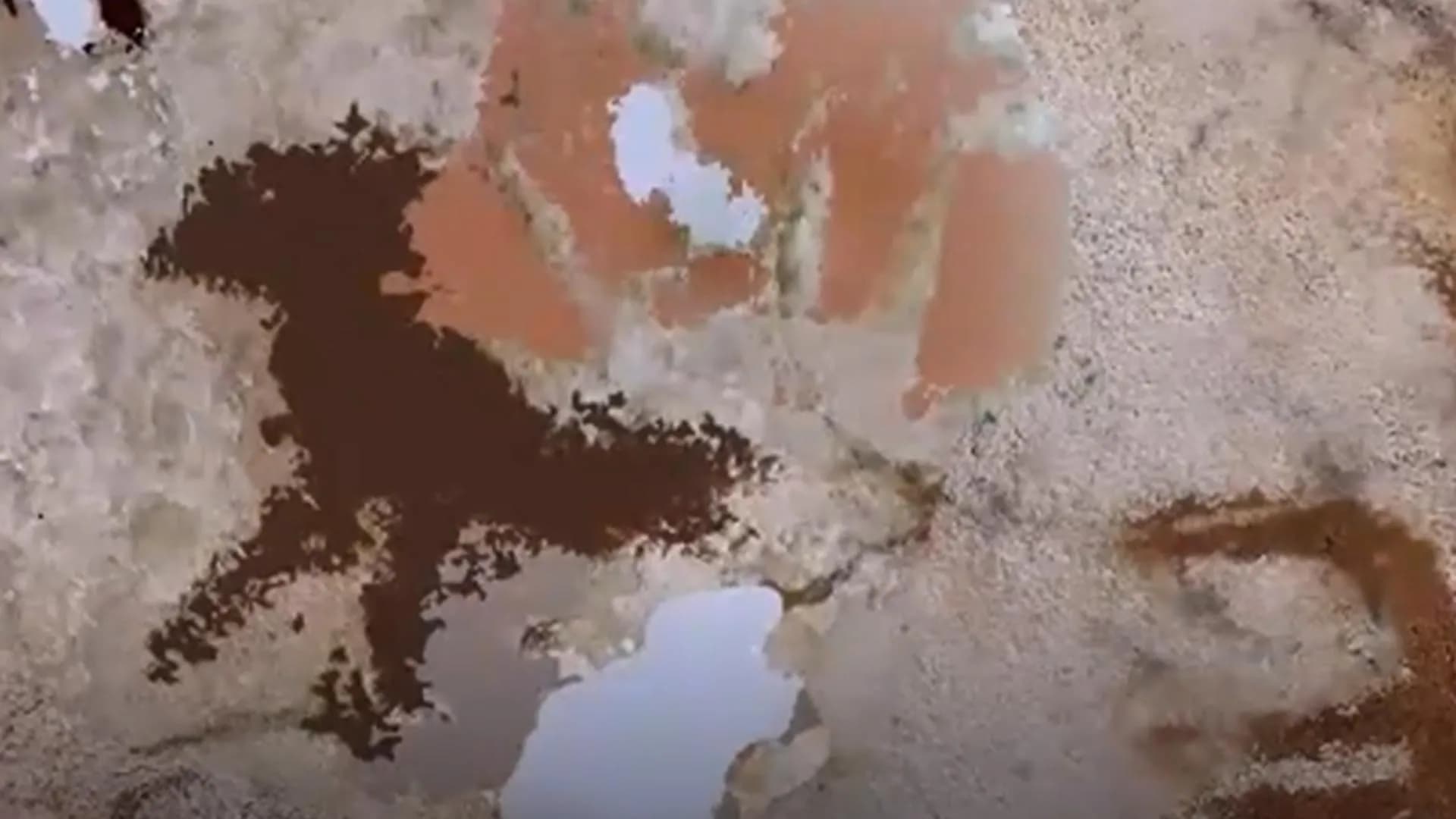
The hand stencil, located in the limestone caves of Sulawesi, was uncovered by an international team of researchers led by Griffith University, alongside Indonesia's national research and innovation agency (BRIN) and Southern Cross University. This artwork is believed to have been created by individuals closely related to the ancestors of present-day Indigenous Australians, providing crucial insights into how and when humans first traversed into Australia.

Advanced Techniques Reveal Ancient Art The **ancient handprint** was found amid more recent artworks within the caves, adding a fascinating layer to the understanding of artistic evolution in this region. To determine the age of the stencil, the research team employed **uranium-series dating** techniques, analyzing minute mineral layers that had formed over and beneath the artwork in the **Liang Metanduno cave**. This meticulous process allowed scientists to confidently establish the stencil's age, confirming it as the oldest reliably dated cave art discovered to date.

This revelation highlights that the artistic activities within this cave spanned an astonishing 35,000 years, continuing until approximately 20,000 years ago. According to Professor Maxime Aubert, a co-leader of the study from the Griffith Centre for Social and Cultural Research, this new phase of research underscores that Sulawesi was home to one of the world's oldest and richest artistic cultures, dating back to the very beginnings of human habitation in the area.

The Unique Features of the Handprint What makes this hand stencil particularly intriguing is its unique claw-like appearance. After its initial creation, the image was intentionally modified, with the outlines of the fingers narrowed, creating a distinctive look. **Professor Adam Brumm**, another co-leader of the study, pointed out that the precise significance of this alteration remains a mystery.

“This art could symbolize a connection between humans and animals, echoing themes seen in other early art from Sulawesi, including scenes that appear to depict part-human, part-animal figures,” Brumm explained. This connection to the natural world might reveal deeper cultural meanings and beliefs of the people who created the art.

Implications for Understanding Human Migration The implications of this discovery stretch far beyond the realm of art. **Dr. Adhi Agus Oktaviana**, a rock art specialist at BRIN, emphasized that understanding the origins of these paintings offers significant insights into the history of **Australian Aboriginal culture**. He posited that the creators of this ancient art in Sulawesi were likely part of the larger population that eventually migrated to Australia.

Archaeologists have long debated the timeline for human arrival on the ancient landmass known as Sahul, which encompassed present-day Australia, Tasmania, and New Guinea. Two primary theories exist: one suggests that humans arrived around 50,000 years ago, while another proposes an entry date of at least 65,000 years ago.

Dr. Oktaviana's findings strongly support the notion that the ancestors of the First Australians were present in Sahul by 65,000 years ago, significantly impacting our understanding of human migration patterns in the region.

Mapping Migration Routes Research indicates two potential migration pathways into Sahul. The first is a **northern route** through Sulawesi and the **Spice Islands**, leading toward New Guinea. The second is a **southern route**, which would have facilitated early seafarers traveling directly to Australia via **Timor** or nearby islands.

As research continues, scientists are eager to explore these migration routes further, piecing together the complex puzzle of early human movement and settlement in the region. The discovery of the hand stencil is not only a testament to human creativity but also a crucial link to understanding our shared history.

What's Next for Researchers? The implications of this discovery are profound and could reshape our understanding of early human history in the region. As researchers continue to examine the art and the cultural context surrounding its creation, we can expect to learn more about the lives and beliefs of these ancient peoples. Future studies may focus on uncovering additional artworks in the caves and further analyzing existing pieces to gain deeper insights into the social structures and environmental interactions of these early humans.

As we look ahead, the ongoing exploration of Sulawesi's rich archaeological landscape promises to reveal more about the origins of art and the migration of our ancestors, paving the way for a more comprehensive understanding of the human journey across continents.

Did you find this article useful? Share it!

Share

Related Articles

Shocking Twist: Pan Parlour Owner's Abduction Unveils Dark Conspiracy
World
Apr 19, 2026

Shocking Twist: Pan Parlour Owner's Abduction Unveils Dark Conspiracy

Discover the shocking conspiracy behind a Vadodara pan parlour owner's kidnapping, involving his wife and a former lover. What led to this sinister plot?

Indian Express
Shocking Lutyens’ Delhi Bungalow Heist: Inside Job Revealed
World
Apr 19, 2026

Shocking Lutyens’ Delhi Bungalow Heist: Inside Job Revealed

A shocking robbery in Delhi’s Lutyens’ area raises security concerns as domestic help orchestrates the heist. What happens next? Read on.

Indian Express
WWE WrestleMania 42 Night One: Shocking Results Revealed!
World
Apr 19, 2026

WWE WrestleMania 42 Night One: Shocking Results Revealed!

WrestleMania 42 Night One delivered thrilling matches and shocking results. Discover the highlights and what to expect on Night Two!

ESPN

Categories

  • World
  • Technology
  • Business
  • Sports

More

  • Entertainment
  • Science
  • Health
  • Politics

Explore

  • Web Stories
  • About Us
  • Contact

Legal

  • Privacy Policy
  • Terms of Service

© 2026 Glipzo. All rights reserved.