
Image: BBC Business
Discover how Greater Manchester Mayor Andy Burnham's commitment to fiscal rules is influencing UK markets amid global economic turmoil. Click to learn more!
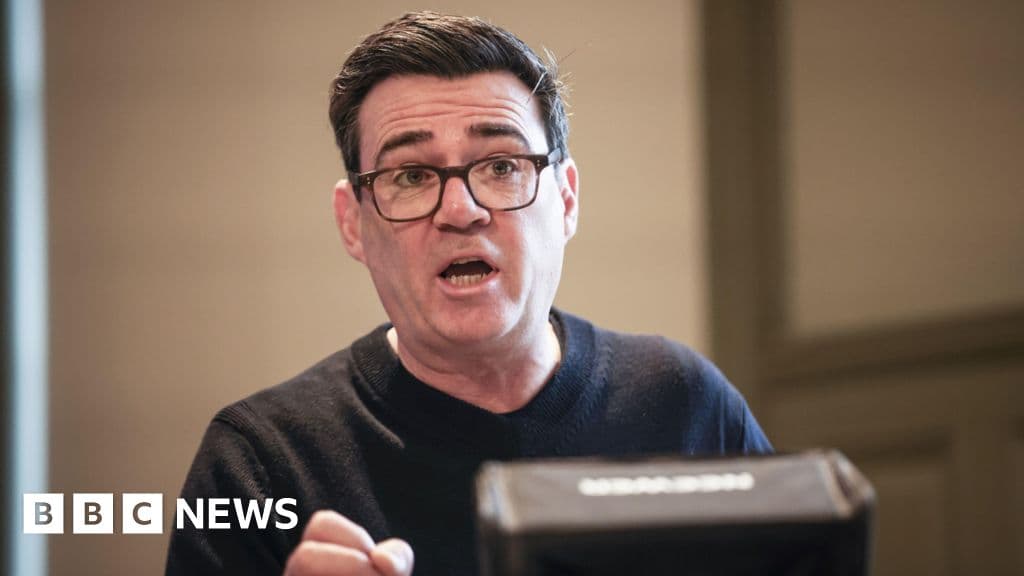
GlipzoIn a bold move to stabilize the financial markets, Greater Manchester Mayor Andy Burnham has reaffirmed his commitment to the UK government's existing fiscal rules. This announcement comes amid rising concerns about government borrowing and economic stability, particularly in light of current global tensions.
Recently, speculation had circulated that Burnham might consider altering these fiscal constraints, particularly to allow for increased defense spending similar to measures taken by Germany. However, in a decisive statement on Monday, Burnham's campaign clarified to BBC News that he would indeed maintain the current fiscal guidelines, a move that has already begun to influence market reactions.
Following Burnham's announcement, the UK 10-year gilt yield—an important indicator of government borrowing costs—experienced a welcome decline, signaling increased investor confidence. The drop in yields was largely attributed to Burnham's efforts to reassure the market during a time of heightened economic uncertainty. Bond market analyst Mohamed El-Erian noted that Burnham's comments played a significant role in stabilizing the UK bond market amid ongoing global financial turbulence.
On the same day as Burnham's announcement, the International Monetary Fund (IMF) urged the UK government to adhere to its fiscal rules, emphasizing the importance of reducing government borrowing faster than other major economies. This call from the IMF underscores the critical role that fiscal discipline plays in maintaining economic stability.
In his recent statements, Burnham emphasized the need for a strategic plan to reduce national debt while also addressing the political turbulence affecting the UK's economic landscape. "There needs to be a plan to get debt down, but beyond that, we need to change politics and take the turbulence out of British politics," he told ITV News. These remarks highlight his awareness of the interconnectedness of fiscal policy and political stability.
The ongoing conflict in the Middle East and the anticipated economic fallout have raised concerns about inflation and interest rates, driving borrowing costs for many G7 nations to levels not seen in decades. As political uncertainty looms, Burnham's commitment to existing fiscal rules could serve as a stabilizing factor amid these external pressures.
Despite Burnham's commitment to the current fiscal framework, some of his supporters, including various think tanks, have proposed adjustments to allow for increased investment spending. However, these proposals suggest deferring any reforms until a budget surplus is achieved, a process that could take several years. This raises questions about Burnham's ability to pursue infrastructure projects, particularly in housing and transportation, without making difficult choices about taxation and other expenditures.
As Burnham navigates these complex fiscal waters, he faces criticism from various political figures, including Conservative shadow chancellor Mel Stride, who warned of what he termed the "Burnham penalty." Stride cautioned that a new prime minister could propose even higher borrowing levels and anti-growth taxes, potentially exacerbating the situation.
In response, a spokesperson for Burnham criticized the Conservative party for their economic policies, arguing they have led to a decline in wealth and power for regions like Makerfield over the past four decades. This back-and-forth highlights the deep political divides surrounding fiscal policy in the UK today.
As the political landscape continues to shift, all eyes will be on Burnham and his ability to balance fiscal discipline with the need for investment in critical infrastructure. Moving forward, it will be essential to monitor how his commitment to the fiscal rules impacts his leadership ambitions and the broader economic environment.
In conclusion, Andy Burnham's steadfast commitment to fiscal responsibility amidst tumultuous global conditions reflects a critical balancing act between economic stability and necessary investment. As he navigates these complex issues, the implications for both his political future and the UK economy will be closely watched by analysts and constituents alike.

Tensions soar as the US and Iran engage in air strikes near the Strait of Hormuz, raising concerns over global oil supply and regional stability.
BBC World
Trump's international interventions face serious stalemates. What will this mean for U.S. foreign policy? Explore the critical challenges ahead.
Indian Express
Tehran denies resignation of President Masoud Pezeshkian amid claims of IRGC influence. What does this mean for Iran's political stability? Click to learn more!
Indian Express