
Image: The Hindu
Israel claims Hezbollah ties to Michigan synagogue attacker, raising alarm over violence. What implications does this have for community safety?
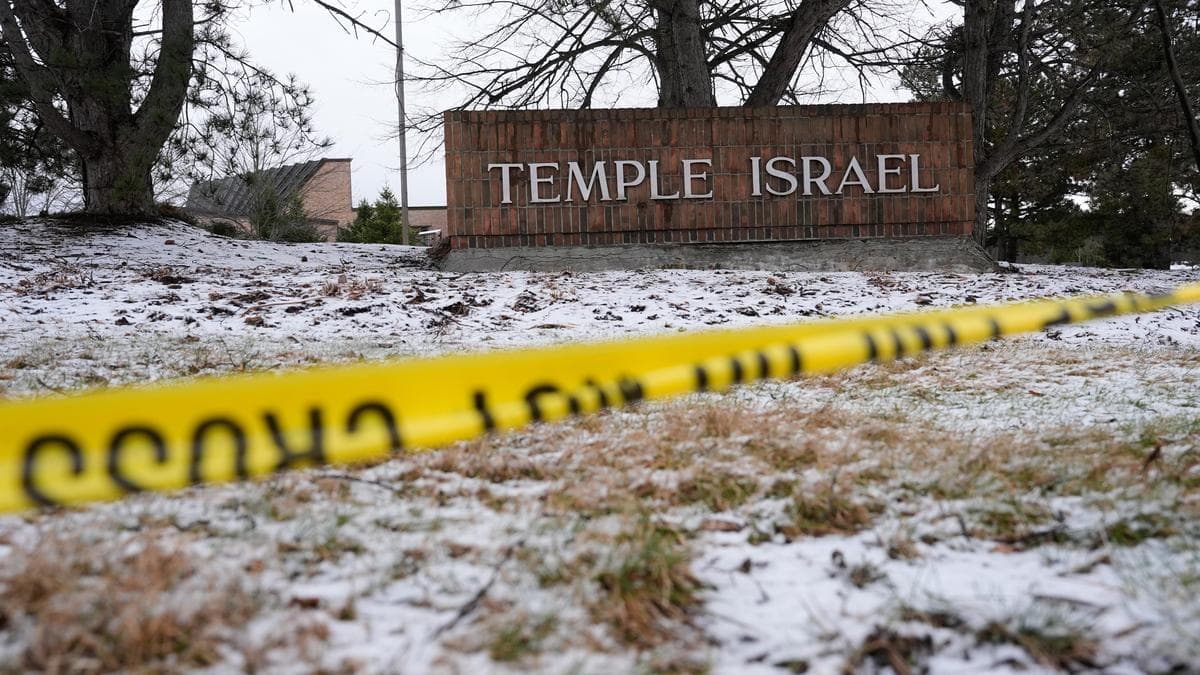
GlipzoIn a shocking development, Israel's military has claimed that Ibrahim Ghazali, the brother of a man who attacked a synagogue in Michigan, was a commander for Hezbollah. This assertion adds a complex layer to the tragic events surrounding the attack, which occurred on March 13, 2026, at Temple Israel in West Bloomfield Township, Michigan.
Ibrahim Ghazali was reportedly killed in an Israeli airstrike on March 5, 2026, just days before his brother, Ayman Mohamad Ghazali, drove his vehicle into the synagogue, subsequently taking his own life after a confrontation with security personnel. This incident has raised numerous questions about the motivations behind Ayman's actions and the implications of his brother's affiliations.
The FBI's Detroit office is currently investigating the synagogue attack but has refrained from commenting on Israel's assertions regarding Ibrahim Ghazali’s militant role. According to FBI spokesman Jordan Hall, the agency is maintaining silence out of respect for the ongoing investigation.
On the day of the attack, Ayman Ghazali, aged 41, reportedly spent approximately two hours parked outside Temple Israel. Equipped with a rifle, commercial-grade fireworks, and containers believed to hold gasoline, he launched a violent assault on the synagogue, which was filled with congregants, including many children.
Eyewitness accounts describe a chaotic scene as Ayman opened fire from his vehicle, prompting an armed security guard to return fire. Tragically, Ayman fatally shot himself after becoming trapped in his burning car, thankfully resulting in no injuries among the staff or children present, largely due to heightened security measures implemented in recent months.
Jennifer Runyan, the FBI’s Detroit field office special agent in charge, noted that while the attack is being treated as violence targeting the Jewish community, there is insufficient evidence at this stage to categorize it as an act of terrorism.
The claims by Israel regarding Ibrahim Ghazali's affiliation with Hezbollah suggest that he was involved in significant militant operations, allegedly managing weaponry for a unit that targeted Israel with rocket fire. A Lebanese official, who spoke anonymously due to the sensitive nature of the bombing, confirmed that Ibrahim and several family members were killed during the airstrike, which struck their home in Lebanon shortly after sunset.
The airstrike that resulted in Ibrahim's death has intensified the scrutiny on Hezbollah, especially as tensions in the region escalate. Israel has ramped up its military actions against the Iran-backed group, leading to a broader conflict that has repercussions across the Middle East.
Ayman Ghazali had moved to the United States in 2011, arriving on an immediate relative visa after marrying a U.S. citizen. He achieved U.S. citizenship in 2016 and resided in Dearborn Heights, a suburb located about 61 kilometers from the synagogue. His background and immigration status add further complexity to the unfolding narrative surrounding the attack.
The incident at Temple Israel coincided with another violent event on the same day: a former Army National Guard member opened fire at Old Dominion University in Virginia, resulting in one death and two injuries. Such incidents highlight a troubling trend of violence in various forms erupting across the nation, raising concerns about security and community safety.
The implications of these developments are vast, reflecting not only on the immediate tragedy of the attack but also on the broader context of rising violence against specific communities in the United States. The FBI's investigation will be crucial in determining the nature of the attack and identifying any potential links to broader terrorist networks.
As security measures are reassessed in response to these incidents, communities may need to brace for increased vigilance and protection against potential threats. The intertwining of local events with international tensions could lead to further unrest and necessitate a deeper understanding of the motivations behind such violence.
Moving forward, it will be essential to monitor the FBI's findings as they continue their investigation into the synagogue attack. The investigation will likely delve deeper into Ayman Ghazali's connections and explore the implications of his brother's alleged role within Hezbollah.
As the situation develops, communities across the United States may require additional support to navigate the complexities of these violent incidents and their impact on social cohesion. The public will be watching closely to see how law enforcement responds and what preventive measures can be taken to safeguard against future acts of violence.
In light of the growing concerns over violence and terrorism, it is critical for communities to engage in discussions about safety, security, and the importance of solidarity among diverse groups. The path forward remains uncertain, but the necessity for vigilance and cooperation is more pressing than ever.

Tensions soar as the US and Iran engage in air strikes near the Strait of Hormuz, raising concerns over global oil supply and regional stability.
BBC World
Trump's international interventions face serious stalemates. What will this mean for U.S. foreign policy? Explore the critical challenges ahead.
Indian Express
Tehran denies resignation of President Masoud Pezeshkian amid claims of IRGC influence. What does this mean for Iran's political stability? Click to learn more!
Indian Express