
Image: Mint (Business)
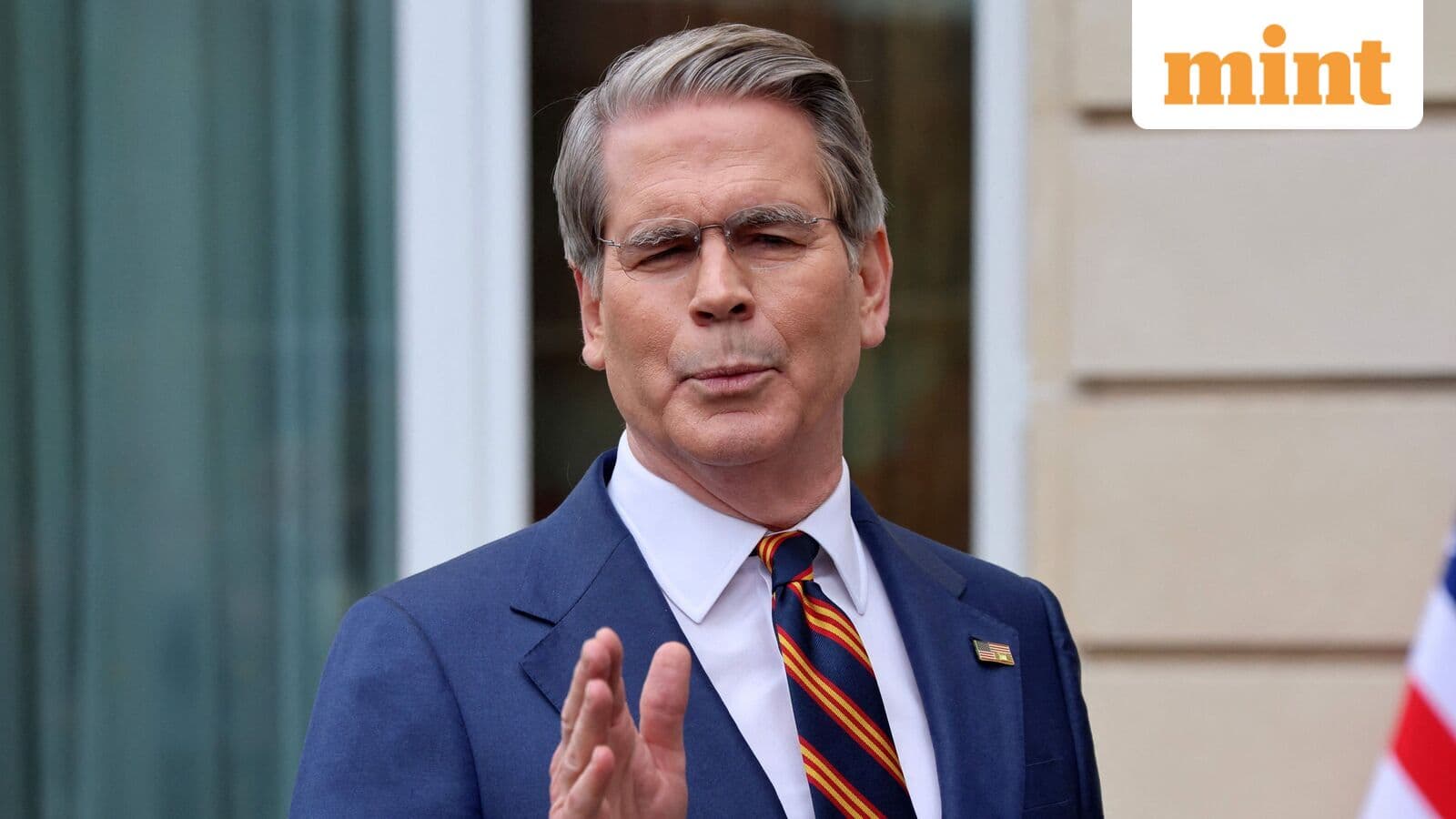
Scott Bessent defends US strikes on Iran, asserting escalation is necessary. What does this mean for global oil prices and Middle East stability?
GlipzoIn a significant escalation of rhetoric surrounding the ongoing Middle East tensions, US Treasury Secretary Scott Bessent has publicly defended the recent US strikes on Iran. Speaking on Sunday, Bessent stated, "sometimes you have to escalate to de-escalate," a remark that underscores the volatile nature of the current geopolitical landscape in the region. His comments were reported by NBC News and come in the wake of a stern warning issued by President Donald Trump via Truth Social, where Trump pressured Iran to reopen the Strait of Hormuz within 48 hours.
The Strait of Hormuz is a critical corridor for global oil shipments, and Trump's ultimatum included severe consequences for Iran’s power infrastructure if they failed to comply. Bessent supported this message, asserting that only strong posturing resonates with Iranian leadership. This defense is particularly relevant as it follows the launch of Operation Epic Fury and Operation Rising Lion, initiated in late February to target Iranian infrastructure shortly after diplomatic discussions concerning Iran’s nuclear ambitions.
In response to the threats from the US, an official spokesperson from Iran issued a stark warning that any attack on its oil facilities would be met with a retaliatory strike. According to Col. Ebrahim Zolfaqari, as reported by state-run IRNA, Iran is prepared to respond vigorously if its fuel and energy infrastructure comes under fire. Zolfaqari emphasized that such actions would also compromise critical systems, including fuel, energy, IT, and desalination facilities utilized by the US and its allies in the region.
The ongoing tensions have raised concerns about direct military engagements in a region already fraught with conflict. While the US has refrained from directly targeting Iran’s oil infrastructure thus far, the situation remains precarious as both sides continue to exchange threats.
During his appearance on Fox Business, Bessent touched on the strategic importance of Kharg Island, a pivotal hub for Iran’s oil production. He confirmed that military assets on the island had been destroyed, and while he did not elaborate on the specifics, he hinted at the possibility of the US eventually securing control over the island. He stated, “all options remain open,” including the deployment of US troops to the site.
Before Bessent's comments, Trump had claimed that the military had already destroyed Kharg Island, asserting that he was not directly involved in the targeting of energy infrastructure. Nevertheless, he acknowledged the extensive time required to rebuild such facilities, suggesting that the US military could carry out further strikes if necessary.
The exchange of threats between the US and Iran has had immediate repercussions on global oil markets. Following the warnings, analysts anticipate a rise in oil prices, which have already surged to levels not seen in nearly four years. On Friday, Brent crude futures for May delivery increased by 3.26%, closing at $112.19 per barrel, while US crude rose 2.27%, settling at $98.32 per barrel.
The situation escalated further as Iran's decision to close the Strait of Hormuz—an essential passageway for about 20% of the world's oil supply—sent shockwaves through the energy markets. Initially, crude oil prices spiked to nearly $120 a barrel before experiencing a slight retreat.
The implications of the current conflict extend beyond regional dynamics and directly influence global energy prices and economic stability. As the US and Iran engage in a tit-for-tat escalation, the potential for further military conflict looms large, threatening to disrupt not only the oil supply but also international diplomatic relations. The Strait of Hormuz remains a focal point for global commerce, and any prolonged closure could lead to significant economic ramifications worldwide.
As the situation develops, observers will be keenly watching: - The US government's next steps regarding military engagement in the region. - Iran's responses to US threats and whether they will escalate military operations. - The impact on global oil prices and the broader economic effects on consumers.
In this volatile environment, the international community is urged to seek diplomatic resolutions to prevent further escalation—a task that appears increasingly challenging in light of the current exchanges between Washington and Tehran.
Looking forward, the actions taken by both the US and Iran will be critical in shaping the future of the Middle East and global energy markets. With tensions unlikely to subside soon, the potential for military confrontation remains a pressing concern. As both sides maneuver for strategic advantage, the world watches closely, hoping for a resolution that avoids further conflict and restores stability to one of the most crucial regions in the world.
Stay tuned for more updates on this developing story and its implications for global security and energy stability.

Tensions soar as the US and Iran engage in air strikes near the Strait of Hormuz, raising concerns over global oil supply and regional stability.
BBC World
Trump's international interventions face serious stalemates. What will this mean for U.S. foreign policy? Explore the critical challenges ahead.
Indian Express
Tehran denies resignation of President Masoud Pezeshkian amid claims of IRGC influence. What does this mean for Iran's political stability? Click to learn more!
Indian Express