
Image: Indian Express
Explore Romila Thapar's memoir, 'Just Being', where she shares insights on history, identity, and the journey of India amid contemporary debates.
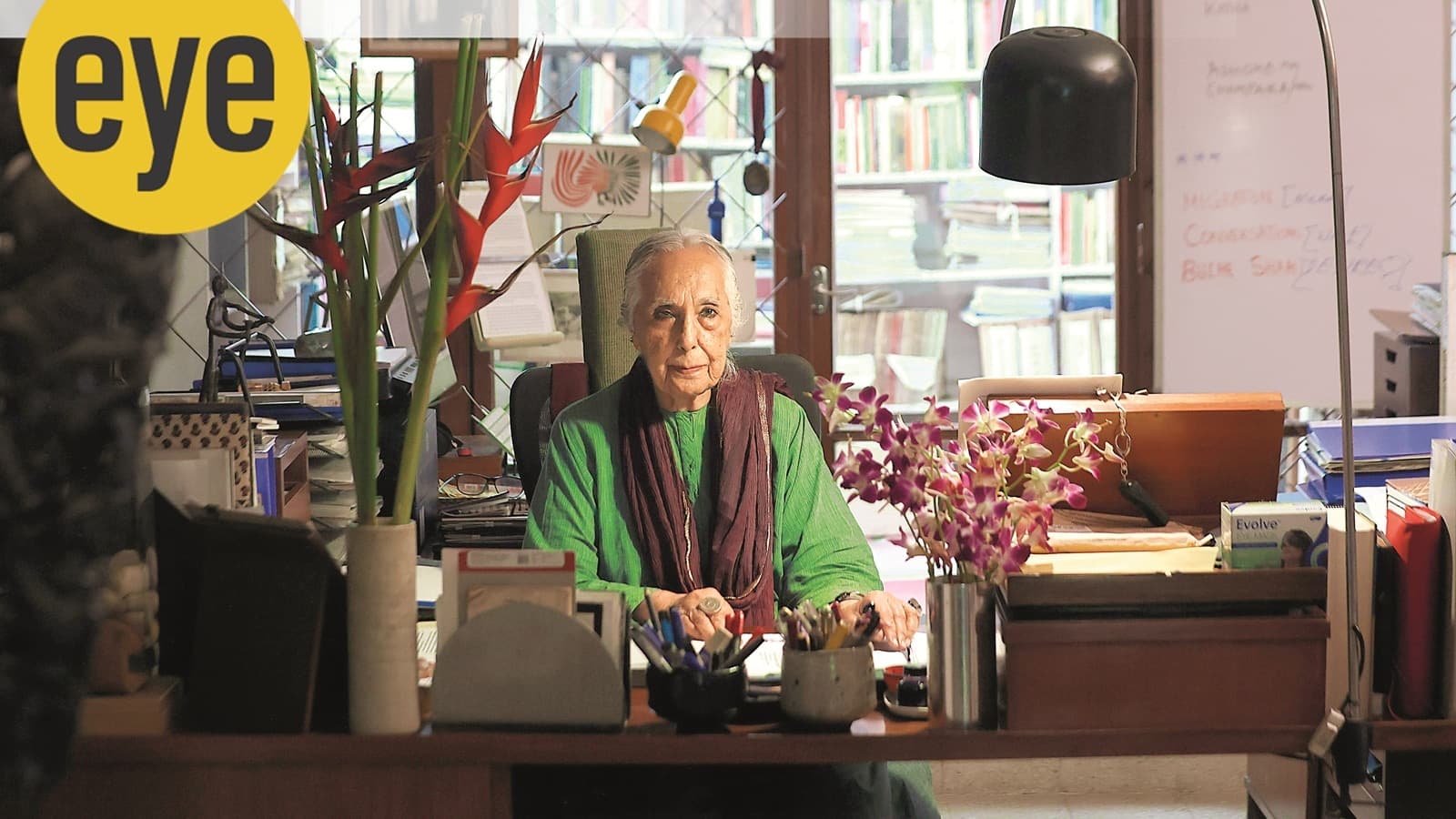
GlipzoIn the heart of Maharani Bagh, a peaceful living room serves as the backdrop for a conversation with Romila Thapar, one of India's most celebrated historians. Despite the intense debates surrounding history in India today, the ambiance here is calm, a stark contrast to the ideological battles unfolding outside. Thapar, who celebrated her 94th birthday last November, sits comfortably as she reflects on her life and the intricate tapestry of Indian history. Her dachshund, Bulleh, named after the revered Sufi poet Bulleh Shah, basks in the quiet, while the walls are adorned with tribal art and playful photographs that pay homage to her youthful fascination with cars.
Thapar's newly released memoir, Just Being (Seagull Books, 2026), unveils not just her personal history but also mirrors the evolution of the nation. The memoir, a significant undertaking initiated during the COVID pandemic, captures her thoughts, memories, and insights into India's complex past. “Initially, I hesitated to share my story, thinking it wouldn't interest anyone. But I was encouraged to publish while I’m still alive rather than waiting until after I’m gone,” Thapar shares, revealing her journey from a reluctant author to a passionate storyteller.
Romila Thapar's journey into the realm of history began against the backdrop of India's independence in 1947. Growing up in Pune, her early experiences shaped her worldview. As a prefect, she was honored to raise the Indian flag, a moment that sparked conversations about the aspirations for a new nation. “There was tremendous excitement about what kind of society we would build,” she recalls, reflecting on the initial hopes for substantial changes post-independence. “While some dreams were realized, many were stymied along the way.”
Thapar's formative years were spent moving across various Indian towns due to her father's career as an army doctor. Each relocation deepened her appreciation for diverse cultures and histories. A significant encounter with Pathan women in the North-West Frontier Province, now part of Khyber Pakhtunkhwa, introduced her to the intricate beauty of silver jewelry, igniting her lifelong passion for rings.
Her father’s burgeoning interest in Indian art during her teenage years further influenced her academic trajectory. “He began reading about the history of Indian art, and during a six-month break from school, he encouraged me to explore these subjects,” she recalls. Initially resistant, Thapar soon found herself captivated by ancient history, setting the stage for her illustrious career.
Thapar’s academic journey led her to the School of Oriental and African Studies (SOAS) in London, where she pursued a BA (Hons) in Ancient Indian History. This decision was transformative, as she chose education over a conventional path of marriage, a choice her father had financially supported. “At SOAS, I discovered both history and a sense of freedom that shaped my academic philosophy,” Thapar explains.
Her groundbreaking works have significantly altered the narrative of early Indian history, moving beyond mere facts to explore the 'whys' and 'hows' of historical events. This approach not only enriches the understanding of India’s past but also encourages critical thinking about present-day societal structures.
Thapar's memoir arrives at a critical time when the interpretation of history is under intense scrutiny in India. The Aryan question, a subject that has sparked fierce debates among scholars and politicians alike, remains a pivotal topic in contemporary discussions about national identity and cultural heritage. Thapar has often been a vocal advocate for a nuanced understanding of such complex issues, emphasizing the need for dialogue over dogma.
“I believe history is meant to be debated and discussed, not weaponized for political gain,” she states firmly. This perspective has positioned her as a key figure in the ongoing discourse about the role of history in shaping contemporary Indian society.
Thapar’s insights and experiences are invaluable, especially as they resonate with younger generations grappling with their identity in a rapidly changing world. Her memoir not only chronicles her personal journey but also serves as a reminder of the importance of historical literacy in fostering an informed citizenry.
As Thapar continues to engage with both academia and the public, her work reminds us of the importance of preserving a multifaceted narrative of history. The challenges and opportunities ahead for historians in India are vast, and as Thapar’s memoir illustrates, the dialogue surrounding history is far from over.
The legacy of Romila Thapar will undoubtedly influence future generations of historians and scholars. As India navigates its position in the global arena, the need for an inclusive understanding of its past becomes increasingly critical.
In conclusion, as we look ahead, Thapar’s contributions will be essential in shaping the ongoing conversations about history, identity, and nationhood in India. What remains to be seen is how future historians will engage with the narratives she has so passionately advocated for and whether they will continue to challenge the historical status quo.

Tensions soar as the US and Iran engage in air strikes near the Strait of Hormuz, raising concerns over global oil supply and regional stability.
BBC World
Trump's international interventions face serious stalemates. What will this mean for U.S. foreign policy? Explore the critical challenges ahead.
Indian Express
Tehran denies resignation of President Masoud Pezeshkian amid claims of IRGC influence. What does this mean for Iran's political stability? Click to learn more!
Indian Express