

Image: The Guardian World
Discover the alarming rise in jihadist violence in Nigeria and DRC, even as global terrorism deaths decline. What does this mean for global security?
GlipzoA striking report has revealed an unsettling rise in jihadist violence in Nigeria and the Democratic Republic of Congo (DRC) during 2025, despite a significant global decline in terrorism-related deaths. While worldwide fatalities dropped to their lowest levels in a decade, Nigeria experienced a staggering 46% increase in terrorism deaths, ranking fourth in the Global Terrorism Index. This alarming trend underscores the complex security challenges facing these nations and highlights the need for immediate intervention.
In total, 750 terror-related deaths were reported in Nigeria, soaring from 513 in 2024. This dramatic increase places Nigeria behind only Pakistan, Burkina Faso, and Niger on the global scale, indicating that the country is grappling with a severe crisis fueled by extremist groups such as Boko Haram and its splinter factions. The majority of violence is concentrated in northern and central regions, where criminal organizations and ethnic militias also contribute to the ongoing turmoil. Moreover, newer threats like the Lakurawa group have begun to emerge, further complicating the already dire situation.
A particularly harrowing incident occurred in February 2025, when 162 individuals were brutally killed in Kwara state, near the border with Benin. This massacre represents one of the deadliest attacks in Nigeria's recent history, signifying a growing trend of extreme violence in the region. In response to the escalating threat, the Nigerian army has intensified its operations. Recently, troops, supported by air units, successfully repelled a coordinated assault on a military base in Borno state, resulting in the deaths of at least 80 insurgents, including several high-ranking commanders.
The Borno state capital, Maiduguri, has also faced a surge in violence, with multiple suicide bombings occurring on the same day as the military assault. These tragic incidents led to 23 deaths and over 100 injuries, illustrating the persistent and evolving nature of terrorism in Nigeria.
The situation is similarly grave in the DRC, where terrorism-related fatalities surged by nearly 28% in 2025, increasing from 365 to 467. This uptick pushed the DRC down to the eighth position on the Global Terrorism Index, marking its worst ranking to date. The Allied Democratic Forces (ADF), an affiliate of the Islamic State, has been identified as a primary driver of this increase, further exacerbating the security crisis in the region.
Interestingly, this rise in Nigeria and the DRC is at odds with global trends. The Institute for Economics & Peace (IEP) report indicates a 28% decline in terrorism deaths worldwide, totaling 5,582 fatalities, alongside a 22% drop in total attacks. Significantly, there has been a 280% increase in terrorism-related deaths in the western world, marking a shift in the landscape of global terrorism.
In the United States, 28 individuals lost their lives to terrorist attacks in 2025, the highest number recorded since 2019. This surge has raised concerns about youth radicalization and the emergence of lone-wolf actors contributing to the violence. As Steve Killelea, founder of IEP, emphasizes, these contrasting trends illustrate a “fracturing world order” that threatens to undo the hard-won progress against terrorism achieved over the last decade.
The report highlights that more than 50% of all terrorism-related deaths globally occurred in the Sahel region, which remains a focal point for extremist activities. Despite an overall decrease in fatalities, Burkina Faso saw the most significant drop in terrorism deaths, with a 50% reduction noted in 2025. Civilians in the region benefited from an 84% decrease in casualties, suggesting a potential shift in tactics among jihadist groups.
Experts suggest that the Jamaat Nusrat al-Islam wal Muslimeen (JNIM), an al-Qaeda affiliate, is strategically modifying its approach to warfare. By focusing on high-value military targets rather than civilian casualties, JNIM is attempting to consolidate its territorial gains and win the “hearts and minds” of the local population. This tactic reflects a calculated move to enhance their operational effectiveness as they expand their control over territory.
Killelea points out that this shift can be attributed to a balancing act between “value and vulnerability.” As JNIM increasingly controls more territory, they are better positioned to conduct sophisticated attacks on military and political targets, minimizing civilian risks and maximizing their strategic advantages.
In line with this evolving strategy, jihadist groups have increasingly employed drone technology to conduct assaults. JNIM has reportedly executed more than 100 drone-related attacks in the Sahel over the past three years, while the Islamic State West Africa Province (ISWAP) has also engaged in drone strikes, with ten incidents directly involving drone technology.
As the security situation worsens in Nigeria and the DRC, the international community faces pressing questions about how to effectively combat these rising threats. The ongoing conflict highlights the urgent need for comprehensive strategies that address the root causes of extremism while enhancing state capacity to combat terrorism.
Looking ahead, observers should monitor the evolving tactics of jihadist groups, the potential for regional cooperation in counter-terrorism efforts, and the impact of global geopolitical shifts on local conflicts. The deteriorating security landscape in Nigeria and the DRC serves as a stark reminder of the challenges that lie ahead in the fight against terrorism.
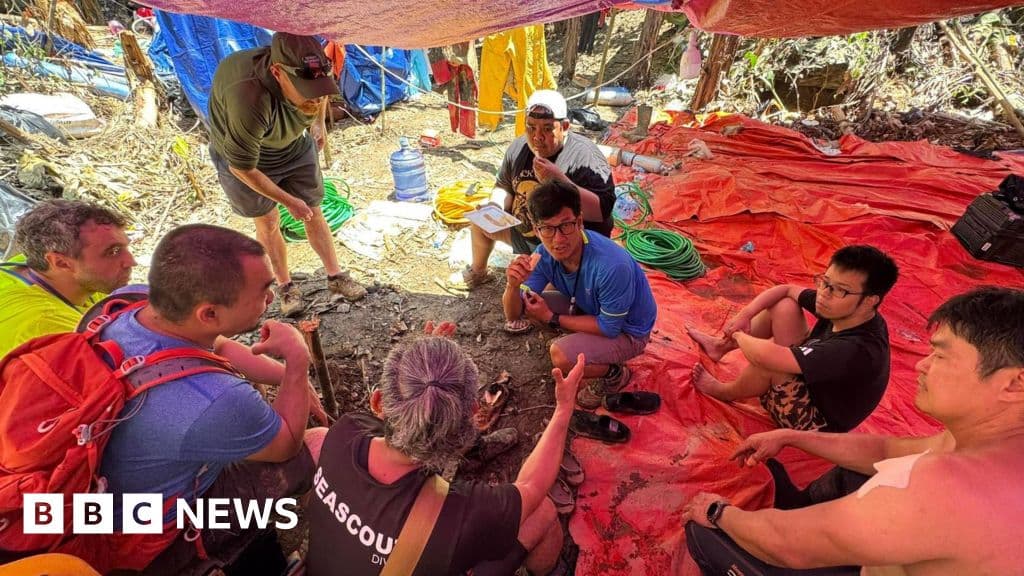
Survivors of the Laos cave rescue are aiding efforts to find the last two missing men trapped inside, sharing crucial insights for the search operation.
BBC World
A year after the tragic Air India crash, the Ali family reflects on grief, unanswered questions, and the enduring bonds of love in the face of loss.
BBC Business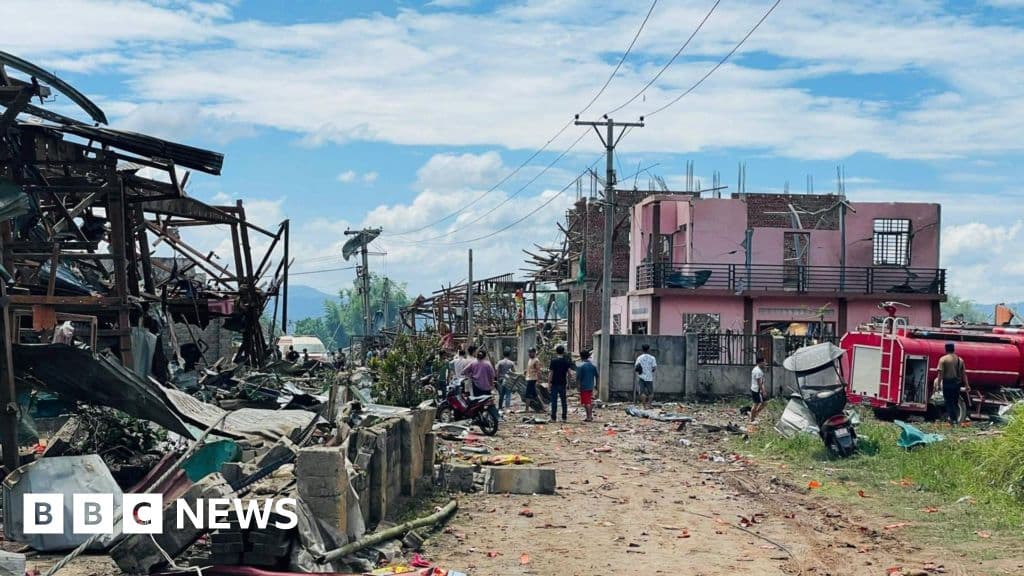
A devastating explosion in Myanmar's Kaung Tat village has killed at least 55 people, raising serious safety concerns and questions about civilian protection in conflict zones.
BBC World