
Image: Indian Express
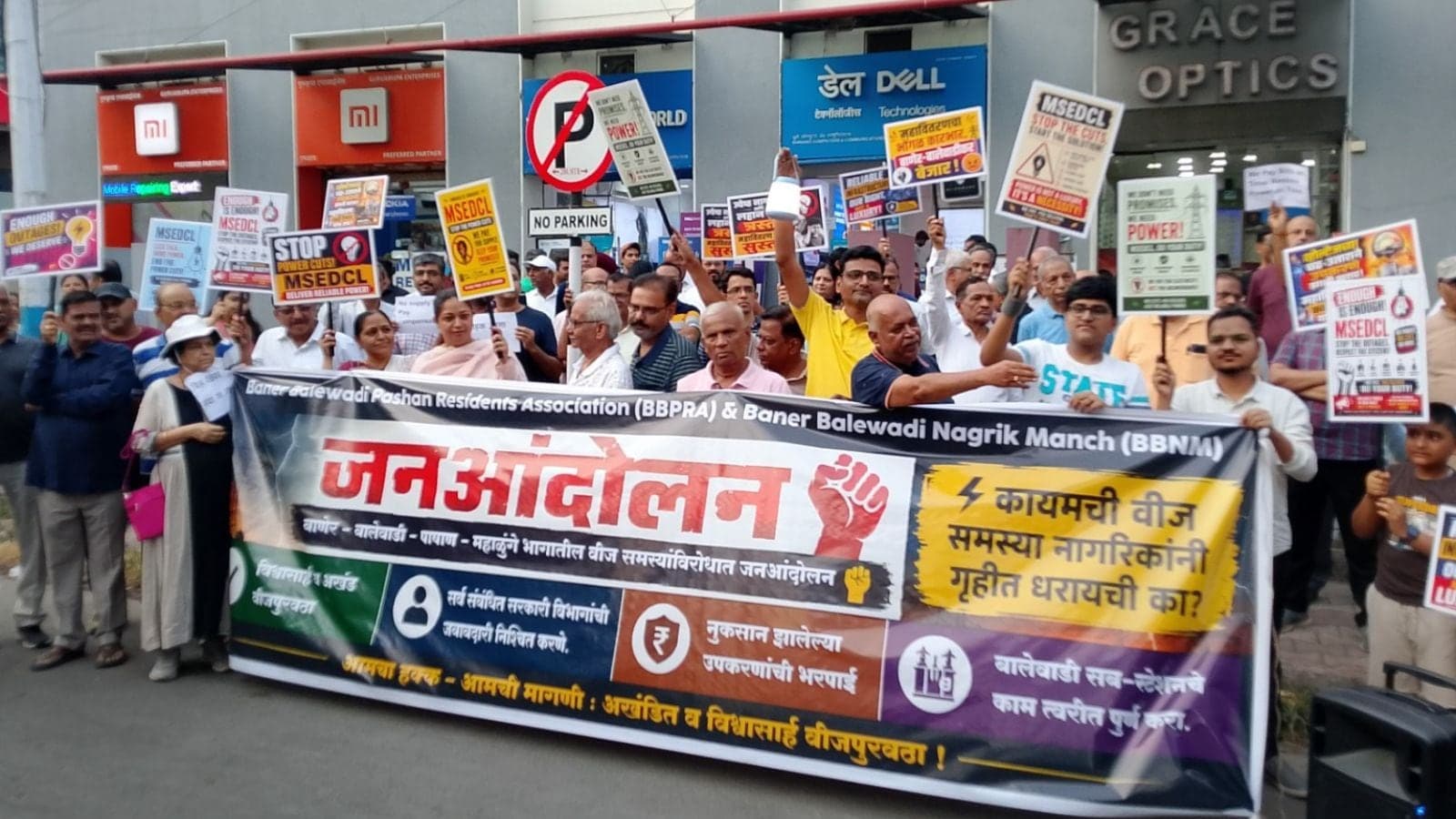
Residents in Pune's Baner-Balewadi protest frequent power cuts, demanding urgent action from MSEDCL to improve infrastructure. What’s next for the community?
GlipzoIn a significant show of frustration, residents from Baner, Balewadi, Pashan, and Mahalunge gathered at Balewadi Phata on Saturday evening to voice their concerns over persistent power outages affecting their neighborhoods. This protest, organized by the Baner Balewadi Pashan Residents Association (BBPRA) and the Baner Balewadi Nagrik Manch (BBNM), highlighted the grievances of locals against the Maharashtra State Electricity Distribution Company Limited (MSEDCL) for what they describe as “frequent, prolonged, and unannounced power cuts.”
The gathering saw residents chanting slogans and expressing their anger about the ongoing electricity issues that have become increasingly unpredictable. Many participants adhered to the organizers' requests to maintain traffic flow and allow space for vehicles, despite the urgency of their message. The protests stem from a mounting sense of frustration, particularly as these power interruptions have significantly impacted various aspects of daily life for residents.
Residents have reported that the power disruptions are especially detrimental to work-from-home professionals, students, and senior citizens. The outages have created chaos in homes, affecting everything from internet connectivity to the operation of essential appliances.
Advocate S O Mashalkar, the President of BBPRA, articulated the collective sentiment: “People have reached a breaking point.” He highlighted that many housing societies have endured power cuts lasting between four and nine hours, which have disrupted elevators, inverter systems, and work-from-home setups.
The situation is further exacerbated by the reliance on electric-powered water pumps in several housing societies. With the power cuts, residents face not only a lack of electricity but also a compromised water supply, impacting their daily routines.
The residents attribute the increasing frequency of power outages to rapid urbanization and large-scale construction in the Baner-Balewadi area. Ameya Jagtap, a member of BBNM, criticized the lack of foresight in infrastructure planning, stating, “Massive high-rises and IT buildings have come up, but nobody thought about whether the existing infrastructure could support this kind of growth.”
Sarang Wable, Secretary of BBPRA, echoed these concerns, stating that the area’s electrical infrastructure has failed to adapt to the swift pace of urban development. “We call Baner and Balewadi ‘Smart City’ areas, but residents are facing frequent power cuts,” he remarked.
Residents also pointed out the risks posed by exposed underground cables and frequent road excavations, which they believe contribute to short circuits and further electricity disruptions. Sanjeev Singh, a local resident, expressed his frustration, stating, “There is no count. There is no predictability at all. You can’t plan anything because you never know when the light will be on or off.” This unpredictability has disrupted daily life in an area heavily reliant on internet connectivity and remote work arrangements.
The electricity load in the Baner-Balewadi region has skyrocketed due to the influx of both residential and commercial developments in recent years. Vijay Varangaokar, a retired electrical engineer previously with Tata Consulting Engineers, emphasized that the rising electricity demand during the summer months has intensified pressure on the existing infrastructure.
Residents have expressed concern that the ongoing power cuts and voltage fluctuations are leading to increased costs associated with inverters, generators, and the repair of damaged appliances. Vijaya Patil, a resident, illustrated the severity of the situation: “The power goes out for five hours at a time. From heating water to preparing breakfast for children, everything gets disrupted.” She also noted that the outages are particularly challenging for children preparing for important examinations.
Amid the protests, concerns were raised regarding the safety and accessibility issues faced by senior citizens living in high-rise buildings. With elevators often rendered useless during power cuts, elderly residents and patients find it increasingly difficult to navigate their homes. This situation has prompted calls for urgent action to address these issues.
A key demand from the protestors was the expedited completion of a proposed power substation in Balewadi, which they believe is crucial for meeting the growing electricity needs of the area.
As residents continue to express their frustrations over the lack of reliable electricity, the pressure on MSEDCL to address these issues mounts. While the protests aim to draw attention to the pressing need for infrastructure improvements, it remains to be seen how quickly the authorities will respond. Local leaders and residents are hopeful that the visibility from such demonstrations will prompt action on the proposed power substation and improvements to the electricity distribution system.
In the coming weeks, it will be essential to monitor how MSEDCL addresses the ongoing concerns of the community. With the increasing reliance on technology and electricity for daily life, ensuring a stable power supply is not just a convenience but a necessity for residents in this rapidly developing area of Pune.

Tensions soar as the US and Iran engage in air strikes near the Strait of Hormuz, raising concerns over global oil supply and regional stability.
BBC World
Trump's international interventions face serious stalemates. What will this mean for U.S. foreign policy? Explore the critical challenges ahead.
Indian Express
Tehran denies resignation of President Masoud Pezeshkian amid claims of IRGC influence. What does this mean for Iran's political stability? Click to learn more!
Indian Express