
Image: Indian Express
A rare 17th-century astrolabe from Indian royalty heads to Sotheby's auction, potentially breaking records with an estimated price of £1.5M-£2.5M.
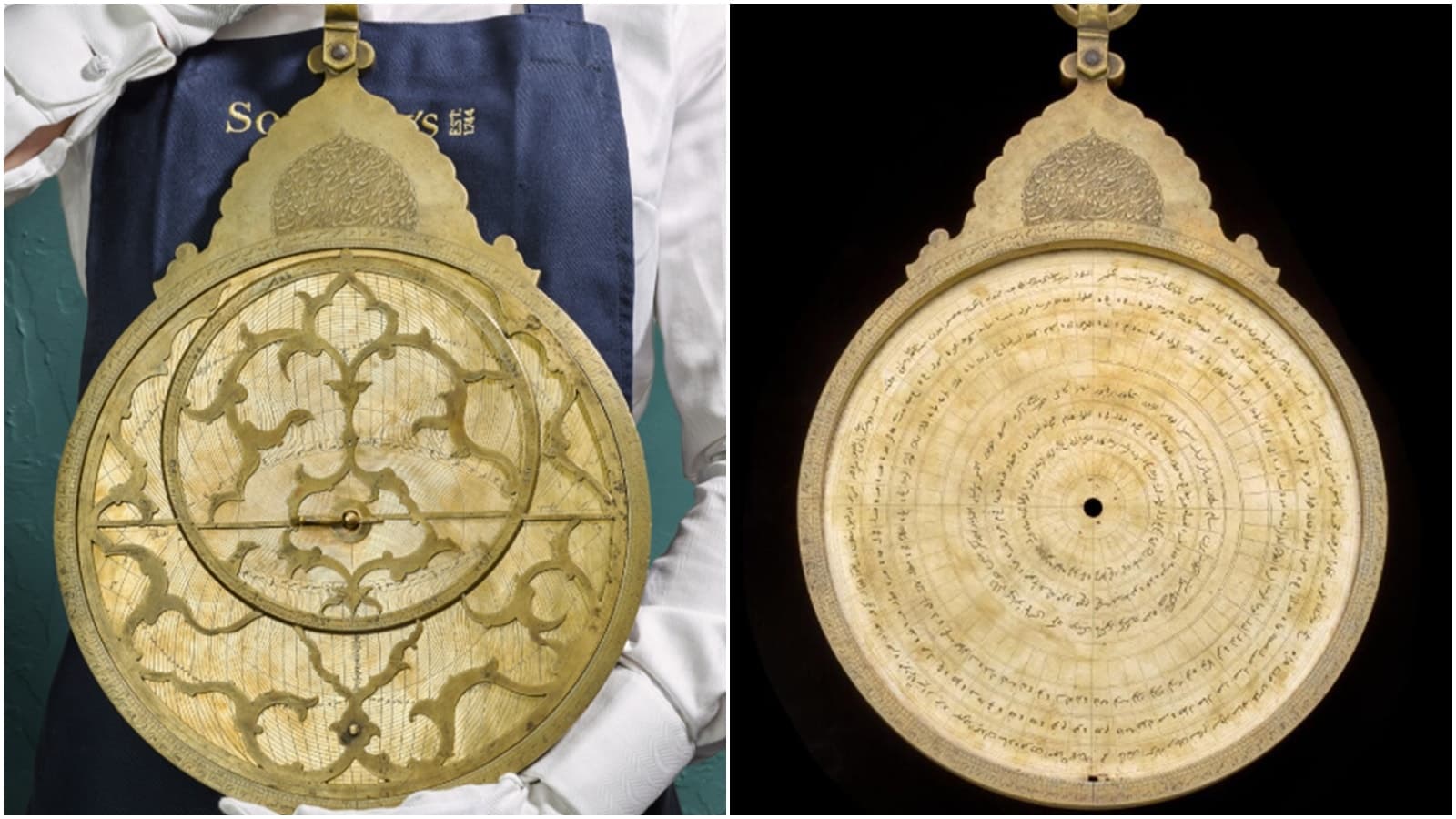
GlipzoA remarkable 17th-century astrolabe, weighing 8.2 kg and standing 45.9 cm tall, is set to make waves at Sotheby’s upcoming auction on April 29 in London. Once part of the illustrious collection of Maharaja Sawai Man Singh II, this extraordinary brass instrument later passed down to Maharani Gayatri Devi. As one of the largest astrolabes known, it comes from a private collection in London and is estimated to fetch between £1.5 million and £2.5 million. This auction could potentially set a new record for astrolabes in the market.
The astrolabe is not just a scientific instrument; it’s a masterpiece of craftsmanship, described in auction notes as “an outstanding testament to the craftsmanship of the leading makers of the Lahore School.” It is one of only two known astrolabes created by renowned makers Qa’im Muhammad and Muhammad Muqim, who worked in a family workshop established by Sheikh Ilah-dad, the Royal astronomer to the second Mughal Emperor, Humayun. Completed in 1612, the piece was commissioned by Aqa Afzal, a Mughal nobleman overseeing Lahore during the reign of Emperor Jahangir.
The intricate details of this astrolabe include: - Geographical index engraved on the interior of the mater. - A solar quadrant and shadow squares on the reverse. - A rete adorned with arabesque star pointers for 38 stars, inscribed with both Persian and Sanskrit names. - Five plates indicating the localities for significant Islamic regions, including Mecca, Kashmir, and Lahore.
The astrolabe’s ecliptic ring features 12 zodiac signs, with elongated letters engraving their names, showcasing not only its astronomical function but also its artistic beauty. The inscription “usturlab e tam” indicates that it is a complete astrolabe, carrying 90 almucantar circles.
In addition to this historical astrolabe, Sotheby’s auction will showcase several other noteworthy pieces: - A 9th-10th century Qur’an leaf featuring stunning gold Kufic script on blue vellum. - A 12th-13th century silver ewer with niello decoration, traceable to either Persia or Central Asia. - An 1811-20 Indian miniature painting depicting the divine figures Radha and Krishna. - A 16th-century Ottoman Cairene rug, further enriching the auction's diverse offerings.
These pieces not only reflect the rich heritage of Islamic art but also underscore the profound historical connections that these artifacts share across cultures and eras.
Vandana Kalra, a prominent art critic and Deputy Associate Editor at The Indian Express, offers insights into the significance of such pieces as the astrolabe. With over two decades of experience in arts and culture journalism, Kalra is an authoritative voice in contemporary Indian art. Her engagement with the arts reflects the evolving landscape of India’s cultural ecosystem, from the burgeoning art market to significant global exhibitions.
Kalra’s career has paralleled the rise of key art events, including the Venice Biennale and the Kochi-Muziris Biennale. She has covered pivotal moments in modern Indian art, such as SH Raza’s exhibition at the Centre Pompidou in Paris, showcasing her deep understanding of art's historical and cultural contexts.
The sale of this astrolabe is not merely about auctioning a historical item; it represents a critical intersection of science, art, and royal heritage. As collectors and institutions vie for pieces like this astrolabe, it illuminates the ongoing appreciation for Mughal history and the sophisticated craftsmanship of the era. Such artifacts serve as tangible links to past civilizations, enabling us to explore the scientific advancements and artistic expressions of the time.
As the auction date approaches, art enthusiasts and collectors worldwide will be closely monitoring the results. The expected high bidding could indicate a resurgence in interest for historical scientific instruments, especially those with royal provenance. The outcome of this auction may also influence future investments in similar artifacts, potentially altering the landscape of collectibles in the realm of Islamic art and history.
For those interested in the astrolabe and its companions, this auction represents an opportunity to engage with history, art, and science in a way that is both enriching and enlightening. Keep an eye on Sotheby’s auction results as they may shape the future of collecting and appreciation for such unique historical treasures.