
Image: BBC World
Putin suggests the Ukraine conflict may be nearing its end. What does this mean for future relations? Explore the implications of his statements.
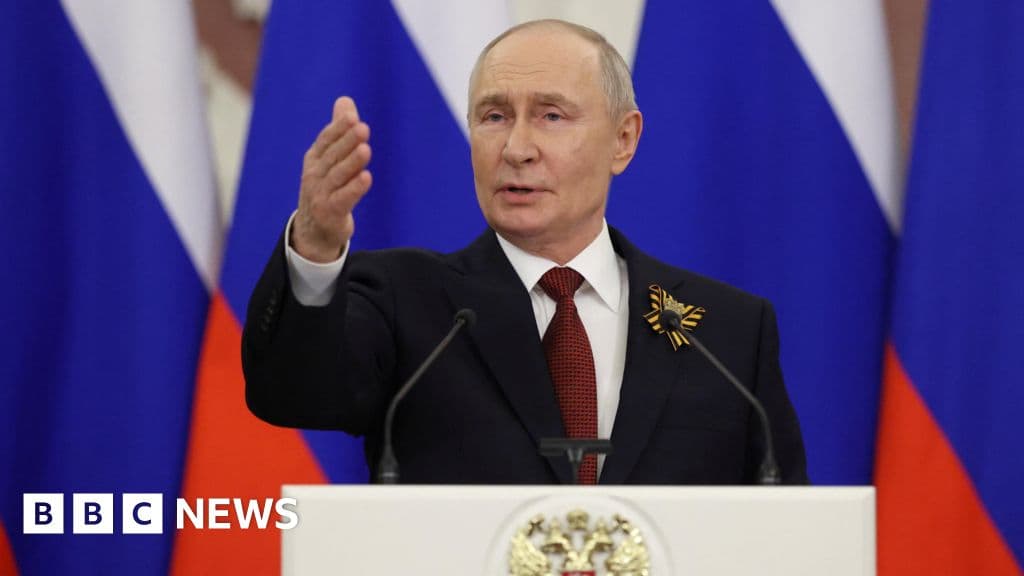
GlipzoIn a surprising statement during a recent press conference, Russian President Vladimir Putin expressed his belief that the ongoing conflict with Ukraine is nearing its conclusion. This announcement came after a scaled-back military parade in Moscow commemorating the Soviet victory in World War II. Putin’s comments sparked intrigue and questions regarding the future of U.S.-Russia relations and the situation in Ukraine.
"I think that the matter is coming to an end," Putin stated, referring to Russia's so-called "special military operation" in Ukraine. He criticized Western nations for their support of the Kyiv government, noting that their involvement has exacerbated tensions. This statement is particularly noteworthy given the ongoing international scrutiny of Russia's military actions and the complexities surrounding the conflict.
This year's annual Victory Day parade in Moscow was significantly subdued, lacking the typical display of military hardware such as tanks and missiles. Authorities cited security concerns, worried that Ukraine might retaliate with drone strikes on Red Square. The decision to scale back the show of military might marks a stark contrast to previous years, where such displays were meant to project strength and deter adversaries.
A last-minute ceasefire, brokered by former U.S. President Donald Trump, allowed the parade to proceed without incident, reducing the risk of potential attacks. Despite this uneasy calm, Putin's rhetoric indicated a persistent resolve in his approach to the conflict, stating that Ukraine is an “aggressive force” supported by NATO, which he claims is fueling the ongoing confrontation.
Putin's remarks coincide with a Victory Day speech in which he justified the war as a “just” cause, framing Russia as a defender against Western aggression. This narrative has been central to his administration's communications since the 2014 annexation of Crimea and the full-scale invasion that began in February 2022. The continued conflict has resulted in significant casualties and geopolitical instability, drawing widespread condemnation from the international community.
He went on to emphasize that any discussions with Ukraine's President Volodymyr Zelensky would only take place once a lasting peace agreement is in sight. "A meeting in a third country is also possible, but only once final agreements have been reached on a peace treaty for a long-term historical perspective," he said, underlining the conditions under which he would be open to dialogue.
Putin acknowledged that he had heard Zelensky express readiness for a personal meeting, but he remained skeptical, noting that such claims have surfaced before without leading to substantial progress. He indicated a willingness to negotiate new security arrangements for Europe, expressing a preference for discussions to include former German Chancellor Gerhard Schröder, a controversial figure due to his ties to Russian energy companies and his longstanding friendship with Putin.
The recent ceasefire agreement included a significant prisoner swap, with both sides committing to exchange 1,000 prisoners. However, Putin indicated that Russia had yet to receive a response from Ukraine regarding these exchanges, highlighting ongoing communication barriers that complicate peace efforts.
For the first time in nearly two decades, the Red Square parade was devoid of military equipment, a notable shift in tradition that reflects the current state of affairs. Furthermore, the event saw a significant reduction in international media coverage, with many outlets being denied access. This lack of transparency may signal a strategic move by the Kremlin to control the narrative surrounding the conflict and its military capabilities.
Putin's declaration that the conflict may be winding down raises critical questions about the future of Ukraine and the broader geopolitical landscape. International relations are at a crossroads, as the West continues to grapple with its response to Russia's actions. The potential for renewed dialogue could pave the way for de-escalating tensions and rebuilding diplomatic relations, but skepticism remains high.
As the situation unfolds, key factors to monitor include: - Future negotiations between Russia and Ukraine, especially regarding peace treaties. - The role of Western nations in supporting Ukraine and how that influences Putin's strategy. - Domestic reactions within Russia to the ongoing military operations and any potential shifts in public opinion.
As we move forward, the international community must remain vigilant and responsive to the developments in the Ukraine conflict. Will Putin's optimistic outlook lead to genuine progress towards peace, or is it merely a facade to mask ongoing hostilities? The coming weeks and months will be pivotal in shaping the trajectory of this conflict, and the world will be watching closely to see if any meaningful resolutions can be achieved.
Ultimately, the path to peace in Ukraine remains fraught with challenges, but the possibility of dialogue, however tentative, offers a glimmer of hope amidst the ongoing strife.

Tensions soar as the US and Iran engage in air strikes near the Strait of Hormuz, raising concerns over global oil supply and regional stability.
BBC World
Trump's international interventions face serious stalemates. What will this mean for U.S. foreign policy? Explore the critical challenges ahead.
Indian Express
Tehran denies resignation of President Masoud Pezeshkian amid claims of IRGC influence. What does this mean for Iran's political stability? Click to learn more!
Indian Express