
Image: Indian Express
Discover Pralhad Joshi's insights on BJP's electoral triumphs, digital transformation in food subsidies, and future plans for upcoming elections.
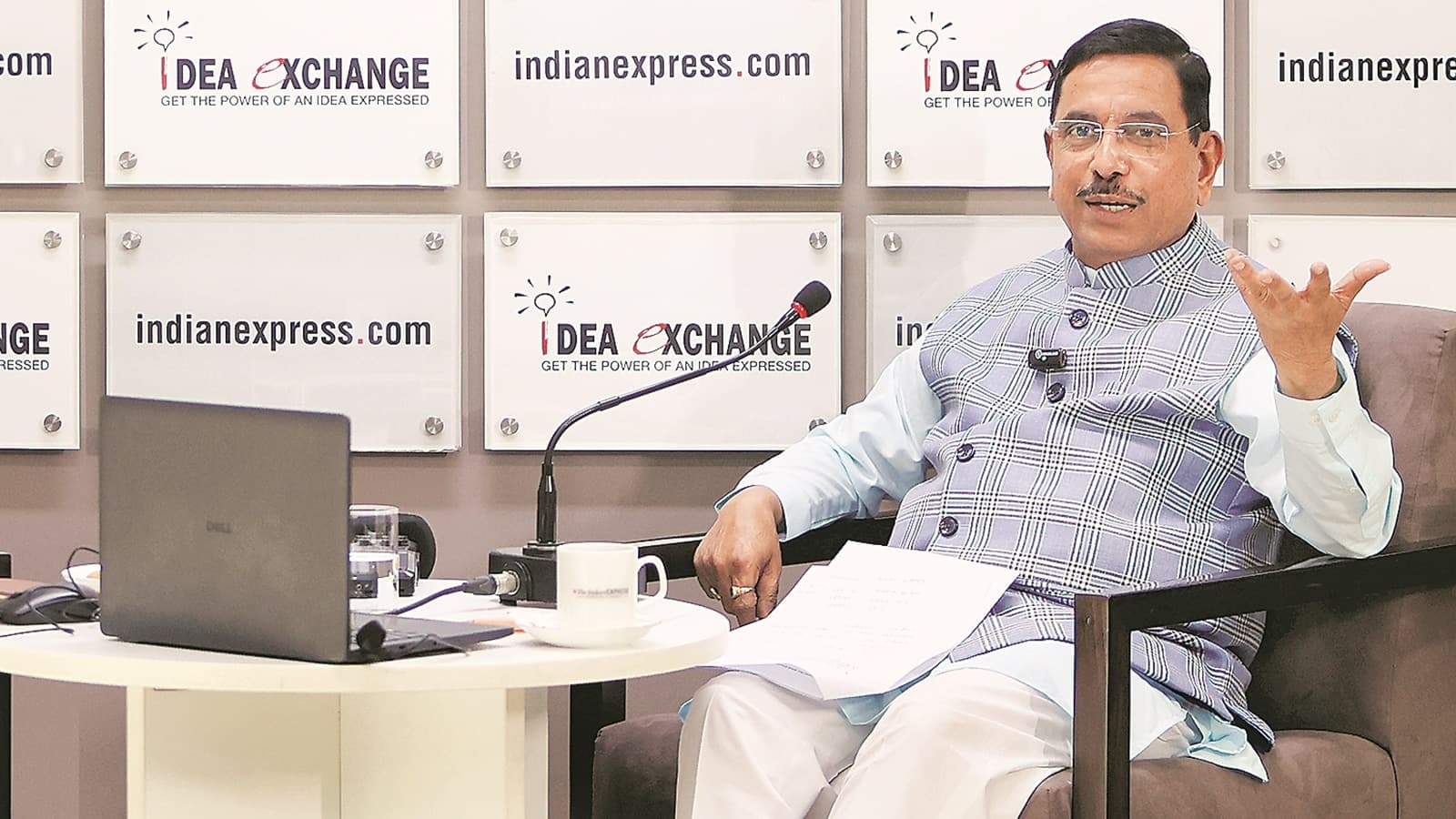
GlipzoPralhad Joshi, Union Cabinet Minister of Consumer Affairs, Food and Public Distribution, and New and Renewable Energy, recently shared his thoughts on the BJP's electoral victories in Assam and West Bengal during a session moderated by Harikishan Sharma, Senior Assistant Editor at The Indian Express. Joshi emphasized the importance of good governance and an honest approach to public service as the driving forces behind the party's success in these eastern states.
In Assam, Joshi attributed the BJP's win to effective governance and a genuine commitment to the welfare of the people. He noted, "If your intentions are good, and if you work honestly, ultimately, this is the outcome." The minister criticized the Congress party, stating that its arrogance has led many to question their loyalty to it. He pointed out that the changing political landscape in West Bengal was influenced by anti-incumbency sentiments against the ruling party and its perceived failures in maintaining law and order.
Joshi reflected on how the Election Commission played a crucial role in ensuring a transparent electoral process this time around. He highlighted that a remarkable 93 percent voter turnout was achieved, a testament to the efforts made to facilitate a free voting environment. He remarked, "People were really fed up... they were never allowed to vote before." This time, however, the BJP took a proactive approach, with ministers actively engaging with the electorate and addressing their concerns.
The minister also pointed out that the BJP's strategy involved regular follow-ups with local communities, especially in areas where violence and intimidation were prevalent. The presence of key party leaders, including the Home Minister, who worked on the ground for over two weeks, helped restore faith among voters. Joshi stated, "This is the type of killer instinct we had. We felt in the larger interest of the country, BJP should win West Bengal. This is the difference between BJP and other parties."
During the discussion, Joshi also addressed the Central Bank Digital Currency (CBDC) initiative that aims to enhance the distribution of food subsidies. Launched in Puducherry, the project started as a pilot and has expanded significantly, now benefiting over 232,000 households. He emphasized the role of digital transformation in making the system more transparent and reducing corruption in food grain distribution.
Joshi noted, "This is the best example of how Digital India can transform lives. It is the most transparent system, and pilferage will decline." He cited the successful digitization of 99 percent of ration cards and the implementation of biometric iris recognition to ensure that only eligible beneficiaries receive the benefits.
With food subsidies surpassing Rs 2 lakh crore in the last fiscal year, the conversation inevitably shifted towards the future of the National Food Security Act. Joshi acknowledged the significant reduction in extreme poverty, which now stands at just 5 percent. He highlighted that approximately 25 crore people have been lifted out of poverty since 2014, thanks to the government's welfare schemes.
In response to concerns about the ongoing necessity of subsidized food grains, the minister stated, "I have categorically told state governments that if people do not want ration, cancel their card." This approach is part of a broader vision, referred to as Viksit Bharat, which aims not only at infrastructure development but also at enhancing the welfare of citizens.
As the BJP prepares for future elections, including in Kerala, Joshi hinted at an early start to their electoral campaign. He emphasized the importance of learning from past experiences and adapting strategies to meet the aspirations of voters. Expect the party to leverage its recent successes in the eastern states as a model for outreach and engagement in other regions.
The political landscape in India is ever-changing, and with the BJP's focus on governance, technology, and welfare schemes, it seems poised to maintain its momentum heading into the next electoral cycle. Observers should pay close attention to how the party implements its strategies in Kerala and other states, as these efforts will be critical in shaping the future political narrative.
Understanding the BJP's approach to governance and electoral strategy is crucial for grasping the dynamics of Indian politics. With an emphasis on transparency, digital innovation, and public welfare, the party aims to solidify its position as a leader in democratic governance. As Pralhad Joshi outlines these plans, it becomes evident that the BJP is not just preparing for elections; it is also redefining how political parties can interact with and serve their constituents in the modern age.
As the political climate evolves, the BJP's strategies will undoubtedly continue to attract both scrutiny and support. Watching how these initiatives unfold will be key to understanding the future of governance and electoral politics in India.

Tensions soar as the US and Iran engage in air strikes near the Strait of Hormuz, raising concerns over global oil supply and regional stability.
BBC World
Trump's international interventions face serious stalemates. What will this mean for U.S. foreign policy? Explore the critical challenges ahead.
Indian Express
Tehran denies resignation of President Masoud Pezeshkian amid claims of IRGC influence. What does this mean for Iran's political stability? Click to learn more!
Indian Express