
Image: BBC World
Discover how Édouard Philippe is positioning himself as a key player in France's presidential race, aiming to combat the rise of populism.
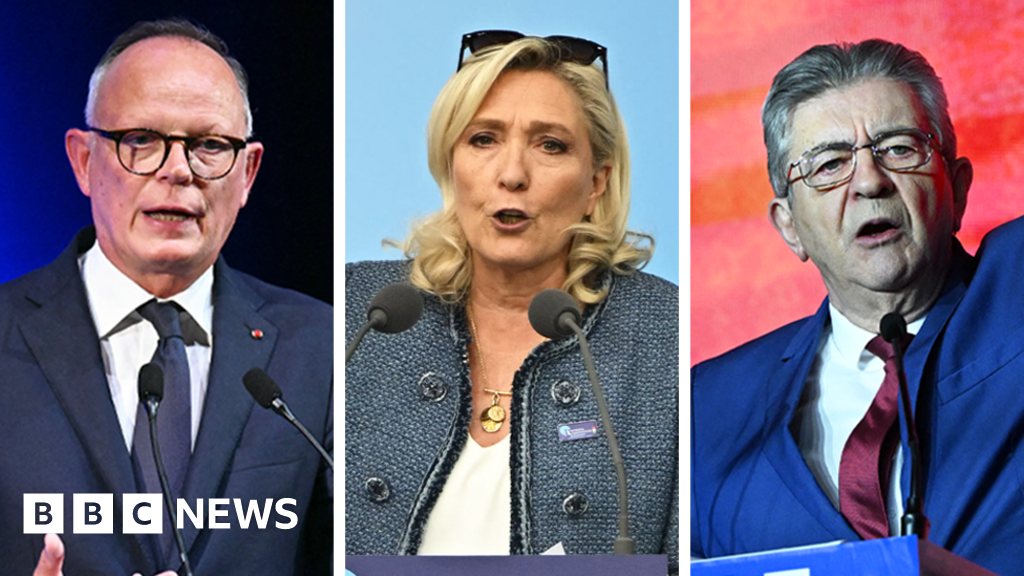
GlipzoAs France gears up for its presidential election in April 2024, the political landscape is buzzing with speculation about who will lead the charge against the rising tide of populism. Édouard Philippe, the former prime minister under President Emmanuel Macron, is currently positioned as a leading contender to prevent a showdown between extreme candidates. With a year to go, the stakes couldn't be higher for the French electorate.
In recent opinion polls, Philippe stands out as the most viable candidate against the far-right. Many believe that he is the only figure who can effectively challenge well-known populist candidates like Marine Le Pen and her deputy Jordan Bardella in a potential runoff. Should the election proceed without a strong centrist candidate, the populist-right could very well secure the presidency, a scenario that raises alarms both domestically and among France's European allies.
Philippe, who currently leads the small Horizons party, is eyeing a broader coalition within the centre-right sphere. His supporters argue that his candidacy represents a natural choice for those seeking stability and moderation in contrast to the extremes of the political spectrum. A critical aspect of Philippe's strategy is to maintain the hard-left candidate Jean-Luc Mélenchon out of the runoff, thereby avoiding a polarized choice between the far-left and far-right.
Political dynamics in France dictate that if too many candidates from the same ideological background enter the race, they risk splitting the vote and failing to advance past the first round. This reality is heightened as traditional political parties struggle to maintain relevance against the backdrop of populist movements.
The political system in France is uniquely structured, making it essential for candidates to consolidate support early on. As Philippe prepares to officially launch his campaign, he is aware that his status as a frontrunner may attract both attention and criticism.
Earlier this month, Philippe began to mobilize his campaign efforts, emphasizing a distinctly Gaullist approach with his slogan “France Libre” (Free France). His economic stance indicates a shift to the right, proposing measures such as raising the retirement age beyond 64 and implementing laws aimed at maintaining balanced national budgets. If elected, these policies may even face public referendum, reflecting Philippe's commitment to engaging the electorate.
In an innovative move, Philippe plans to connect with voters through a unique communication stunt scheduled for June. He intends to beam himself into 1,000 living rooms across France, allowing citizens to engage in a mass virtual meeting. His first official rally is set for July 5 in Paris, laying the groundwork for a robust campaign.
Despite Philippe's current position as a frontrunner, the path to the presidency is fraught with uncertainties. His rivals from the centre-right may not acquiesce easily, and it remains to be seen if they will choose to consolidate around Philippe or continue their individual campaigns, potentially fracturing support and playing into the hands of more extreme candidates.
While Philippe's challenges from the centre-left appear minimal at present, the traditional left is plagued by internal divisions. The Socialists are still grappling with candidate selection, and it’s plausible that multiple names could appear on the ballot, complicating the electoral landscape.
The upcoming election is crucial not only for France but also for the broader European context. A victory for a populist candidate could signal a shift in the political climate across Europe, potentially undermining stability and unity within the European Union. Philippe's ability to present himself as a moderate force against the backdrop of rising extremism makes his candidacy one to watch.
As the election date approaches, the political atmosphere will likely become more charged. Philippe's actions and decisions over the next few months will be pivotal, as will the strategies employed by his rivals. The unfolding narrative will reveal whether Philippe can solidify his position as the candidate of choice for the centre-right or if he will face unexpected challenges that could alter the course of the election.
In conclusion, as France stands on the brink of a significant electoral decision, the emergence of Édouard Philippe as a potential leader could reshape the future of French politics, steering the nation away from the extremes and towards a more centrist governance. The coming year will be critical, and all eyes will be on how this political drama unfolds in the lead-up to the elections.

Tensions soar as the US and Iran engage in air strikes near the Strait of Hormuz, raising concerns over global oil supply and regional stability.
BBC World
Trump's international interventions face serious stalemates. What will this mean for U.S. foreign policy? Explore the critical challenges ahead.
Indian Express
Tehran denies resignation of President Masoud Pezeshkian amid claims of IRGC influence. What does this mean for Iran's political stability? Click to learn more!
Indian Express