
Image: BBC World
Pam Bondi defends her handling of Epstein files amid congressional scrutiny, asserting transparency while facing accusations of withholding information.
GlipzoFormer U.S. Attorney General Pam Bondi has stepped into the spotlight, defending her management of the controversial release of documents regarding Jeffrey Epstein, the notorious convicted sex offender. This comes on the heels of a congressional investigation focusing on the handling of Epstein-related files, which have drawn significant public and political scrutiny.
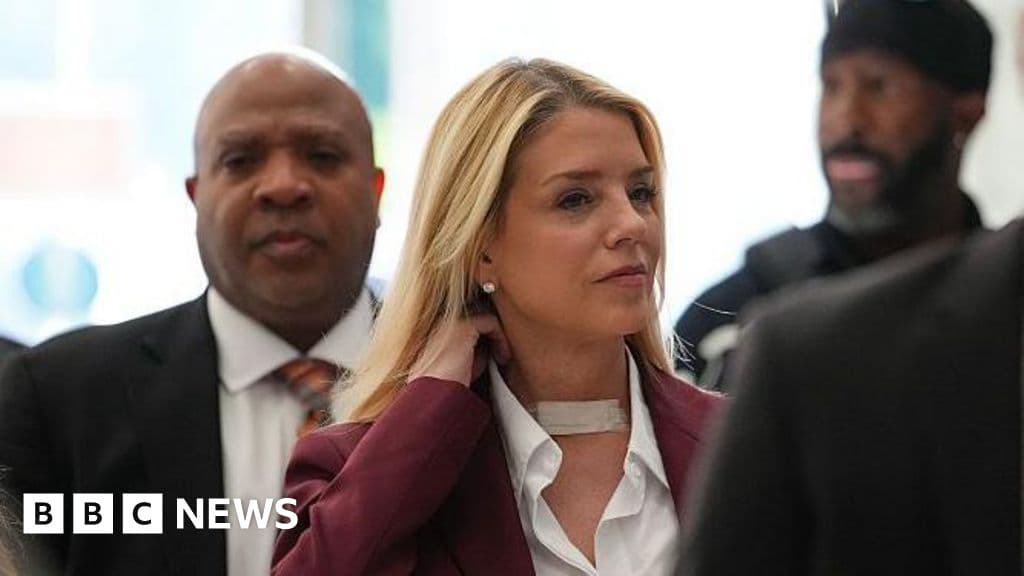
On Friday, Bondi provided testimony behind closed doors in Washington, D.C. She emphasized her commitment to transparency during her tenure at the Department of Justice (DOJ). “We demonstrated an unprecedented commitment to transparency in the Department's search for, collection, and review of the Epstein files, producing nearly 3 million pages of material,” she stated during her opening remarks to the U.S. House Oversight Committee.
Bondi’s appearance was mandated by the committee after she was formally subpoenaed in March, shortly before President Donald Trump removed her from her position as the nation’s top law enforcement officer. As attorney general, Bondi was responsible for implementing the Epstein Files Transparency Act, which was enacted to ensure that the DOJ publicly released unclassified documents related to Epstein’s case.
Despite her assertions of transparency, Bondi and the DOJ have faced intense criticism. Many have accused them of withholding crucial documents and failing to protect the identities of Epstein's victims. “I am proud of the Department's record and commitment to transparency under my leadership,” Bondi stated, emphasizing the complexity of the process. “To the best of my knowledge, the Department produced everything required under the Epstein Files Transparency Act.”
Chairman James Comer, a Republican leading the committee, expressed concerns over the possible mismanagement of the Epstein investigation, stating they are investigating compliance with the transparency act. In a recent press briefing, Comer said, “We’re going to try to determine whether or not there could be more documents legally turned over. I want every document. I don’t want anything held back, and I think the majority of the committee’s the same way.”
Tensions escalated during Bondi's three-hour testimony. Democratic committee members accused her of being evasive, deflecting responsibility to her former deputy, Todd Blanche, who now serves as acting attorney general. Robert Garcia, the leading Democrat on the committee, noted that Bondi refused to respond to questions related to President Trump.
Representative Melanie Stansbury of New Mexico echoed these sentiments, claiming the interview lacked proper Republican representation apart from the chairman. She highlighted the obstruction of justice, stating, “The United States Department of Justice is intervening on behalf of Pam Bondi to stop her from answering questions about what happened in the cover-up of this case and her conversations with Donald Trump.”
The reaction from Epstein survivors has been overwhelmingly negative. Maria Farmer, an outspoken Epstein survivor, criticized Bondi’s approach, stating, “At every turn, Bondi has ignored and disregarded the will of Epstein survivors who have waited for justice for decades. Even now, as a private citizen, she refuses responsibility for her missteps and failures.”
In response to claims of shifting blame, Bondi took to social media to refute these allegations, asserting, “NOT TRUE. I praised Acting AG Blanche's management of this Herculean task. I said his ethics are beyond reproach and that he is an incredible Attorney General.”
The scrutiny surrounding Bondi comes amid a broader investigation into the Trump administration’s handling of the Epstein case. Lawmakers from both parties have voiced concerns about the perceived lack of accountability and transparency. Nancy Mace, a Republican lawmaker, recently accused the DOJ of a “cover-up” and pushed for Bondi’s subpoena.
The Trump administration has been under bipartisan pressure to release all documents related to Epstein’s case, particularly due to the controversial handling of files that failed to redact the names of Epstein's victims. Epstein's death in prison in 2019, while awaiting trial, has only intensified the demand for answers.
As the investigation continues, the eyes of the nation remain fixed on the House Oversight Committee's findings. The implications of this inquiry extend beyond Bondi; they touch on the broader questions of how sexual assault victims are treated by the legal system and the accountability of those in power.
In the coming weeks, the committee is expected to release further findings, which could shed light on whether more documents will be made available. The tension between the need for transparency and the political ramifications of the investigation will likely be a focal point as the committee navigates the complicated landscape of the Epstein saga.
Why It Matters: The Epstein case continues to provoke discussions about justice, accountability, and the protection of victims' rights within the legal system. The outcome of this congressional investigation could set precedents for future transparency in high-profile cases and impact public trust in government institutions.
With public interest high and new developments likely, observers will be keenly watching how this investigation unfolds and what further revelations may come to light.

Tensions soar as the US and Iran engage in air strikes near the Strait of Hormuz, raising concerns over global oil supply and regional stability.
BBC World
Trump's international interventions face serious stalemates. What will this mean for U.S. foreign policy? Explore the critical challenges ahead.
Indian Express
Tehran denies resignation of President Masoud Pezeshkian amid claims of IRGC influence. What does this mean for Iran's political stability? Click to learn more!
Indian Express