
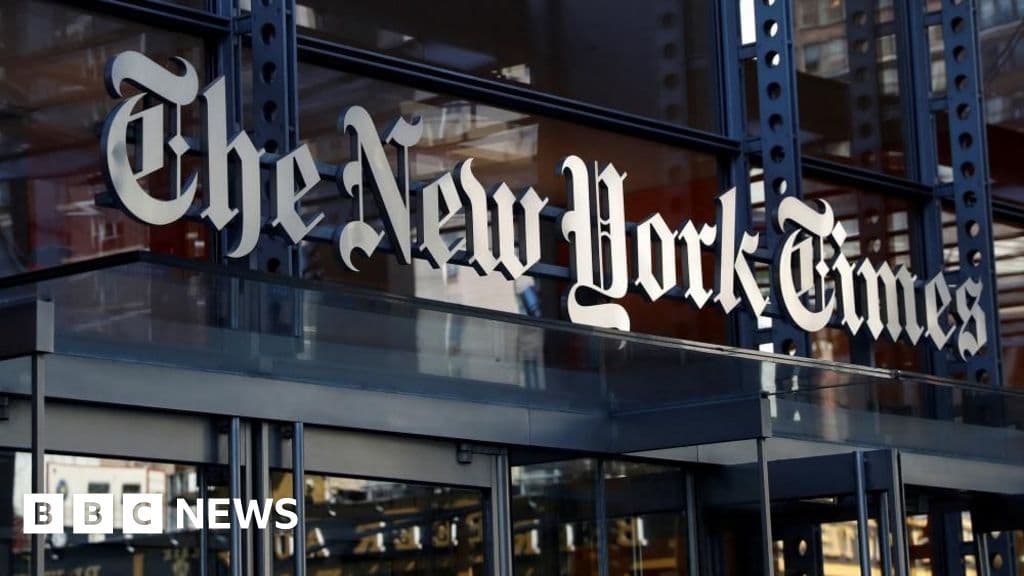
Image: BBC World
The New York Times defends itself against Israeli legal threats over a controversial report alleging sexual violence against Palestinians. What’s next?
GlipzoThe New York Times is currently at the center of a high-stakes controversy after Israeli Prime Minister Benjamin Netanyahu threatened legal action against the publication. This comes in response to an article authored by Nicholas Kristof, which alleges a disturbing pattern of sexual violence inflicted on Palestinian detainees by Israeli security forces. The article, published on Monday, raised serious questions about the treatment of Palestinians in Israeli custody, prompting a fierce backlash from Israeli officials.
Netanyahu and Israel's Foreign Minister Gideon Saar issued a statement asserting their intention to initiate a defamation lawsuit against the newspaper, characterizing the article as one of the most egregious falsehoods ever directed at the State of Israel. The statement contended that Kristof's claims were based on unverified sources allegedly linked to Hamas, raising concerns about the integrity of the article's foundation.
In his extensive 3,700-word piece titled "The Silence that Meets the Rape of Palestinians," Kristof outlined testimonies from 14 individuals who alleged they were sexually assaulted by Israeli soldiers, interrogators, or settlers. He emphasized that while there is no direct evidence that Israeli leaders sanction such actions, a United Nations report suggested that such sexual violence has become part of Israel's operational procedures regarding Palestinian detainees.
Kristof’s article included harrowing first-person accounts from alleged victims, detailing incidents of rape and assault, which have sparked outrage among Israeli officials and the public alike. The allegations presented in the article are not isolated; they mirror a broader narrative of reports from various Israeli and Palestinian NGOs documenting instances of sexual violence against Palestinian detainees.
In response to the article, Israeli officials have rallied against both Kristof and the New York Times. Israel's ambassador to the U.S., Yechiel Leiter, publicly condemned Kristof's journalistic practices, branding them as a violation of established standards. On the ground, protests erupted outside the New York Times' Manhattan office, with demonstrators demanding Kristof's dismissal from the publication.
The Israeli foreign ministry's statement explicitly accused Kristof of engaging with dubious sources, claiming that his reporting relied on narratives propagated by groups linked to Hamas. This reaction underscores the contentious relationship between Israel and media portrayals of its actions in the ongoing Israeli-Palestinian conflict.
The allegations of sexual violence against Palestinians are not new. Over the years, there have been numerous reports from various organizations documenting the maltreatment of Palestinian detainees. For instance, last year, two Palestinian men disclosed to the BBC that they had faced sexual abuse while detained by Israeli forces, one of whom claimed to have been subjected to humiliation involving a dog.
In light of the legal threats, the New York Times has defended its reporting, asserting that the allegations made against Kristof are part of a broader pattern aimed at suppressing independent journalism. The newspaper stated, "This threat, similar to one made last year, is part of a well-worn political playbook that aims to undermine independent reporting and stifle journalism that does not fit a specific narrative. Any such legal claim would be without merit."
This defense highlights the ongoing struggle between media freedom and government pushback, particularly in regions marked by conflict. The implications of this case extend beyond just one article, as it raises significant questions about journalistic integrity, freedom of the press, and the accountability of state actions.
As the situation develops, it will be crucial to observe how both the New York Times and the Israeli government navigate this contentious landscape. Should the Israeli government proceed with its defamation lawsuit, it could set a precedent impacting not only the New York Times but also how media outlets report on sensitive issues in the region.
Furthermore, this incident may lead to increased scrutiny of Israeli practices regarding Palestinian detainees, potentially influencing public opinion and international diplomatic relations. The ongoing discussions around media narratives, especially in conflict zones, are likely to evolve as this case unfolds.
In conclusion, the legal threats against the New York Times serve as a reminder of the complex dynamics at play in reporting on international issues. Observers should remain attentive to the outcomes of this controversy and its broader implications for journalism and human rights advocacy.
---

Tensions soar as the US and Iran engage in air strikes near the Strait of Hormuz, raising concerns over global oil supply and regional stability.
BBC World
Trump's international interventions face serious stalemates. What will this mean for U.S. foreign policy? Explore the critical challenges ahead.
Indian Express
Tehran denies resignation of President Masoud Pezeshkian amid claims of IRGC influence. What does this mean for Iran's political stability? Click to learn more!
Indian Express