
Image: The Hindu
The NDA secures all five seats in Bihar's Rajya Sabha elections, showcasing political strength amid opposition challenges. What’s next for Bihar’s political landscape?
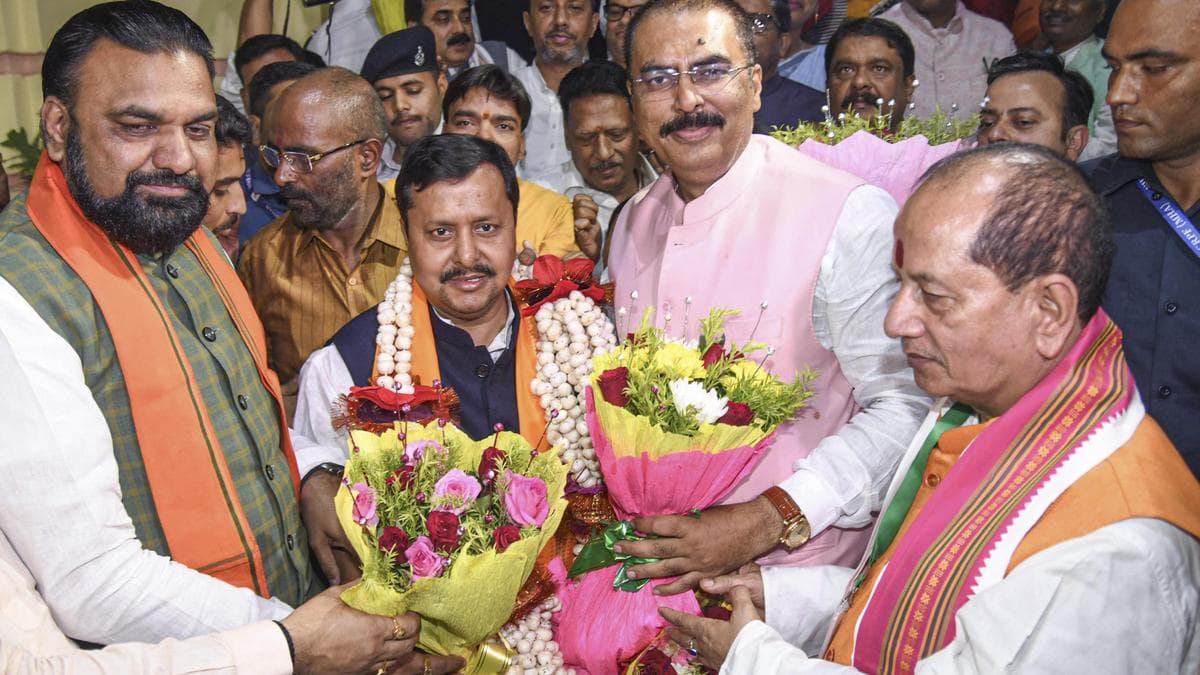
GlipzoIn a significant political development, the National Democratic Alliance (NDA) clinched victory in all five seats contested during the Bihar Rajya Sabha elections held on March 16, 2026. This win showcases the NDA's robust foothold in Bihar, especially as Chief Minister Nitish Kumar and BJP President Nitin Nabin emerged victorious among the candidates.
The elections were marked by a notable absence of opposition participation, with four MLAs from the Mahagathbandhan—a coalition of regional parties—failing to vote. In stark contrast, the NDA mobilized all 202 MLAs to cast their votes, while only 37 MLAs from the opposing coalition took part in the process. This turnout disparity played a crucial role in the NDA's clean sweep.
The five successful candidates included: - Nitin Nabin (BJP) - Shivesh Kumar (BJP) - Nitish Kumar (JD-U) - Ramnath Thakur (JD-U) - Upendra Kushwaha (Rashtriya Lok Morcha)
This election was not without its drama. The battle for the fifth seat was particularly competitive, with Shivesh Kumar narrowly defeating Rashtriya Janata Dal (RJD) candidate Amarendra Dhari Singh. Kumar received 38 votes, while Singh garnered 37 votes, showcasing the tight margins in political contests.
As per the official results from the Assembly Secretariat, each of the top candidates, including Nitish Kumar and Nitin Nabin, received 44 votes, while Ramnath Thakur and Upendra Kushwaha secured 42 votes each. Shivesh Kumar’s initial round of voting yielded 30 votes, demonstrating the intricacies of the Proportional Representation system employed in Rajya Sabha elections.
The Rajya Sabha elections utilize a unique voting mechanism known as the Single Transferable Vote (STV) system. In this method: - MLAs rank candidates on their ballots rather than voting for just one. - To win, a candidate must reach a predetermined quota of votes, which is calculated based on the total number of votes and available seats. - If a candidate exceeds this quota, any surplus votes are transferred to the next preferred candidate on those ballots.
This system highlights the strategic maneuvering often essential in legislative elections, as seen in the recent contest where Shivesh Kumar capitalized on this transfer process to secure his win over Singh.
In the aftermath of the elections, Bihar BJP State President Sanjay Saraogi expressed his satisfaction, stating, “All our five candidates have secured victory. I congratulate everyone.”
However, the victory was not without criticism. Vijay Kumar Sinha, Deputy Chief Minister and BJP leader, directed sharp remarks towards the RJD and Congress, accusing them of undermining democratic values by allegedly restricting their MLAs. He described their tactics as akin to treating legislators as “bonded laborers.”
Meanwhile, Upendra Kushwaha of the Rashtriya Lok Morcha remarked on the dwindling influence of the RJD, suggesting that their party might soon face extinction if they didn’t change their tactics.
On the other hand, Rajesh Ram, the Bihar Congress President, alleged that the BJP manipulated investigative agencies to intimidate their MLAs, contributing to their absence during the voting process. RJD MLA Kumar Sarvjeet further claimed that the BJP utilized financial incentives to sway the election results.
The NDA's victory in these elections reflects a significant consolidation of power in Bihar, reinforcing the coalition's dominance in the political landscape. This clean sweep not only strengthens the NDA's representation in the Rajya Sabha but also signals potential implications for future legislative decisions, budget approvals, and policy formulations.
Given the political tensions highlighted by the opposition's criticisms, the NDA may face ongoing challenges in maintaining unity and addressing dissent within its ranks. Moreover, the absence of Mahagathbandhan MLAs raises questions about their political strategy moving forward and their ability to mobilize support.
As the NDA celebrates its electoral success, the focus now shifts to how these leaders will leverage their positions in the Rajya Sabha to influence national policies. Key areas to observe include: - Legislative initiatives and reforms proposed by the NDA. - The opposition's response to this electoral setback and their strategies to regain influence. - The internal dynamics within the NDA as they work to maintain party discipline and address dissenters.
The outcomes of these developments will be critical in shaping Bihar’s political future and could have broader ramifications for national politics as the country moves closer to the next general elections.

Tensions soar as the US and Iran engage in air strikes near the Strait of Hormuz, raising concerns over global oil supply and regional stability.
BBC World
Trump's international interventions face serious stalemates. What will this mean for U.S. foreign policy? Explore the critical challenges ahead.
Indian Express
Tehran denies resignation of President Masoud Pezeshkian amid claims of IRGC influence. What does this mean for Iran's political stability? Click to learn more!
Indian Express