
Image: BBC World
NATO confirms no expulsion provisions amid US-Spain tensions over Iran. What’s next for the alliance amid calls for greater European military support?
GlipzoNATO has publicly stated that there are no provisions for suspending or expelling member countries after an internal U.S. Pentagon email suggested punitive measures against allies. The email allegedly indicated that the U.S. might seek to suspend Spain due to its stance on the Iran conflict, a report that has since been dismissed by both Spain's leadership and NATO officials. This situation highlights the ongoing tensions within the alliance regarding defense commitments and support, especially as the conflict with Iran escalates.
The North Atlantic Treaty Organization (NATO) has made it clear that its founding treaty does not include any mechanisms for the suspension or expulsion of member states. This assertion comes against the backdrop of a leaked email from a U.S. official, which suggested that the Pentagon was considering ways to penalize allies perceived as not supporting U.S. military campaigns.
The email specifically mentioned Spain's refusal to allow the U.S. to use its air bases for operations against Iran. The Pentagon Press Secretary, Kingsley Wilson, emphasized the frustration felt by the U.S. towards its NATO allies, stating that despite the extensive support provided, many allies were not pulling their weight. She remarked, "The War Department will ensure that the president has credible options to ensure that our allies are no longer a paper tiger."
This assertion underscores the growing divide within NATO, particularly regarding the commitments of European allies in the ongoing conflict in the Middle East. The U.S. has expressed discontent over what it perceives as a lack of support from European nations, particularly after the recent military actions against Iran, which have heightened tensions in the region.
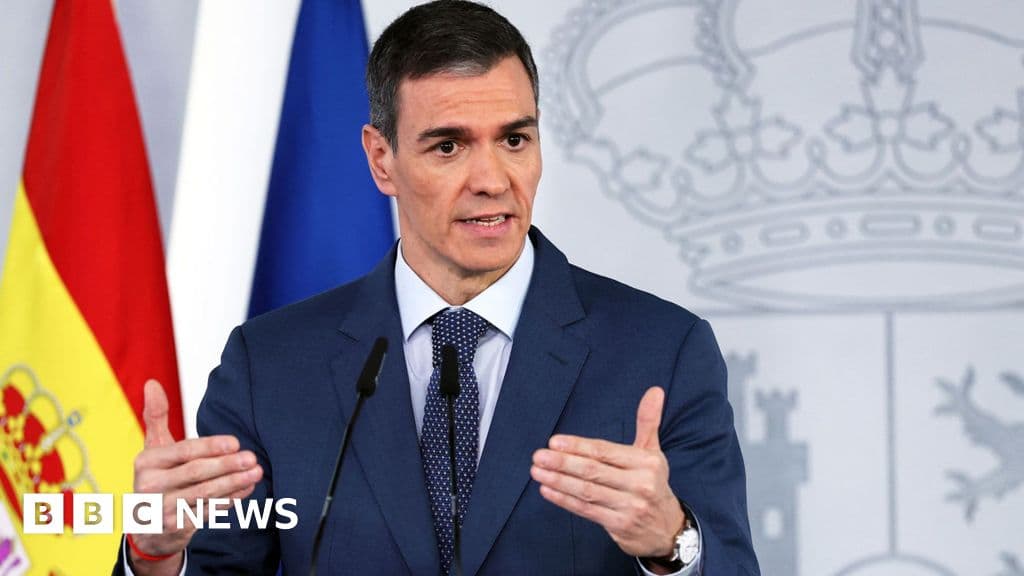
In light of the Pentagon's email, Spanish Prime Minister Pedro Sánchez firmly rejected the notion that Spain's NATO membership could be put into question. He emphasized that Spain operates based on official documents rather than internal communications. Sánchez affirmed his country’s commitment to cooperating with its allies, but insisted that such cooperation must always comply with international law.
His response reflects a broader sentiment among European leaders who are increasingly wary of being drawn into conflicts that they do not directly benefit from. Sánchez stated, "We do not work based on emails. We work with official documents and official positions taken, in this case, by the government of the United States."
The tensions surrounding Spain have broader implications for NATO, especially as the conflict in Iran continues to escalate. The U.S. has two significant military bases in Spain: Naval Station Rota and Morón Air Base. However, Spain's refusal to allow the use of its territory for military operations against Iran has raised questions about the future of U.S.-Spain military relations.
In the United Kingdom, Prime Minister Keir Starmer has echoed similar sentiments, asserting that greater involvement in the Iran conflict is not in the UK's national interest. While the UK has permitted the U.S. to utilize British bases for military strikes in the region, there is a growing reluctance among European nations to engage in direct military actions.
This situation has drawn various responses from international leaders. Italian Prime Minister Giorgia Meloni has called for solidarity among NATO allies, emphasizing the importance of unity in the face of growing tensions. At an EU summit in Cyprus, she stated that the alliance is a crucial source of strength and must work to enhance NATO's European pillar to complement the American one.
Conversely, U.S. Defense Secretary Pete Hegseth has criticized European allies for their perceived lack of commitment, suggesting that they need to take more responsibility for their own defense. He remarked, "We are not counting on Europe, but they need the Strait of Hormuz much more than we do."
As these dynamics unfold, the future of NATO and its member states could be at a crossroads. The internal tensions and differing approaches to international conflicts underscore the need for clear communication and commitment among allies. As the U.S. continues to confront challenges in the Middle East, the role of European nations in supporting or opposing U.S. actions will be crucial.
Looking forward, it will be essential to monitor how NATO navigates these internal divisions and whether member states can come together to support collective security efforts without compromising their own national interests. Key areas to watch include:
In summary, while NATO maintains that no member can be expelled, the ongoing discussions and disagreements highlight significant challenges ahead for the alliance as it seeks to adapt to shifting geopolitical realities.

Tensions soar as the US and Iran engage in air strikes near the Strait of Hormuz, raising concerns over global oil supply and regional stability.
BBC World
Trump's international interventions face serious stalemates. What will this mean for U.S. foreign policy? Explore the critical challenges ahead.
Indian Express
Tehran denies resignation of President Masoud Pezeshkian amid claims of IRGC influence. What does this mean for Iran's political stability? Click to learn more!
Indian Express