
Image: Indian Express
Explore how Modi's BJP transforms India's political scene, aiming for indefinite power through strategic changes and implications for democracy.
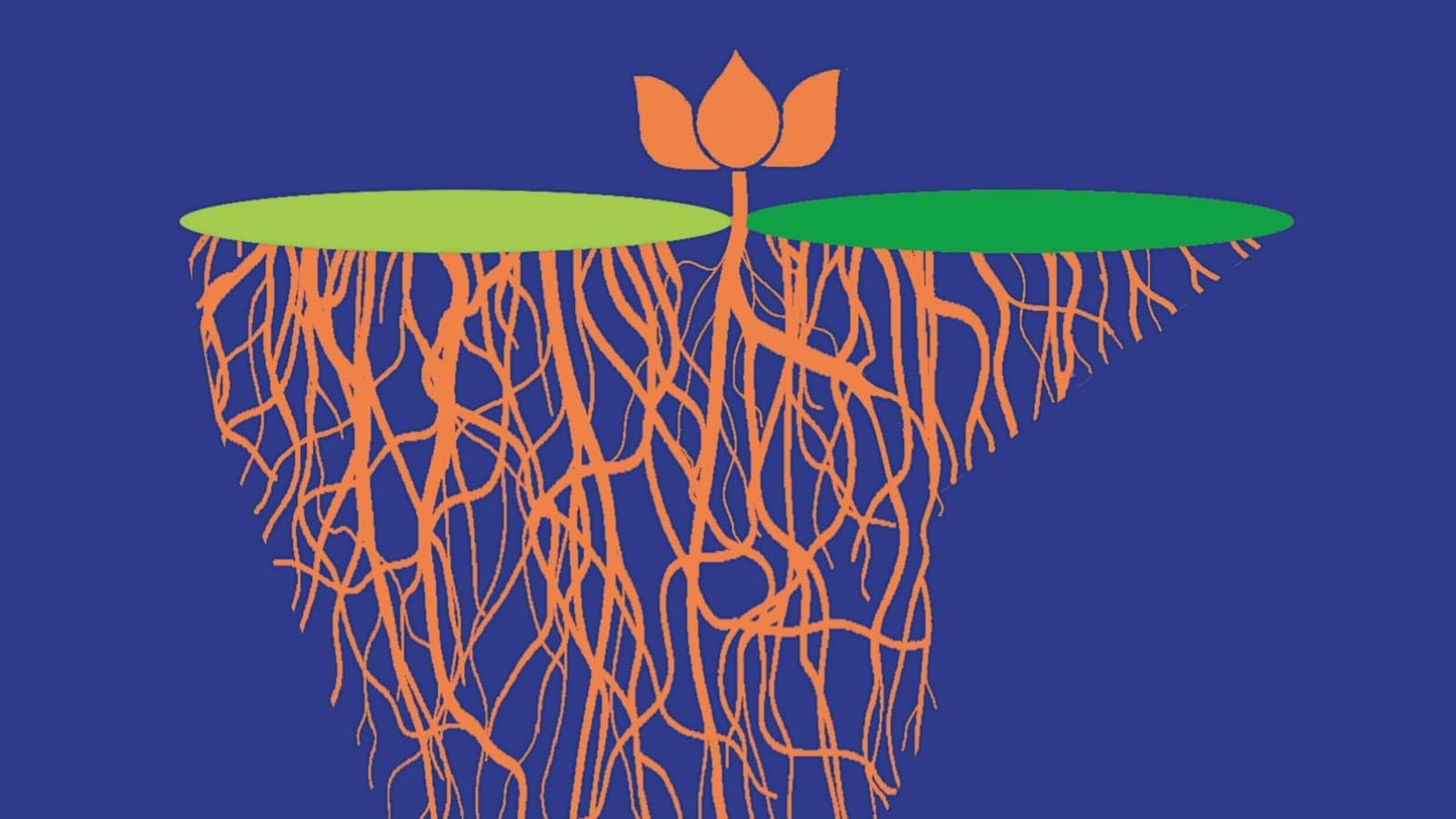
GlipzoPrime Minister Narendra Modi's Bharatiya Janata Party (BJP) has established itself as a unique force in India's political arena, setting it apart from any other party in the country’s history. Unlike traditional parties that prioritize winning elections, the BJP appears to pursue a more ambitious goal: to maintain power indefinitely. This ambitious strategy draws parallels with the Communist Party of China (CPC), which has also sought to secure its dominance through a series of historical conflicts and political maneuvers.
The CPC’s rise was forged through a brutal war against Japanese invaders and a subsequent civil war, ultimately leading to its cemented control in 1949. In contrast, India gained independence from British rule in 1947, subsequently crafting a secular, democratic Constitution, which was enacted in 1950. This Constitution, distinctively, endorses a multi-party system and ensures regular elections and peaceful transitions of power at both the national and state levels.
From its origins as the Janata Sangh, evolving into the Bharatiya Janata Sangh, and currently known as the BJP, the party has historically positioned itself as a proponent of India’s Constitution. It has strived to differentiate itself from the Indian National Congress, which occupies a more left-leaning space in the political spectrum. Throughout its journey, the BJP has remained committed to democratic principles under notable leaders such as Shyama Prasad Mookerjee, Deendayal Upadhyaya, Atal Bihari Vajpayee, and L.K. Advani.
However, the party’s ideological backbone, the Rashtriya Swayamsevak Sangh (RSS), has a markedly different vision for India’s political landscape. The RSS advocates for a nation characterized by one language, one culture, one political party, and ideally, one religion. Modi, as the party’s leader, aligns with this vision but recognizes that achieving such an objective requires more than just electoral victories; it necessitates a series of calculated and strategic actions.
Since taking office in 2014, Modi's governance approach has included significant constitutional, legislative, and administrative changes aimed at steering the nation toward what he terms “Viksit Bharat” (Developed India). Key initiatives include: - Citizenship (Amendment) Act - Uniform Civil Code - Jammu and Kashmir Reorganization Act - One Nation, One Election (ONOE) initiative
These measures are viewed as steps toward reinforcing the RSS’s vision for India, demonstrating Modi's dual role as both an ideologue and a pragmatist. His ambition was to secure an overwhelming majority in the Lok Sabha for the 2024 elections, aiming for over 400 seats. However, the BJP faced a significant setback, capturing only 240 seats, which fell short of a simple majority in a house of 543 members.
In light of the 2024 electoral outcomes, Modi’s focus has shifted to regaining lost ground ahead of the 2029 elections. Among the critical legislative efforts was the proposed 131st Amendment Bill. This bill, which aimed to secure reservations for women, was perceived as a veiled attempt to facilitate delimitation and gerrymandering. Such changes could have rendered southern states less influential in national governance, further consolidating power within the BJP.
The party’s strategy relied heavily on a robust organizational structure across the Hindi-speaking states and Gujarat, coupled with a mix of financial resources, cooperative governors, and a compliant bureaucracy. Key challenges to this model included resistance from southern states and a united opposition, making the ONOE initiative particularly significant as a potential solution.
The proposed ONOE Bill stands at a critical juncture. If enacted, it could fundamentally alter the fabric of Indian democracy, consolidating electoral timelines and potentially marginalizing regional parties, especially in southern India. Critics warn that this move could splinter the political landscape further, exacerbating regional disparities and diminishing the representation of diverse voices in governance.
As the BJP navigates the challenges of the upcoming elections, it faces increasing scrutiny regarding its governance model and the implications of its policies. The political atmosphere is charged, with the potential for significant shifts in voter sentiment as the opposition rallies to counteract the BJP's narrative.
Looking ahead, the question remains: how will the BJP respond to the evolving political dynamics? With the 2024 Lok Sabha elections approaching, the party's strategies will be pivotal in shaping its trajectory. Key elements to watch include: - The effectiveness of Modi’s outreach to regain lost support. - The potential backlash against perceived undemocratic practices. - The formation of a unified opposition front to challenge the BJP. - The impact of ongoing legislative changes on regional political power dynamics.
In conclusion, the upcoming years will be critical for both the BJP and Indian democracy at large. With a mix of ambition, ideology, and pragmatism guiding its path, the BJP's actions will undoubtedly have profound implications for the future of India’s political landscape.

Tensions soar as the US and Iran engage in air strikes near the Strait of Hormuz, raising concerns over global oil supply and regional stability.
BBC World
Trump's international interventions face serious stalemates. What will this mean for U.S. foreign policy? Explore the critical challenges ahead.
Indian Express
Tehran denies resignation of President Masoud Pezeshkian amid claims of IRGC influence. What does this mean for Iran's political stability? Click to learn more!
Indian Express