
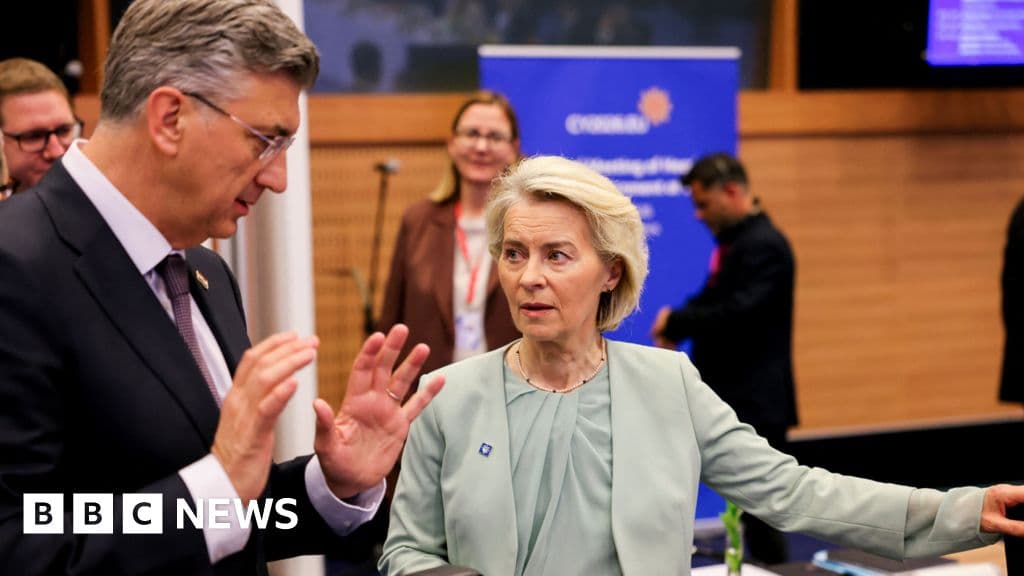
Image: BBC World
Tensions rise as the US threatens Spain over NATO support. What does this mean for Spain, NATO, and global alliances? Discover the implications.
GlipzoTensions have escalated dramatically within NATO as Spain faces a potential US threat following a leaked email from the Pentagon. This incident comes at a time when European leaders are already grappling with numerous geopolitical crises, including the ongoing energy dilemmas stemming from the US-Israel conflict in Iran and Russia's continued aggression towards Ukraine. During a recent summit held in Cyprus, leaders were prepared to discuss critical issues like the new EU budget, only to find themselves entangled in this surprising diplomatic fallout.
Pedro Sanchez, Spain's Prime Minister, attempted to maintain composure, telling reporters, "We are fulfilling our obligations toward NATO," as he arrived at the summit. But what prompted this reassurance? The email revealed a potential punitive measure from the US regarding Spain's stance on the Israeli campaign against Iran, specifically hinting at the possibility of suspending Spain from NATO.
Interestingly, the NATO treaties do not include provisions for expelling a member country. Any hypothetical action to prevent Spain from taking on important roles within NATO would require a unanimous agreement among all member states. This legal nuance brings into question the validity of the threats being made, sparking a strong defense from other European leaders at the Cyprus meeting.
Dutch Prime Minister Rob Jetten was particularly vocal, emphasizing that Spain is a steadfast NATO member and that European countries are making significant efforts to strengthen the alliance. He reiterated that these endeavors align with the interests of the United States as well.
In a show of solidarity, a high-ranking German official echoed this sentiment, affirming Spain's NATO membership and suggesting no alterations should occur. Meanwhile, Italian Prime Minister Giorgia Meloni expressed her concerns regarding the deteriorating relations between Washington and Madrid, labeling the situation as “not at all positive.” This highlights a shift in public sentiment in Italy and across Europe as people increasingly turn against former President Donald Trump.
Giorgia Meloni’s political journey has taken a turn since her close relationship with Trump, who once viewed her as a significant ally. Recently, she has openly criticized Trump’s remarks about the Pope and denied the US the use of the Sigonella airbase in Sicily for military operations against Iran. This change in stance reflects a broader trend among European leaders distancing themselves from Trump amid unfavorable public opinion.
The leaked email also raised eyebrows regarding the US's stance towards the United Kingdom’s claim to the Falkland Islands, intensifying existing tensions between Washington and London. Trump's frustration with UK Prime Minister Sir Keir Starmer stems from Starmer's refusal to allow US military bases to be used for operations against Iran, a stance that has incurred Trump's wrath.
Spain’s Prime Minister Sanchez has not shied away from expressing his opposition to the US-Israeli strikes on Iran, labeling them as illegal under international law. This firm stance has earned him the ire of Trump, who seems particularly incensed over Spain’s position. Sanchez's refusal to grant US forces access to joint military bases has only added to the diplomatic strain between the two nations.
This situation not only poses immediate challenges for Spain but also raises questions about the future of NATO unity. As the alliance grapples with internal disputes, the ramifications on military strategy and cooperation could be profound. The implications of these tensions could affect NATO's collective security commitments, particularly in the face of ongoing global crises.
The unfolding situation necessitates a unified response from NATO allies. As European leaders rally around Spain, the need for solidarity within the alliance becomes increasingly critical. The potential fallout from the US's threats could have lasting effects on NATO's credibility and operational effectiveness.
Key Takeaways: - Spain's NATO Membership: No provisions exist for expulsion, and any punitive action requires unanimous consent. - European Solidarity: Leaders from the Netherlands and Germany have voiced strong support for Spain, emphasizing the importance of unity within NATO. - Shifting Political Alliances: Italian leaders are reassessing their relationships with Trump amid changing public opinions in Europe. - Legal and Diplomatic Implications: The legality of US threats against Spain raises questions about NATO's internal governance.
This escalating crisis not only impacts Spain but also sets a precedent for how NATO members interact with each other and respond to external pressures. It highlights the importance of a cohesive strategy among allies in the face of shifting global dynamics. As the situation develops, the reactions of both Spain and its NATO partners will be crucial in determining the alliance's future.
In conclusion, as tensions simmer and diplomatic discussions continue, all eyes will be on how NATO navigates these challenges. The upcoming months could see significant shifts in alliances and policies as leaders strive to maintain unity and mutual support in the wake of these threats. The world watches closely as the fate of NATO hangs in the balance, prompting questions about the alliance's future direction and its ability to respond to geopolitical challenges effectively.

Tensions soar as the US and Iran engage in air strikes near the Strait of Hormuz, raising concerns over global oil supply and regional stability.
BBC World
Trump's international interventions face serious stalemates. What will this mean for U.S. foreign policy? Explore the critical challenges ahead.
Indian Express
Tehran denies resignation of President Masoud Pezeshkian amid claims of IRGC influence. What does this mean for Iran's political stability? Click to learn more!
Indian Express