
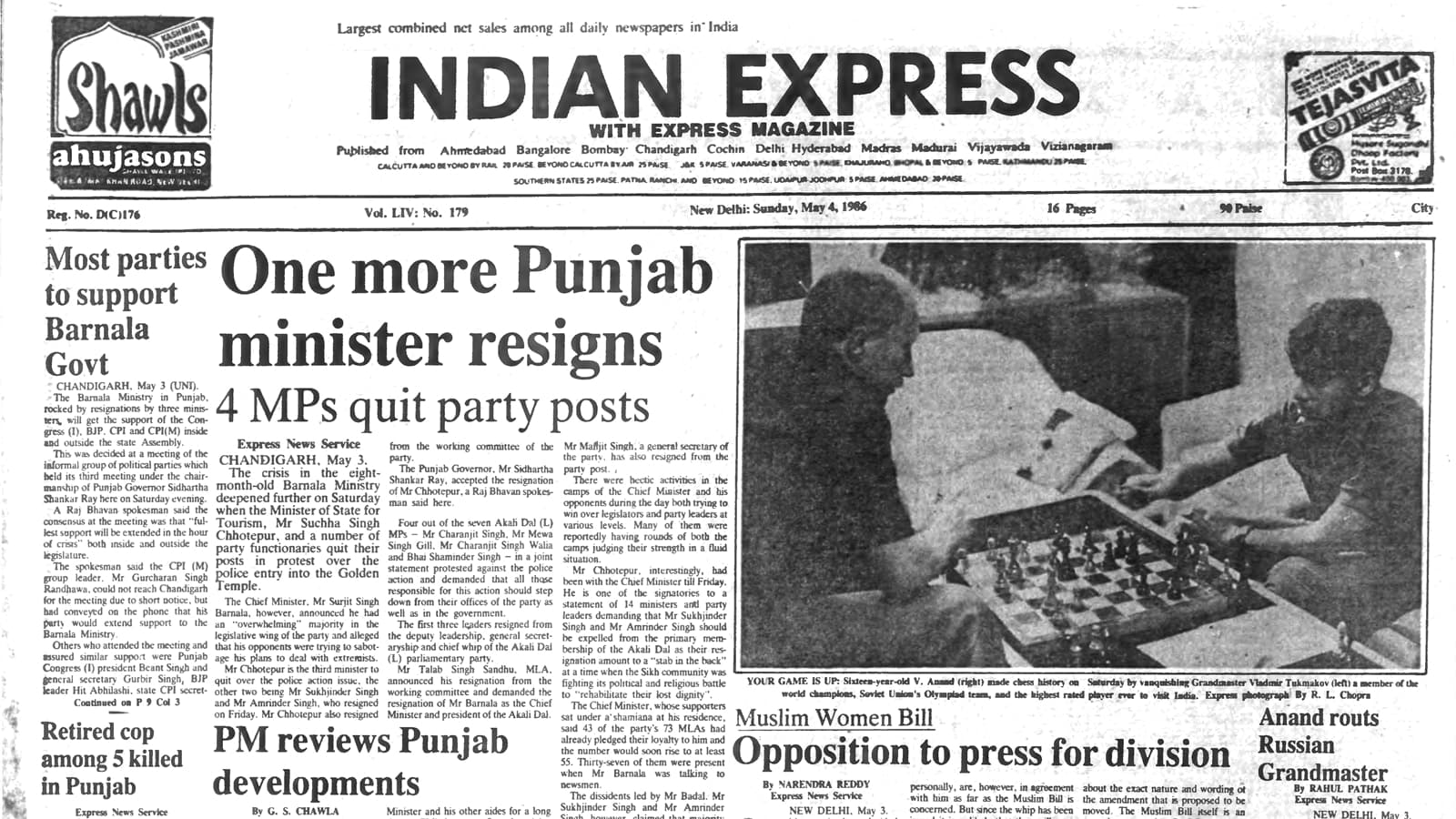
Image: Indian Express
Discover the dramatic events of May 4, 1986, including political resignations in Punjab, a tragic Air Lanka blast, and Anand's stunning chess victory.
GlipzoOn May 4, 1986, Punjab's political scene was rocked by the sudden resignation of Suchha Singh Chhotepur, the Minister of State for Tourism. This dramatic move was part of a growing crisis within the Barnala ministry, which had been in power for a mere eight months. Chhotepur's resignation, along with several party functionaries, was a direct response to the police's controversial entry into the Golden Temple. This act was perceived as a severe affront to the religious sentiments of many Sikhs, leading to widespread unrest and dissatisfaction within the ruling party.
Despite the turmoil, Chief Minister Surjit Singh Barnala asserted that he maintained an “overwhelming” majority within the party's legislative wing. He further claimed that his adversaries were conspiring to undermine his efforts to address the ongoing threats from extremists. Barnala's confidence seemed unshaken, but the resignation of such key figures raised significant questions about the stability of his administration.
In parallel, the political atmosphere was charged as opposition parties prepared to challenge the Muslim Women (Protection on Divorce) Bill in the Lok Sabha. Set for a vote on the same day, the bill's passage was almost a certainty given the ruling party's commanding two-thirds majority. However, opposition leaders aimed to secure a moral victory by pressing for a division during the vote, despite the bill’s likely approval.
This legislative maneuvering highlighted the growing tensions between ruling and opposition parties. The opposition’s strategy was clear: while they could not prevent the bill’s passage, they sought to draw public attention to their dissent, hoping to rally support from constituents who felt disenfranchised by the ruling party's policies.
On the same day, a tragic event unfolded in Colombo, Sri Lanka, when an Air Lanka Tristar aircraft was destroyed by an explosion at Katunayake International Airport, located approximately 35 kilometers from the capital. The explosion resulted in the deaths of 22 individuals and left 24 others injured, sending shockwaves through the nation and the international community.
Authorities suspect that an Eelam terrorist group was behind this devastating attack. According to a statement from the National Security Ministry, the explosion occurred just moments before flight UL 101—bound for Malé—was scheduled to take off, drawing significant media coverage and condemnation from around the world. The Sri Lankan government faced increasing pressure to address the ongoing violence and instability in the region, further complicating the political landscape.
In a stark contrast to the political and social turmoil of the day, the chess world witnessed a remarkable achievement by Viswanathan Anand, a 16-year-old prodigy. Competing at the Bhilwara tournament, Anand faced off against Vladimir Tukmakov, a grandmaster renowned for his formidable skills. Tukmakov had dominated the tournament until he encountered Anand, who emerged victorious in a stunning match.
Anand's victory over Tukmakov, who had previously defeated every opponent except fellow Russians, marked a significant milestone in his young career. As Tukmakov attempted to gain control over the board, Anand executed a brilliant strategy that left spectators in awe. This triumph not only solidified Anand’s reputation in the chess community but also hinted at his potential for a legendary career ahead.
The events of May 4, 1986 collectively underscore a pivotal moment in both regional politics and international affairs. The resignation of key political figures in Punjab reflected deep divisions within the ruling party, raising questions about its future stability. Meanwhile, the Air Lanka tragedy highlighted the ongoing struggles against terrorism in Sri Lanka, drawing attention to the urgent need for security reforms.
In a more uplifting light, Anand's victory served as a reminder of the power of youth and talent, inspiring a generation of aspiring chess players in India and beyond.
As the dust settles from these significant events, all eyes will be on how the Barnala ministry navigates the aftermath of the resignations and the potential fallout from the Muslim Women Bill. Will the political landscape shift, or will Barnala manage to maintain control? In Sri Lanka, the government's response to the Air Lanka incident will be critical in shaping national sentiment towards security policies and counter-terrorism strategies. Finally, Anand's rise in chess is likely to attract more global attention, setting the stage for further achievements on the international chess circuit. The interplay of these narratives will shape the socio-political climate in the region for years to come.

Tensions soar as the US and Iran engage in air strikes near the Strait of Hormuz, raising concerns over global oil supply and regional stability.
BBC World
Trump's international interventions face serious stalemates. What will this mean for U.S. foreign policy? Explore the critical challenges ahead.
Indian Express
Tehran denies resignation of President Masoud Pezeshkian amid claims of IRGC influence. What does this mean for Iran's political stability? Click to learn more!
Indian Express