
Image: BBC World
US and Nigeria's joint operation kills senior IS leader Abu-Bilal al-Minuki, a major blow to ISIS in Africa. Discover the implications for global security.
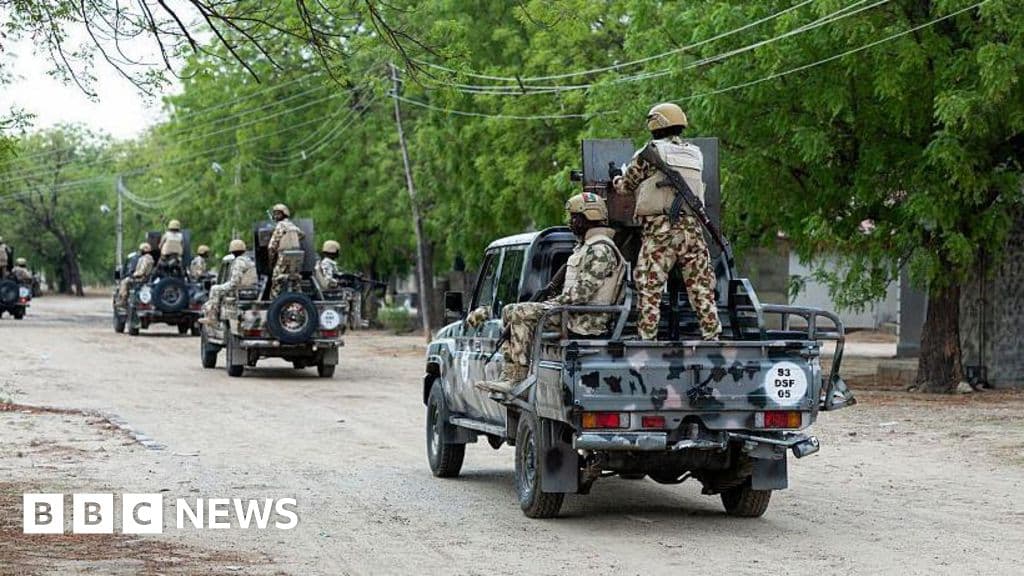
GlipzoIn a significant development in the fight against terrorism, Nigeria and the United States have confirmed the death of a senior Islamic State (IS) leader in a coordinated military operation. The target, Abu-Bilal al-Minuki, was identified by US President Donald Trump as the "second in command of ISIS globally" and labeled as the "most active terrorist in the world." This joint operation occurred in the Lake Chad Basin, an area notorious for being a stronghold for militant groups.
This operation is particularly crucial as IS has dramatically shifted its focus in recent years, with approximately 90% of its attacks now taking place in sub-Saharan Africa. Among these, the Nigerian branch of IS, known as the Islamic State West Africa Province (ISWAP), has emerged as the most active faction. Nigerian President Bola Tinubu praised the collaboration, stating that the operation dealt a "heavy blow" to IS and reaffirmed the commitment of both nations to combat terrorism.
Abu-Bilal al-Minuki, who was designated as a Specially Designated Global Terrorist by the United States in 2023, was killed along with several of his aides during a military strike on his fortified compound in Metele, Borno State. This region is shared by Nigeria, Chad, Niger, and Cameroon and has long been an operational base for both Boko Haram and ISWAP. According to military sources, the operation was conducted shortly after midnight on Saturday, following months of comprehensive intelligence gathering.
The Nigerian military reported that the operation resulted in zero casualties or loss of assets, showcasing the effectiveness of their intelligence and the increasing cooperation between US and Nigerian forces. Al-Minuki had been recently promoted to a significant position within the IS hierarchy, overseeing operations across the Sahel and West Africa, which included numerous attacks on civilians and minority groups.
Before his allegiance to IS in 2015, al-Minuki was a senior commander within Boko Haram, a group that has waged a brutal campaign to impose Islamic law in northern Nigeria since 2009. His leadership was marked by orchestrating attacks against civilians, and he was linked to the 2018 Dapchi schoolgirls kidnapping, where more than 100 girls were abducted by Boko Haram militants. This background highlights the severe threat that al-Minuki posed to regional stability and security.
Boko Haram pledged allegiance to IS in 2015, marking a significant shift in its operational strategy. The group aims to establish a caliphate, governed by Islamic law, which has led to widespread violence and humanitarian crises throughout the region. Analysts suggest that al-Minuki’s nickname may have derived from Mainok, a town in Borno State, illustrating a common practice of identifying individuals by their hometowns.
Interestingly, the Nigerian military had previously claimed to have killed al-Minuki in 2024, only to retract that statement, clarifying that they had actually targeted a different fighter using the same alias. This incident is not isolated, as there have been multiple assertions regarding the deaths of key jihadist figures in the Lake Chad Basin, including several claims about former Boko Haram leader Abubakar Shekau before his eventual death was confirmed in May 2021.
President Trump hailed al-Minuki's death as a critical setback for IS's operations in Africa and beyond, emphasizing that it would disrupt funding channels and command structures. He commended the Nigerian government for their partnership in this successful operation, asserting that al-Minuki would no longer pose a threat to the African populace or to Americans. This event underscores the growing military collaboration between the United States and Nigeria as they intensify efforts against the extremist insurgency that has plagued the region for over a decade.
The operation comes on the heels of earlier comments from President Trump, who criticized Nigeria's efforts in protecting vulnerable communities, particularly Christians, a sentiment that Nigerian officials have consistently refuted. In a broader context, the rise in violence from IS and its affiliates has compelled both nations to strengthen their military ties and operational strategies.
Moving forward, the focus will remain on the evolving strategies of militant groups in the region. As IS continues to adapt, the international community must monitor how these developments impact the security landscape in West Africa. The successful elimination of al-Minuki represents a significant victory, but it also raises questions about the remaining leadership structure within IS and their potential responses to this loss.
As military efforts intensify, the upcoming months will be critical in determining whether this operation will lead to a lasting decline in IS's influence in the region or if new leaders will emerge to fill the void left by al-Minuki. Observers will be keenly watching for signs of increased military cooperation between the US and Nigerian forces, as well as any retaliatory actions from IS in response to this significant blow to their leadership.
In conclusion, the death of Abu-Bilal al-Minuki is a pivotal moment in the ongoing battle against terrorism in West Africa, highlighting both the challenges and potential successes that lie ahead in this complex and evolving conflict.

Tensions soar as the US and Iran engage in air strikes near the Strait of Hormuz, raising concerns over global oil supply and regional stability.
BBC World
Trump's international interventions face serious stalemates. What will this mean for U.S. foreign policy? Explore the critical challenges ahead.
Indian Express
Tehran denies resignation of President Masoud Pezeshkian amid claims of IRGC influence. What does this mean for Iran's political stability? Click to learn more!
Indian Express