
Image: Indian Express
Explore the historical significance of Barnala's tankhah in 1986, revealing deep community tensions and global political stances that resonate today.
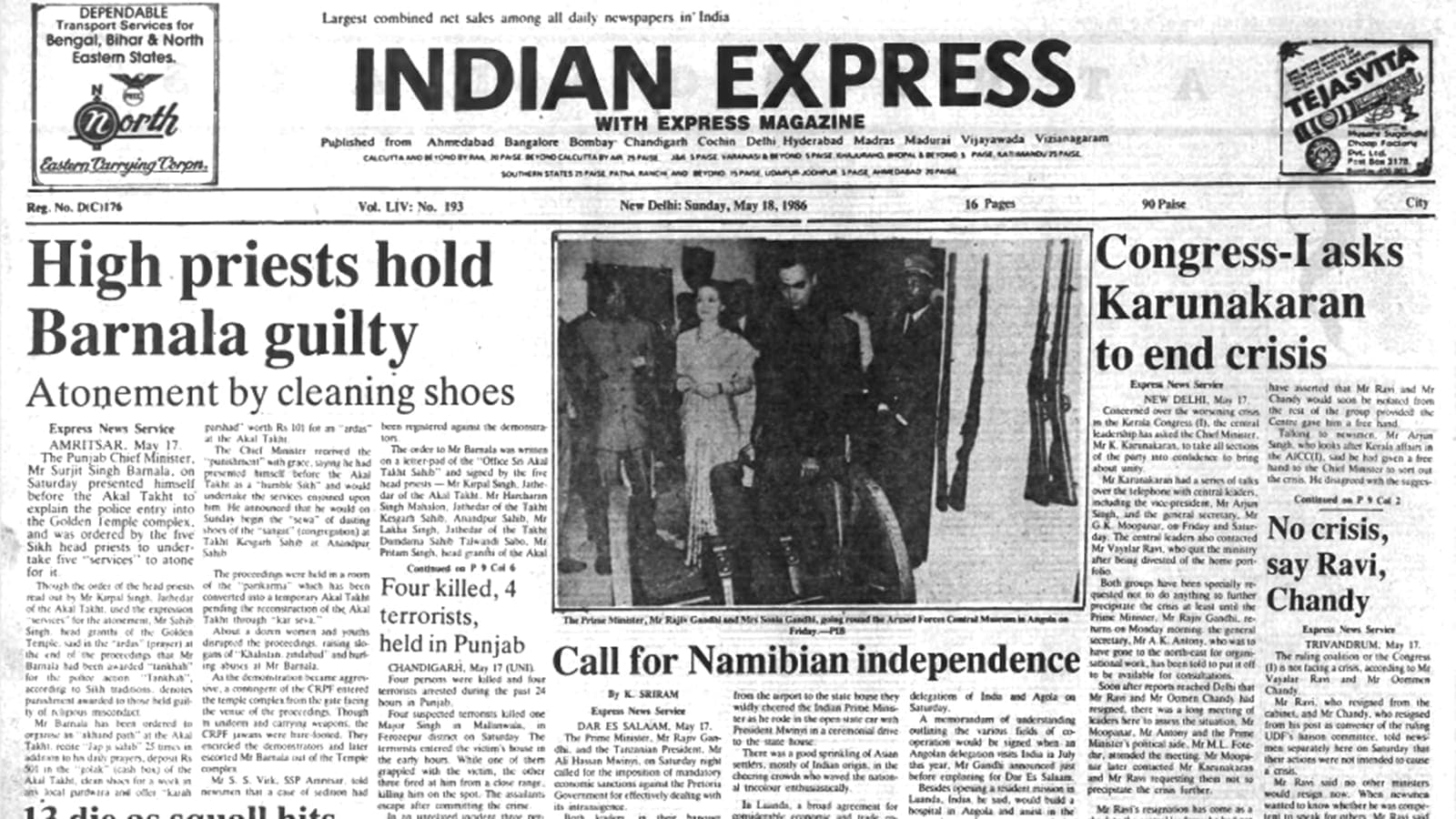
GlipzoOn May 18, 1986, a significant event unfolded in Punjab as Chief Minister Surjit Singh Barnala faced a critical moment before the Akal Takht, the highest temporal authority in Sikhism. This occurrence, steeped in historical and political context, not only marked a notable point in Barnala's tenure but also highlighted the deep-rooted tensions surrounding the Golden Temple, a sacred site for Sikhs worldwide.
During his visit to the Akal Takht, Barnala was compelled to justify the government's controversial police action within the Golden Temple complex. The police entry, which had caused widespread outcry, was a topic of heated debate and scrutiny among the Sikh community. The five Sikh head priests, in an unprecedented move, issued an order for Barnala to perform five specific “services” as a form of atonement for the actions taken by his government against the Sikh faith and its revered institution.
Kirpal Singh, the Jathedar of the Akal Takht, delivered the order, emphasizing the spiritual implications of Barnala's actions. However, it was Sahib Singh, the head granthi of the Golden Temple, who notably referred to this atonement as “tankhah,” a term denoting punishment or penance within Sikh theology. This declaration not only represented a disciplinary measure against Barnala but also echoed the community's demand for accountability from their leaders.
In a broader geopolitical context, the same day saw notable discussions regarding international relations, particularly concerning Namibia and South Africa. During a banquet in Dar es Salaam, Indian Prime Minister Rajiv Gandhi and Tanzanian President Ali Hassan Mwinyi urged the global community to enforce mandatory economic sanctions against the apartheid regime in South Africa.
Both leaders voiced their unwavering support for the oppressed populations of South Africa and underscored the necessity of granting unconditional independence to Namibia. President Mwinyi praised India's moral and material support to the liberation movements across southern Africa, showcasing India's commitment to anti-colonial struggles and human rights.
Meanwhile, in Tamil Nadu, Chief Minister M.G. Ramachandran, often referred to as MGR, was updated on the latest developments regarding the Sri Lankan government's proposals to address the ethnic conflict on the island. MGR expressed his willingness to collaborate with the central government in efforts aimed at resolving the complex ethnic issue that had long plagued Sri Lanka.
The situation was delicate, with the Indian government seeking additional proposals to fill the existing gaps in the Sri Lankan government's formulations. This diplomatic engagement was crucial as it demonstrated India's proactive role in addressing regional conflicts and fostering peace in South Asia.
The events of May 18, 1986, encapsulate a pivotal moment in Indian politics, particularly regarding the Sikh community's relationship with state authorities. Barnala's tankhah serves as a reminder of the tensions and challenges that political leaders face when navigating community grievances. This incident is not only significant for understanding the dynamics of Punjab's political landscape in the 1980s but also highlights the broader implications of governance, accountability, and community relations.
Furthermore, the actions of Prime Minister Rajiv Gandhi and President Mwinyi reflect a critical stance against colonialism and injustice, which resonates in the ongoing struggles for human rights and equality around the globe. The collaborative efforts between Indian leaders and their counterparts in southern Africa underscore the importance of international solidarity in the fight against oppression.
As we reflect on the historical events of May 18, 1986, it is essential to consider what lessons can be drawn for contemporary governance and community relations in India and beyond. The need for accountability and the importance of listening to community voices remain relevant today. Political leaders must navigate complexities with empathy and responsiveness to foster trust and cooperation with their constituents.
In the realm of international relations, the commitment to supporting liberation movements and advocating for human rights is an ongoing challenge. As new global issues arise, the principles of solidarity and justice must guide diplomatic efforts to create a more equitable world.
As we observe the evolving political landscape, it will be crucial to watch how leaders address historical grievances and engage with communities in meaningful dialogue. The legacies of the past continue to influence current affairs, shaping the path toward a more just and inclusive society.

Tensions soar as the US and Iran engage in air strikes near the Strait of Hormuz, raising concerns over global oil supply and regional stability.
BBC World
Trump's international interventions face serious stalemates. What will this mean for U.S. foreign policy? Explore the critical challenges ahead.
Indian Express
Tehran denies resignation of President Masoud Pezeshkian amid claims of IRGC influence. What does this mean for Iran's political stability? Click to learn more!
Indian Express