
Image: BBC World
Three Australian women linked to Islamic State face serious charges upon returning from Syria. What does this mean for national security and legal ramifications?
GlipzoIn a significant development, three Australian women connected to the Islamic State (IS) group are facing serious legal repercussions upon their return from Syria. Kawsar Abbas (53) and her daughter Zeinab Ahmed (31) were both arrested at Melbourne Airport and are set to appear in court soon after their return to Australia. Meanwhile, Janai Safar (32) faces similar charges in Sydney.
The legal actions against these women come amid a broader investigation into Australians who have traveled to conflict zones. The allegations against Abbas are particularly alarming, as police claim she is responsible for grave human rights violations, including the enslavement of a woman. The nature of these charges has drawn attention not only for their severity but also for the implications they hold for national security and the legal landscape surrounding returning foreign fighters.
Kawsar Abbas has been charged with four counts of crimes against humanity. Australian Federal Police (AFP) allege she traveled to Syria in 2014, where she played a role in purchasing a female slave for $10,000, whom she kept in her home. Her daughter, Zeinab Ahmed, faces two similar charges, both of which carry a potential maximum sentence of 25 years in prison.
In Sydney, Janai Safar is accused of traveling to Syria in 2015 to join her husband, who had previously aligned himself with IS. She faces charges that could result in a 10-year imprisonment for each offense.
The AFP's ongoing investigation into Australians returning from conflict zones is a critical component of national security efforts. Stephen Nutt, Assistant Commissioner for Counter Terrorism, emphasized the seriousness of the allegations, stating that the police will continue to pursue those who are suspected of committing crimes abroad. Nutt remarked, “This remains an active investigation into very serious allegations.”
These arrests are part of a larger group of 34 Australian women and children who had been residing at the al-Roj camp in Syria since 2019. The group intended to return to Australia earlier this year but faced bureaucratic obstacles that delayed their return. Notably, one individual from this cohort was previously issued a temporary exclusion order, barring her from returning to Australia for up to two years.
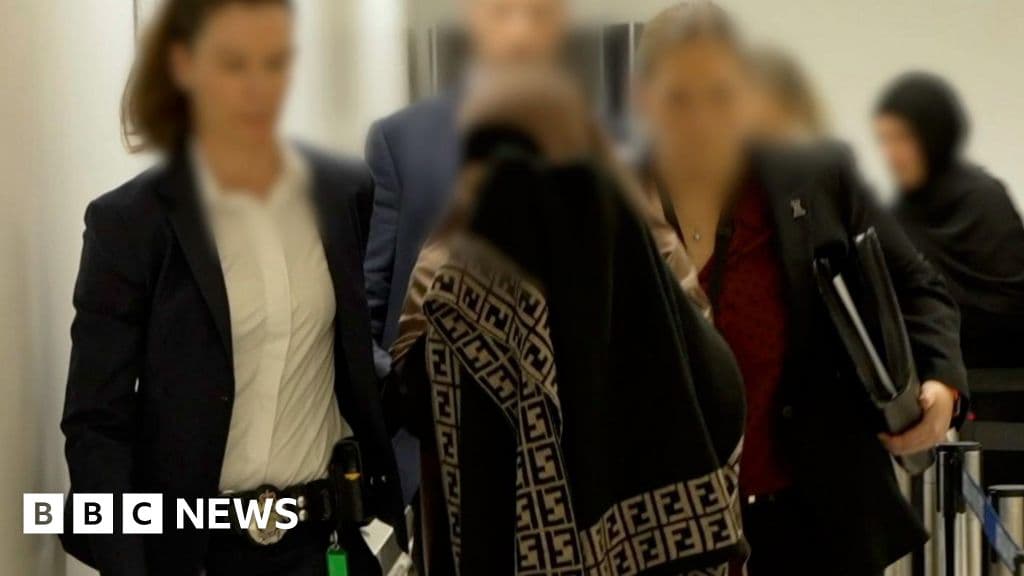
Following the arrests, chaotic scenes unfolded at Melbourne Airport, highlighting the high tension surrounding these events. As the only woman not detained emerged from the arrivals hall, she was quickly surrounded by a group of about 15 men. This group attempted to shield her and the accompanying children from the media, showcasing the intense public interest and scrutiny surrounding the case.
The arrests of Abbas, Ahmed, and Safar not only highlight individual actions but also raise critical questions about the legal ramifications for Australians who have engaged with terrorist organizations abroad. The Australian government’s stance on these issues is evolving, particularly as more citizens attempt to return from conflict zones.
The implications of these charges extend beyond the courtroom. They affect public perception, governmental policy, and the broader conversation around national security and counter-terrorism efforts in Australia. As these cases unfold, they could pave the way for stricter regulations regarding the return of foreign fighters and their families.
As the legal proceedings begin, several key aspects are likely to unfold: - Court Proceedings: The upcoming court sessions will be pivotal in determining the outcomes of these cases. - Government Response: How the Australian government addresses the return of others from conflict zones will be closely monitored, especially as public sentiment plays a role in shaping policy. - Continued Investigations: The AFP's ongoing investigations may lead to further charges against individuals associated with IS, raising questions about accountability and legal recourse.
In summary, the legal actions against these women represent not just individual accountability but also a broader national concern regarding the implications of returning foreign fighters. As Australia grapples with this complex issue, the outcomes of these cases could significantly influence future policies and societal attitudes toward those linked with terrorism.

Tensions soar as the US and Iran engage in air strikes near the Strait of Hormuz, raising concerns over global oil supply and regional stability.
BBC World
Trump's international interventions face serious stalemates. What will this mean for U.S. foreign policy? Explore the critical challenges ahead.
Indian Express
Tehran denies resignation of President Masoud Pezeshkian amid claims of IRGC influence. What does this mean for Iran's political stability? Click to learn more!
Indian Express