
Image: BBC World
A woman charged for ties to ISIS after returning from Syria sparks debate on repatriation and national security in Australia. Discover the implications.
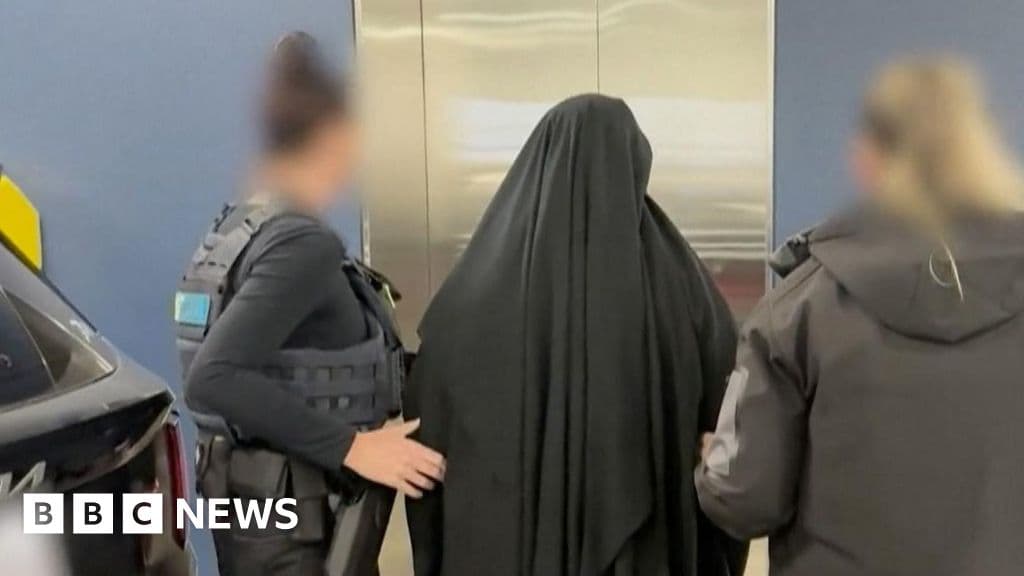
GlipzoIn a significant development, Australian authorities have charged a woman with connections to the Islamic State after her return from Syria last year. The 34-year-old, identified by reports as Rayann El Houli, is facing serious allegations including membership in a terrorist organization and unlawful entry into a declared conflict zone. The charges were announced following her arrival in Australia in September along with another woman, marking a critical moment in the ongoing discussions surrounding the repatriation of individuals linked to terrorist groups.
The charges against El Houli carry a maximum penalty of up to 10 years in prison, according to Hilda Sirec, a federal police assistant commissioner. El Houli’s case is part of a broader investigation into several Australian women who have spent time in the al-Roj and al-Hawl camps in northeastern Syria, where families of IS fighters have been detained since 2019.
This announcement comes shortly after the recent return of two groups of women and children from Syria to Australia. Earlier this month, three women were also charged with various offenses, including crimes against humanity. The Australian government has faced intense scrutiny regarding its policies on repatriating citizens associated with terrorist activities.
The group that arrived in Sydney and Melbourne on Tuesday was believed to be the last contingent of Australians from the al-Roj camp. Other Australians had previously returned in recent months and years. Among the recent arrivals, a mother-daughter duo, Kawsar Ahmad and Zeinab Ahmad, faced charges of enslavement and using a slave, with Kawsar additionally accused of slave trading. Another woman, Janai Safar, was charged with entering a declared conflict zone and associating with IS.
The situation has ignited a heated political debate in Australia. The government asserts that it has not facilitated the return of these individuals, emphasizing a hands-off approach. Prime Minister Anthony Albanese has stated, “if you make your bed, you lie in it,” highlighting the government’s position on personal accountability for those who traveled to Syria.
However, advocates for the returnees argue that Australia has a responsibility to uphold the rights of its citizens, especially the children. They contend that the younger generations should not suffer the consequences of their parents’ decisions. This has led to a clash between differing views on national security and human rights, making the issue particularly contentious.
Sirec confirmed that all adult women returning to Australia are under investigation, emphasizing that the absence of immediate charges does not indicate a halt in investigations. The scrutiny on these individuals raises critical questions about national security, social reintegration, and the potential risks associated with their return.
The Australian Federal Police is actively working to ensure that those who have committed crimes are held accountable, while also examining the socio-political implications of these returns for Australian society. The complexities surrounding the children involved in these cases cannot be overlooked, as many advocates are pushing for supportive measures rather than punitive actions.
As investigations continue, it remains to be seen how the government will navigate the challenging landscape of national security versus human rights. The situation is fluid, and several key points warrant close attention:
In conclusion, the repatriation of individuals with ties to the Islamic State represents a complex intersection of legal, ethical, and social challenges that Australia must navigate moving forward. As the investigations unfold, the nation watches closely to see how these issues will shape the future of its citizens.

Tensions soar as the US and Iran engage in air strikes near the Strait of Hormuz, raising concerns over global oil supply and regional stability.
BBC World
Trump's international interventions face serious stalemates. What will this mean for U.S. foreign policy? Explore the critical challenges ahead.
Indian Express
Tehran denies resignation of President Masoud Pezeshkian amid claims of IRGC influence. What does this mean for Iran's political stability? Click to learn more!
Indian Express