
Image: BBC World
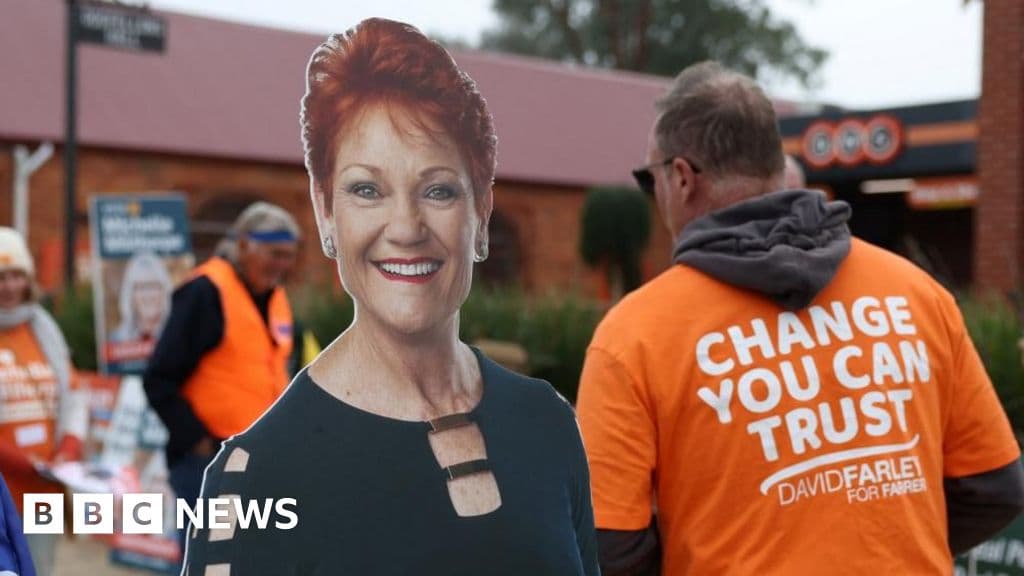
Polls have opened in a crucial by-election in Farrer, testing One Nation's support amid political shifts in Australia. Find out why this matters!
GlipzoPolls have opened for a pivotal by-election in Farrer, New South Wales, on Saturday, which is anticipated to gauge the support for the right-wing populist party, One Nation. This election could mark a significant milestone as the party aims to secure its first federal lower house seat. The contest has emerged after the resignation of Sussan Ley, the former leader of the opposition Liberal Party, who stepped down following a leadership change after just nine months.
As voters head to the polls, the competition is fierce, with One Nation's David Farley and local independent candidate Michelle Milthorpe emerging as the frontrunners. The Liberal Party is also fielding a candidate, but polls suggest a tightly contested race. Voting booths will close at 18:00 local time (09:00 BST) on Saturday, with results anticipated shortly thereafter.
Milthorpe, a local educator, previously came in second in the two-candidate preferred count during last year's federal election against Ley, who experienced her worst performance as a sitting MP since her initial win in 2001. This by-election is significant as it employs Australia's preferential voting system, where voters rank candidates based on their preferences, leading to an intricate tally process that culminates in the two-candidate preferred count.
The outcome of this by-election will not change the Labor government's significant majority but could be a historic moment for One Nation. This election is the first federal test of One Nation's popularity, particularly following its strong performance in the recent South Australian state election in March, where it received the second-highest vote count, marking its best electoral showing to date.
One Nation's history in federal elections has been tumultuous; the party has never succeeded in securing a lower house seat. In the late 1990s, Pauline Hanson, the party leader, briefly held her seat as an independent but lost in her re-election attempt. Since then, she has returned to serve as a senator, but this by-election poses a unique opportunity for the party to make a breakthrough.
David Farley, the candidate representing One Nation, is a former CEO of the Australian Agricultural Company, one of the nation’s largest beef producers. In a campaign video shared on social media, Farley expressed his disillusionment with the traditional political landscape, stating, "I have lost a bit of faith in the major parties. They say one thing to your face and then go and do something else in parliament."
This sentiment resonates with many voters disenchanted with established political norms, and Farley’s candidacy could attract those seeking an alternative. With Farrer covering a vast area of 127,000 square kilometers (approximately 49,000 square miles), larger than South Korea, it includes key regional centers such as Albury, Griffith, and Deniliquin. Historically, the seat has been held by either the Liberal or National parties, making this election even more intriguing.
Interestingly, Saturday’s by-election could also be the first instance where neither of the major political parties—Labor and the Liberal-National Coalition—are present in the two-candidate preferred count during a federal election. Labor has opted not to contest this race, further opening the field for alternatives.
This by-election serves as the inaugural electoral assessment for new leaders of the Liberal and National parties. Angus Taylor, who took the reins from Ley in February, and Matt Canavan, who succeeded David Littleproud in March, face the challenge of revitalizing their parties after a dismal performance in the last federal election, which was deemed their worst defeat ever. The ongoing internal strife and dwindling poll numbers have compounded their challenges.
The significance of this by-election extends beyond Farrer; it reflects broader trends in Australian politics, including the rise of populist movements and discontent with traditional party politics. As voters express their frustrations through their preferences, the outcome could influence the strategies of both major and minor parties heading into future elections.
The results of this by-election could reshape the political landscape in Australia. Should One Nation secure a victory, it may embolden the party to pursue more aggressive strategies in future contests, potentially altering the dynamics between major parties. Conversely, if the Liberals or the independent candidate emerges victorious, it may signal a resilience within traditional party lines.
As the clock ticks down to the closing of the polls, all eyes are on Farrer to see if this by-election will indeed serve as a litmus test for support of One Nation and what it means for the future of Australian politics.

Tensions soar as the US and Iran engage in air strikes near the Strait of Hormuz, raising concerns over global oil supply and regional stability.
BBC World
Trump's international interventions face serious stalemates. What will this mean for U.S. foreign policy? Explore the critical challenges ahead.
Indian Express
Tehran denies resignation of President Masoud Pezeshkian amid claims of IRGC influence. What does this mean for Iran's political stability? Click to learn more!
Indian Express