
Image: BBC World
Israel and Lebanon's ambassadors will meet in Washington on Tuesday to discuss a ceasefire amid ongoing violence and rising casualties. Will peace prevail?
GlipzoIn a significant diplomatic development, Israel and Lebanon's ambassadors to the United States are set to meet in Washington on Tuesday. This meeting aims to discuss a potential ceasefire and establish a timeline for direct negotiations between the two nations, which have had a tumultuous relationship for decades. The announcement was made by the Lebanese presidency, emphasizing that any negotiations would only proceed under the condition of a ceasefire.
This telephone conversation marks a pivotal moment, as it is the first direct communication between the two countries' ambassadors. Israeli Prime Minister Benjamin Netanyahu has authorized these discussions, responding to what he described as persistent requests from the Lebanese government.
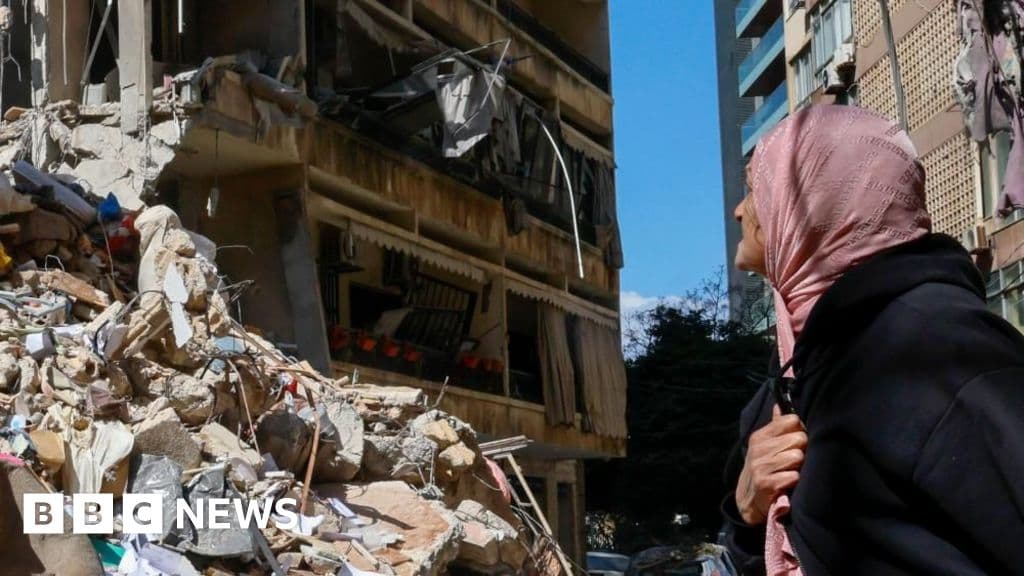
The ongoing violence has intensified the urgency of these talks. Following a series of Israeli airstrikes on Lebanon, the death toll has tragically risen to 357, with over 1,223 individuals reported injured. The Lebanese health ministry has indicated that the casualty numbers may continue to rise as recovery efforts progress and more remains are identified.
In a statement, the Israeli military claimed that their airstrikes have led to the deaths of at least 180 Hezbollah members. Despite these claims, Hezbollah has responded with its own rocket attacks in retaliation, further escalating tensions in the region.
The upcoming meeting, scheduled for Tuesday, will take place at the U.S. State Department. The goal is to establish terms for a ceasefire, which, if agreed upon, could pave the way for further negotiations at a later date. This meeting is particularly noteworthy given that direct talks between Lebanon and Israel are rare, with historical communications primarily facilitated through intermediaries.
The backdrop of this diplomatic engagement is a conflict that has seen a marked increase in hostilities since November 2024, when a ceasefire was last agreed upon. Since then, discussions facilitated by U.S. envoys have struggled to gain traction. The complexity of the situation has been heightened by differing views on whether Lebanon was included in a recently declared U.S.-Iran ceasefire. While Iran claims Lebanon was part of the agreement, U.S. officials and Israel assert it was not.
Iran's Deputy Foreign Minister Saeed Khatibzadeh has condemned the Israeli strikes as a serious violation of this ceasefire, while U.S. Vice President JD Vance clarified that the agreement did not extend to Lebanon.
The humanitarian crisis continues to escalate, with Lebanese President Joseph Aoun reporting that recent strikes have resulted in the deaths of 13 state security personnel in Nabatieh. The situation has drawn widespread condemnation, as civilian casualties mount, including members of families and individuals in various towns across Lebanon. Specific incidents include: - Seven family members killed in Abbassieh - Eleven casualties in Zrarieh - A medical center hit in Burj Qalaway, resulting in two fatalities - A drone strike targeting an ambulance in Toul
In response to these strikes, the Israel Defense Forces (IDF) have continued their operations, targeting rocket launchers that have reportedly fired into northern Israel. The IDF stated that they are actively working to locate and destroy these launchers, maintaining a defensive posture against Hezbollah's retaliatory actions.
Hezbollah has not remained passive in this conflict, firing rockets aimed at multiple locations in Israel, including the southern coastal city of Ashdod—the furthest point they have targeted during this escalation. The IDF confirmed intercepting these rockets, emphasizing the ongoing threat posed by Hezbollah's military capabilities.
As the situation unfolds, both sides are entrenched in their positions, with Hezbollah citing Israeli actions as violations of the U.S.-Iran ceasefire. This adds another layer of complexity to the already fraught negotiations.
As Tuesday's meeting approaches, the international community is watching closely to see if any progress can be made towards a ceasefire. The stakes are high, with the potential for further escalation if talks fail.
As such, the focus will be on the conditions set for the ceasefire, and whether both sides can agree on a framework that leads to a sustainable peace. With tensions running high, the coming days will be critical in determining the future trajectory of this complex conflict.

Tensions soar as the US and Iran engage in air strikes near the Strait of Hormuz, raising concerns over global oil supply and regional stability.
BBC World
Trump's international interventions face serious stalemates. What will this mean for U.S. foreign policy? Explore the critical challenges ahead.
Indian Express
Tehran denies resignation of President Masoud Pezeshkian amid claims of IRGC influence. What does this mean for Iran's political stability? Click to learn more!
Indian Express