
Image: BBC World
Japan's Defense Minister Shinjiro Koizumi rejects China's militarism claims and emphasizes transparency amid escalating military tensions.
GlipzoIn a bold move during the closing day of the Shangri-La Dialogue in Singapore, Japan's Defense Minister Shinjiro Koizumi firmly rejected China's accusations of Japan engaging in a "new militarism." Koizumi highlighted that it is China's expansive military capabilities and lack of transparency that should be of serious concern to the global community. His remarks come amid increasing tensions between the two nations, rooted in a tumultuous historical relationship dating back to Japan's invasion of China during World War II.
During the summit, Koizumi emphasized the importance of nations updating their defense strategies to address emerging challenges. He stated, "It is only natural that every country, including Japan, updates its defenses to meet new challenges and contribute to peace in the region." By clarifying Japan's intentions, he aimed to reassure neighboring countries, many of which have historical grievances stemming from Japan's wartime actions.
Just before the summit, Jiang Bin, the spokesperson for China's Ministry of National Defense, had warned the international community about what he termed the "grey rhino of a remilitarized Japan", urging collective action to contain Japan's defense advancements. This statement underlines the ongoing apprehension in China regarding Japan’s military evolution, which has included record defense budgets for 12 consecutive years.
In December, Japan's cabinet approved a military spending plan exceeding 9 trillion yen (approximately $57 billion), driving the nation closer to its goal of allocating 2% of its GDP for defense purposes. Despite these increases, the Japanese government has reiterated that its intentions are purely defensive, aiming to bolster its security rather than pursue offensive military strategies.
During his address, Koizumi took a direct stance against the narrative of Japan's militarism. He questioned the fairness of labeling Japan as militaristic while pointing out that Japan does not possess nuclear weapons or strategic bombers, unlike China. "There's a country that has a huge arsenal of nuclear weapons and strategic bombers," he remarked, alluding to China’s military capabilities. "And yet Japan is labelled with 'new militarism'. Isn't it strange?"
In an attempt to foster clear communication, Koizumi assured attendees that Japan would engage in open dialogue and act with a high degree of transparency regarding its military developments. He stated, "What are we developing these capabilities for? And based on what thinking? Japan will move forward while making a clear explanation to the international community."
The historical context of Japan's wartime actions continues to influence its contemporary relations with China and other neighboring nations. A representative from the Chinese military challenged Koizumi during the dialogue, asking if Japan would apologize for its actions in World War II. Koizumi did not address the question directly, instead redirecting focus to China's military expenditures and activities, which he described as matters of serious concern.
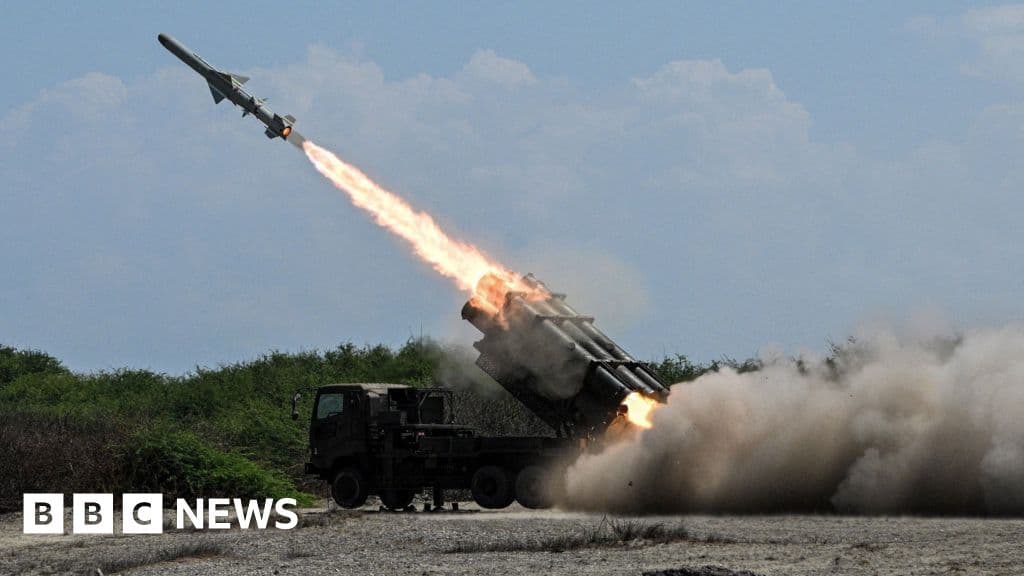
This historical backdrop complicates Japan's defense strategy, particularly as Prime Minister Sanae Takaichi has taken significant steps to enhance the nation's military capabilities since her appointment in October 2025. Japan is not only increasing its budget but also investing in advanced technologies, such as surface-to-ship missiles and unmanned drones, which will be deployed in various capacities.
Looking ahead, Japan is set to revise key security documents by the end of the year as part of its broader defense strategy. Takaichi has also proposed changes to Article 9 of Japan's constitution, which renounces war, sparking debate about the nation’s pacifist stance. The relaxation of rules allowing for the export of lethal weapons marks another significant shift in Japan's military policy, aimed at strengthening its defense industrial base.
As tensions with China continue to rise, especially in light of recent comments from Takaichi regarding Japan's potential military responses, the international community will be watching closely. The trajectory of Japan's defense policy could have profound implications not only for Japan and China but for the stability of the entire Asia-Pacific region.
The evolving dynamics will necessitate careful navigation to avoid escalating conflicts while ensuring regional security. Japan's commitment to transparency and communication will be crucial in addressing concerns and fostering trust among its neighbors. What happens next in this intricate geopolitical landscape remains to be seen.

Tensions soar as the US and Iran engage in air strikes near the Strait of Hormuz, raising concerns over global oil supply and regional stability.
BBC World
Trump's international interventions face serious stalemates. What will this mean for U.S. foreign policy? Explore the critical challenges ahead.
Indian Express
Tehran denies resignation of President Masoud Pezeshkian amid claims of IRGC influence. What does this mean for Iran's political stability? Click to learn more!
Indian Express