
Image: BBC World
Discover how the Irish government is finalizing a fuel support package amidst ongoing blockades and protests over soaring fuel prices. What’s next?
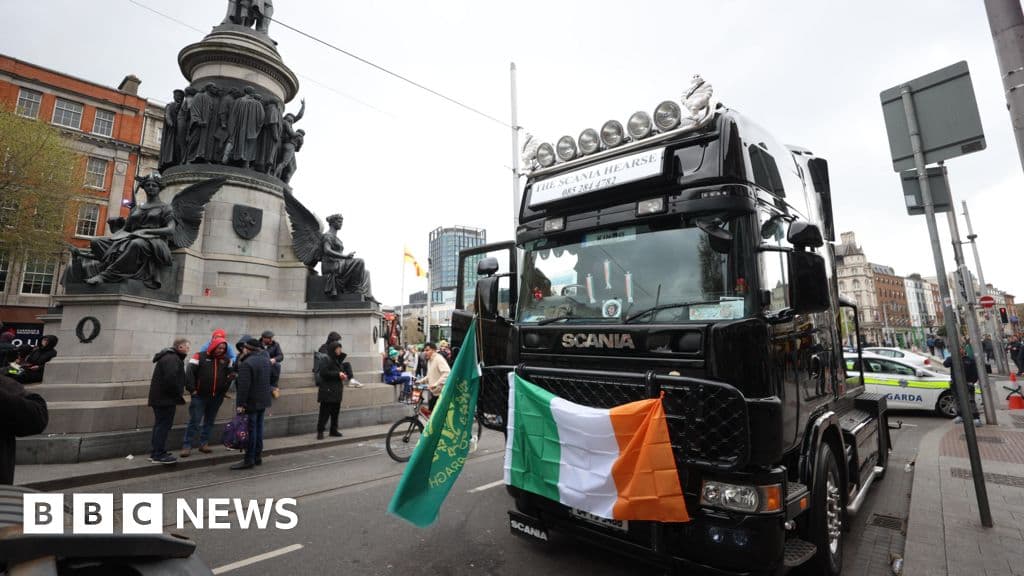
GlipzoThe Irish government is moving swiftly to finalize a fuel support package following significant disruptions caused by ongoing protests across the Republic of Ireland. Protests have continued for four consecutive days, primarily involving slow-moving convoys of vehicles, including tractors, blocking crucial roads. These demonstrations have been sparked by soaring fuel prices, exacerbated by the geopolitical tensions stemming from the US-Israeli conflict with Iran.
In response to the escalating situation, the government has engaged in what they term "constructive engagement" with representatives from the haulage and farming sectors. Following these discussions, officials indicated that a substantial aid package is on the horizon, aimed specifically at key sectors of the economy that are bearing the brunt of these rising costs.
Tánaiste (Irish Deputy Prime Minister) and Finance Minister Simon Harris emphasized that the upcoming support will be both “substantial and significant.” He expressed optimism about the ongoing talks while also stressing the importance of ceasing the blockades to facilitate progress. "The blockade has to end," he stated, highlighting the urgency of the situation.
Taoiseach (Irish Prime Minister) Micheál Martin echoed this sentiment, warning that the ongoing protests risk pushing Ireland into a fuel supply crisis. He noted that the blockades could lead to a situation where the country is unable to procure necessary oil supplies, significantly impacting daily life and emergency services.
The National Emergency Coordination Group (NECG) raised alarms about the increasing pressure on fuel supplies for emergency response vehicles, including ambulances and fire services. They issued a statement detailing how these vehicles depend on retail fuel stations for their operations, which are currently hindered by the ongoing protests. The risks posed to public safety are becoming increasingly unacceptable, leading health ministers to urge protesters to reconsider their actions.
John Dallon, a farmer from Kildare, expressed his commitment to the protests, indicating a willingness to continue them for several weeks if necessary. Despite the government's efforts, Dallon mentioned that he felt excluded from critical discussions, despite having expected to attend. He remains hopeful that the government will present effective proposals to tackle high fuel prices.
The political landscape surrounding these protests has intensified, with Sinn Féin leader Mary Lou McDonald criticizing the ruling coalition for excluding protesters from negotiations. In a pointed social media message, she accused Fianna Fáil and Fine Gael of mishandling the situation, further escalating the crisis.
As protests continue, the situation at gas stations remains dire. Mary Burke, who manages a service station in County Tipperary, reported that her supply of petrol and diesel had been depleted within hours, despite a fresh delivery arriving. A cap of €30 (£26) per customer was implemented due to the limited supply, and she anticipates running out of fuel before the next delivery is scheduled.
Joseph Musgrave, CEO of Home and Community Care Ireland, noted that many staff members who require cars for travel between home care appointments are struggling to find fuel. He reported a surge of calls from staff members facing difficulties due to the shortages. This situation underscores the broader implications of the fuel crisis, affecting not just transportation but also critical services within communities.
As the government works to negotiate a resolution, the impact of these protests is being felt across multiple sectors, amplifying the urgency for an effective response. The ongoing dialogue between the government and industry stakeholders will be crucial in mitigating these challenges.
Moving forward, the Irish government is expected to maintain discussions with various stakeholders throughout the weekend. The outcome of these negotiations will likely dictate the next steps in addressing the fuel crisis.
Key points to monitor include: - The effectiveness of the support package once announced and its impact on fuel prices. - The response from protesters following any government proposals. - Public sentiment and potential for further political ramifications as the situation develops.
In conclusion, the unfolding situation in Ireland serves as a critical reminder of the interconnectedness of global events and local economies. The government’s next steps will be essential in restoring stability and ensuring that essential services can operate effectively, all while balancing the demands of those advocating for relief from high fuel prices.

Tensions soar as the US and Iran engage in air strikes near the Strait of Hormuz, raising concerns over global oil supply and regional stability.
BBC World
Trump's international interventions face serious stalemates. What will this mean for U.S. foreign policy? Explore the critical challenges ahead.
Indian Express
Tehran denies resignation of President Masoud Pezeshkian amid claims of IRGC influence. What does this mean for Iran's political stability? Click to learn more!
Indian Express