
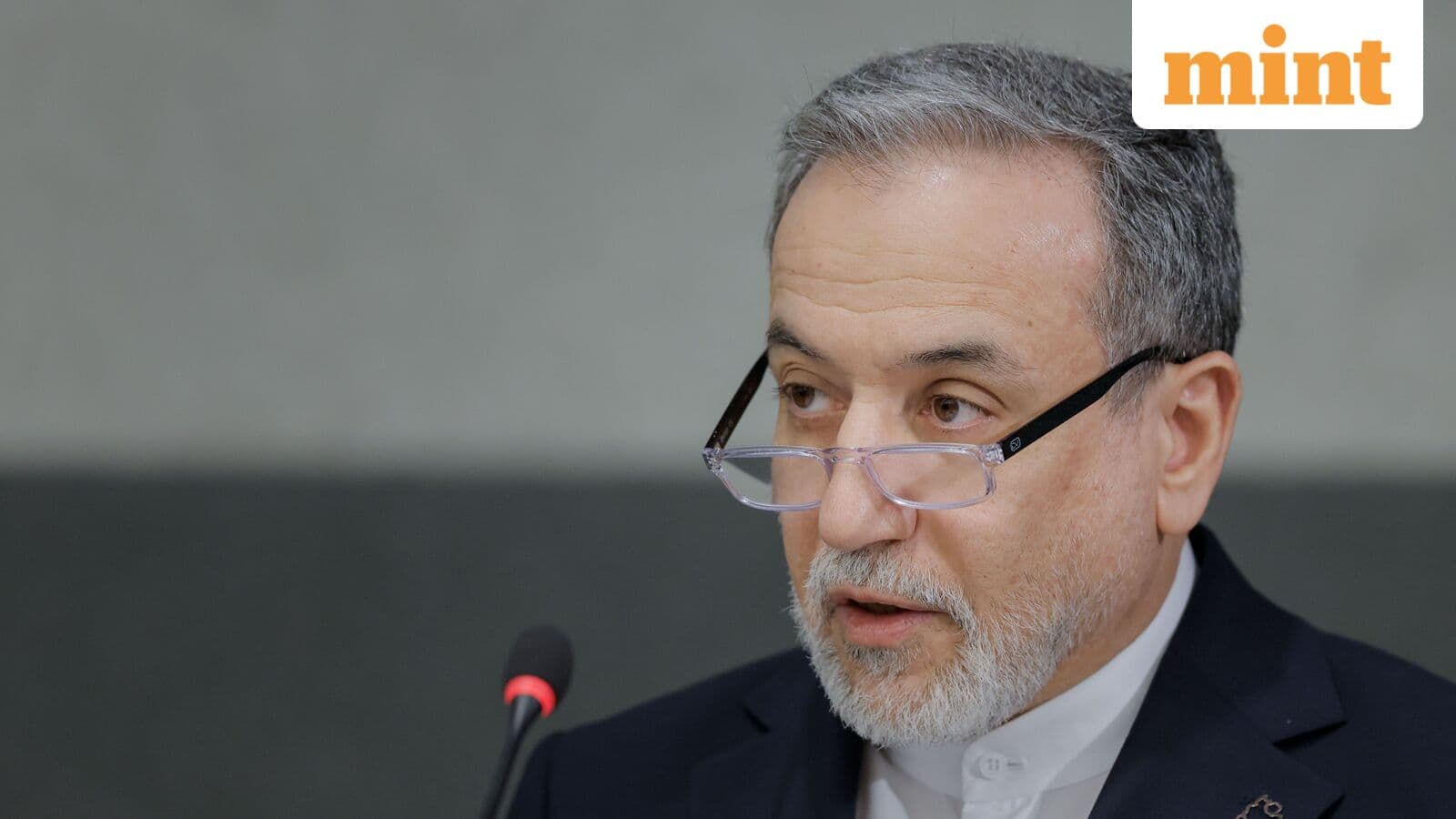
Image: Mint (Business)
Iran's Foreign Minister reveals shocking details about the nation's nuclear stockpile, raising questions about control and future retrieval amidst military tensions.
GlipzoIn a recent interview with CBS News, Iran's Foreign Minister Abbas Araghchi addressed the pressing issue of Iran's nuclear stockpile, revealing that the nation currently does not have access to its 440 kg of nuclear material. This admission raises critical questions about the control and location of Iran's nuclear assets amid heightened tensions in the Middle East.
Araghchi clarified that this stockpile was officially reported to the International Atomic Energy Agency (IAEA), which monitors nuclear materials globally. When asked about the current status of the nuclear material, he stated, "They are under the rubble." This startling revelation points to the aftermath of military strikes that have left Iran's nuclear facilities severely compromised.
The foreign minister's comments specifically refer to the airstrikes conducted by the Trump administration in June 2025, during an operation dubbed Operation Midnight Hammer. This military action targeted Iran's nuclear sites at Fordow, Natanz, and Isfahan, which were bombed using advanced B-2 stealth bombers and bunker-buster munitions. At the time, Trump claimed these attacks had "completely and totally obliterated" Iran's nuclear enrichment capabilities.
Araghchi's remarks underscore the serious damage inflicted on these facilities, particularly at Fordow, which he described as having sustained heavy destruction. The implications of these strikes are profound, as they not only disrupt Iran's nuclear ambitions but also complicate international diplomatic efforts regarding nuclear non-proliferation.
Despite the devastation, Araghchi indicated a potential pathway for retrieving the nuclear materials, albeit under stringent conditions. He mentioned, "There is the possibility to retrieve them, but under the supervision of the agency," referring to the IAEA. This suggests that while the materials are currently buried beneath rubble, there may be an avenue for recovery in the future, contingent upon diplomatic agreements.
However, he was quick to clarify that Iran has no immediate plans to recover the stockpile. "For the time being, we have no program. We have no plan to recover them from under the rubble," he stated, signaling that Iran is not prioritizing this issue at present.
The interview also touched on the state of US-Iran negotiations before the military strikes occurred. Araghchi revealed that Iran was open to diluting its 440 kg of 60% enriched uranium as part of the discussions. This willingness to negotiate was framed as a significant concession, aimed at demonstrating that Iran does not seek nuclear weapons. "That was a big offer, a big concession in order to prove that Iran has never wanted nuclear weapons and would never want them," he emphasized.
These negotiations have become increasingly complex following the military strikes, which have created an atmosphere of distrust and hostility between the two nations. Despite the cessation of talks, Araghchi maintains that Iran's position remains firm, stating, "We will continue to defend ourselves for as long as necessary."
The geopolitical landscape in the Middle East continues to shift, with rising tensions following military engagements. Trump's administration has claimed victory over Iran in various aspects, yet he has refrained from declaring a definitive end to the conflict. Officials have suggested that hostilities could persist for at least three more weeks, leaving regional stability in jeopardy.
As Iran navigates this precarious situation, the future of its nuclear program remains uncertain. While Araghchi has expressed a commitment to self-defense and sovereignty, the international community is watching closely, particularly in light of ongoing diplomatic efforts involving the IAEA and other global powers.
The fate of Iran's nuclear stockpile and its broader implications for international relations hinge on several factors. As discussions about nuclear non-proliferation continue, it is crucial to monitor the evolving situation in Iran. Key points to watch include:
Araghchi's revelations have opened the door to critical discussions about Iran’s nuclear future, but whether these talks will lead to a peaceful resolution or further conflict remains to be seen. The international community must remain vigilant as developments unfold in the coming weeks and months.

Tensions soar as the US and Iran engage in air strikes near the Strait of Hormuz, raising concerns over global oil supply and regional stability.
BBC World
Trump's international interventions face serious stalemates. What will this mean for U.S. foreign policy? Explore the critical challenges ahead.
Indian Express
Tehran denies resignation of President Masoud Pezeshkian amid claims of IRGC influence. What does this mean for Iran's political stability? Click to learn more!
Indian Express