
Image: BBC World
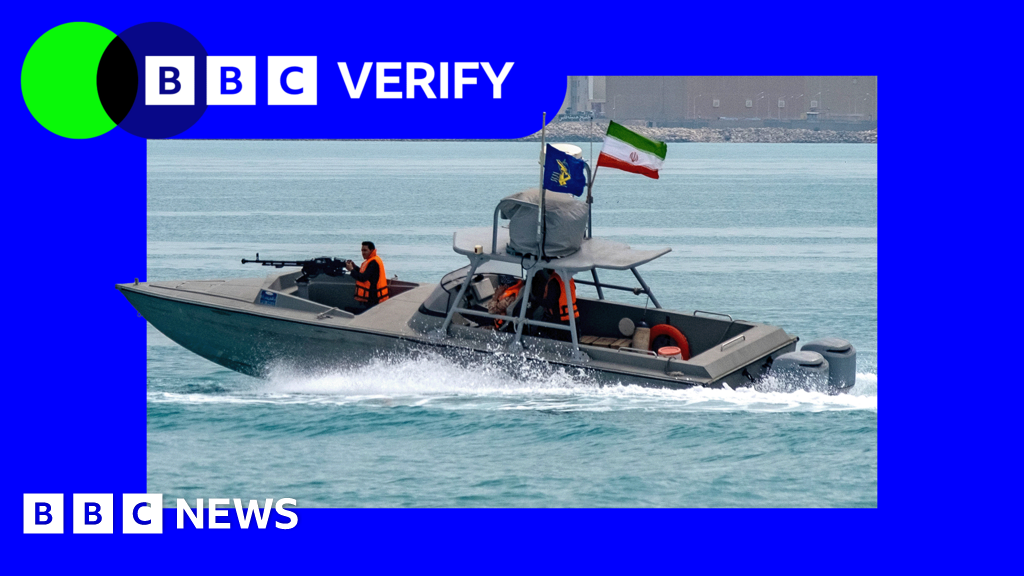
Iran expands claims over the Strait of Hormuz, asserting military control amid rising tensions with the UAE and U.S. forces. What’s next for the region?
GlipzoIn a significant move that has raised eyebrows across the globe, Iran has announced the expansion of its claimed military jurisdiction in the Strait of Hormuz, a vital maritime route. This declaration comes from Iran's newly established body, the Persian Gulf Strait Authority, which asserts that it now exercises oversight over an area exceeding 22,000 square kilometers (approximately 8,800 square miles).
This expansion encroaches upon the territorial waters of both Oman and the United Arab Emirates (UAE). The UAE has responded assertively, dismissing Iran's claims as "nothing but fragments of dreams" while emphasizing its own sovereignty over the waters. This confrontation is more than just a territorial dispute; it signifies a broader struggle for influence in a region critical for global oil shipments.
The Persian Gulf Strait Authority has made it clear that any maritime transit through the Strait of Hormuz must be coordinated with and authorized by Iranian forces. This declaration poses a direct challenge to international norms and the rights granted under the United Nations Convention on the Law of the Sea, which guarantees safe passage through another nation's waters. Notably, Iran has yet to ratify this convention, complicating the legal landscape surrounding its maritime claims.
Iran's aggressive posturing includes media reports from the Islamic Revolutionary Guard Corps (IRGC), which showcased footage of what they labeled a "punishment" strike against a tanker in the strait. Analysis from BBC Verify identified the vessel as Barakah, a Liberian-flagged tanker that reportedly suffered damage from unidentified projectiles earlier this year. This series of events underscores the increasing volatility in the region.
Iran's assertiveness coincides with heightened U.S. military activity in the area. On Wednesday, U.S. forces boarded an Iran-bound oil tanker, suspected of breaching American sanctions against Iranian ports. The operation, conducted by the U.S. Central Command (Centcom), involved marines rappelling onto the Celestial Sea, a ship previously sanctioned for its ties to Iran.
Centcom confirmed that it had directed the vessel to change course after conducting a search. The ship has since altered its destination to Duqm in Oman, suggesting an attempt to evade U.S. scrutiny. This incident, along with the redirection of 94 commercial vessels and disabling of four others since the U.S. blockade began on April 13, illustrates the ongoing maritime tensions and the U.S.'s commitment to enforcing sanctions against Iran.
As the situation escalates, diplomatic efforts are also underway. Donald Trump recently revealed that he postponed a planned military strike on Iran at the request of Gulf states, citing ongoing serious negotiations. In a post on Truth Social, Trump indicated that leaders from Qatar, Saudi Arabia, and the UAE urged him to hold off, raising hopes for potential diplomatic resolutions.
Amid these developments, Pakistan's military chief, Asim Munir, is reportedly in Tehran to facilitate peace talks between Iran and the U.S. The Iranian foreign ministry has acknowledged it is reviewing the latest U.S. proposals aimed at de-escalating tensions, suggesting a complex web of diplomacy is at play.
The Strait of Hormuz is a critical chokepoint for the world's oil supply, with about 20% of global oil trade passing through its waters. Iran's attempt to assert control over this strategic route raises significant concerns for international shipping and energy security. The situation is also a flashpoint for U.S.-Iran relations, with historical animosities and geopolitical interests colliding in a region already fraught with tension.
As the U.S. continues its military presence and Iran seeks to solidify its claims, observers should keep an eye on several key developments: - Diplomatic Talks: Will the ongoing negotiations yield a peaceful resolution? - U.S. Military Actions: How will the U.S. respond to any further Iranian provocations? - Regional Reactions: What will be the response from Gulf states and other international players?
The outcomes of these interactions will shape not only the future of U.S.-Iran relations but also the stability of the larger Middle East region. The escalating situation in the Strait of Hormuz is a critical reminder of the delicate balance of power in this strategically vital area, and the world will be watching closely as events unfold.

Tensions soar as the US and Iran engage in air strikes near the Strait of Hormuz, raising concerns over global oil supply and regional stability.
BBC World
Trump's international interventions face serious stalemates. What will this mean for U.S. foreign policy? Explore the critical challenges ahead.
Indian Express
Tehran denies resignation of President Masoud Pezeshkian amid claims of IRGC influence. What does this mean for Iran's political stability? Click to learn more!
Indian Express