
Image: BBC World
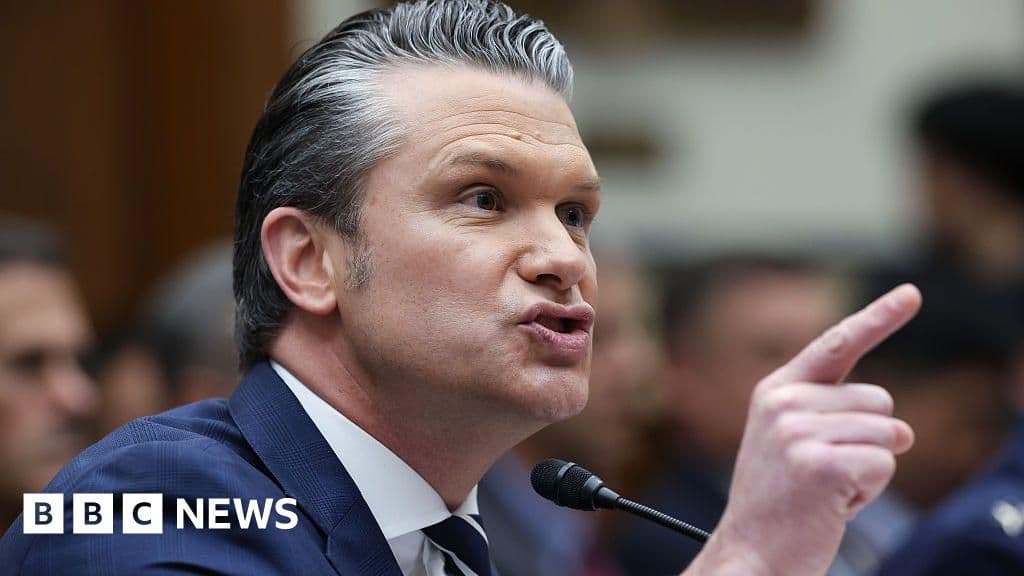
Defense Secretary Pete Hegseth faced intense scrutiny in a six-hour hearing on the Iran war, revealing costs and controversies that impact U.S. policy.
GlipzoIn a heated confrontation that stretched nearly six hours, U.S. Defense Secretary Pete Hegseth found himself in the hot seat during a hearing with the House Armed Services Committee. This was Hegseth's first public questioning under oath since the commencement of hostilities in Iran. The hearing, which took place on Wednesday, also included key military figures such as General Dan Caine, Chairman of the Joint Chiefs of Staff, and Jules Hurst, the Department of Defense's Chief Financial Officer.
Hegseth's opening comments set the tone for the meeting, asserting that the most significant challenge facing the U.S. military was not just the adversarial actions of Iran but the "defeatist words" coming from some Democratic lawmakers and even a few Republicans. This statement quickly ignited tensions as committee members raised concerns about the ongoing conflict.
A focal point of the hearing was the staggering cost of the Iran war, which Hurst revealed had already reached $25 billion (£18.5 billion). This amount primarily covered munitions and the replacement of military equipment lost in the conflict.
The conflict persists despite a recent ceasefire agreement between the U.S. and Iran, which aims to pave the way for peace talks. However, the war itself has not officially come to an end, raising questions about financial accountability and the strategic direction of U.S. military efforts.
As the hearing progressed, the topic of the military budget became increasingly contentious. The White House has proposed a monumental increase in the defense budget to $1.5 trillion (£1.1 trillion), a figure that would represent the largest military spending surge since World War II. Hegseth defended this request, claiming it illustrates the "urgency of the moment" and the need to adapt to rapidly advancing technologies.
General Caine echoed this sentiment by describing the budget increase as a "historic down payment for future security." In contrast, Democratic lawmakers labeled the military actions in Iran as an unnecessary "war of choice", emphasizing that such actions lacked Congressional approval.
California Democrat John Garamendi accused Hegseth and the administration of deceiving the American public about the war's purpose. He characterized the current situation as a "quagmire", suggesting that President Trump is entangled in yet another Middle Eastern conflict. Hegseth responded sharply, calling Garamendi's remarks "reckless" and attributing the Congressman’s views to a "hatred for President Trump".
While many Republicans on the committee rallied behind the Pentagon's actions, voicing concerns about Iran as a "existential threat" to the U.S., the division was palpable. Congressman Carlos Gimenez of Florida articulated a stance of vigilance, stating, "When someone tells me for 47 years that they want to kill us, I think I am going to take them at their word." His comments underlined a broader belief among some Republican members that military preemptive measures against Iran are justified.
The hearing also delved into the broader economic implications of the ongoing conflict, particularly the upward trend in global oil prices and the resulting impact on consumer goods. At one point, Hegseth firmly rebuked a congressman, declaring "shame on you" during a particularly intense exchange.
A particularly sensitive discussion arose around the fallout from an airstrike that hit a school in Minab, Iran, resulting in the deaths of 168 individuals, including approximately 110 children. The strike occurred during the initial phases of the U.S. and Israel's military operations. U.S. military investigators are reportedly examining the incident, which may have been an unintentional mistake.
Leading Democrat Adam Smith expressed frustration over the lack of accountability, stating, "We made a mistake and that happens in war... two months after it happened we refused to say anything about it, giving the world the impression that we just don't care." In response, Hegseth indicated that investigations were still underway and refrained from discussing the financial implications of the strike.
As the hearing concluded, Hegseth is scheduled to appear before the U.S. Senate on Thursday for further questioning. With the ongoing conflict in Iran continuing to escalate, the implications of military spending and accountability for civilian casualties are expected to remain hot topics in U.S. politics.
The decisions made regarding military funding and strategies will significantly influence U.S. foreign policy and domestic economic conditions. As the war drags on, the financial toll and humanitarian consequences will likely fuel debates in Congress and among the public, shaping the political landscape leading into future elections.
Key Takeaways: - Hegseth's first hearing since the Iran conflict began highlights significant military spending issues. - The proposed defense budget increase signals a shift in U.S. military strategy. - Ongoing discussions about civilian casualties raise important ethical questions. - Bipartisan divides illustrate the complexity of U.S. military engagement in Iran.
The coming days will be crucial in determining how U.S. lawmakers respond to the ongoing challenges posed by the Iran conflict and the ramifications of military expenditures.

Tensions soar as the US and Iran engage in air strikes near the Strait of Hormuz, raising concerns over global oil supply and regional stability.
BBC World
Trump's international interventions face serious stalemates. What will this mean for U.S. foreign policy? Explore the critical challenges ahead.
Indian Express
Tehran denies resignation of President Masoud Pezeshkian amid claims of IRGC influence. What does this mean for Iran's political stability? Click to learn more!
Indian Express